Côte d'Ivoire grows nearly half the world's cocoa. Here is how the bean gets from farm to chocolate bar
Smallholders on one to three hectares produce the crop that earns 40% of the country's export income. Explained: who buys it, how the price is set, and what the 'living income' premium is.
Lire cet article en français →
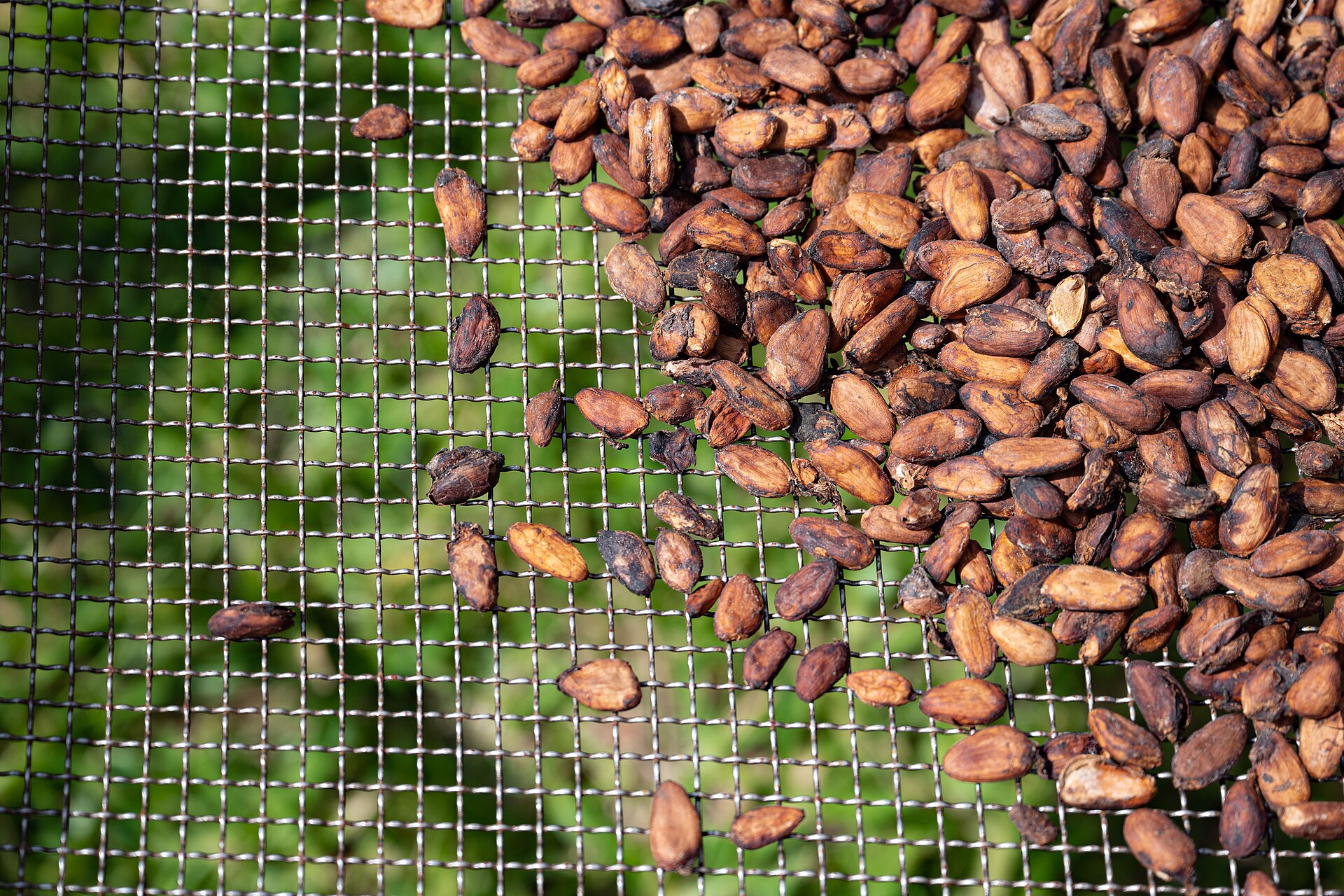
Abidjan — If you have eaten chocolate today, there is a good chance it started on a small farm in Côte d'Ivoire. The country is the world's largest producer and exporter of cocoa beans, with about 45% of global output in 2024. It overtook Ghana as number one in 1978. West Africa as a whole grows about two-thirds of the world's crop, with Ghana, Nigeria, Cameroon and Togo the other big producers.
A smallholder crop
Ivorian cocoa is grown mostly by smallholder farmers on one to three hectares. When enough pods are ripe, they are cut and opened, and the beans and pulp are left to ferment on the farm, then dried.
From village to ship
- A buyer, the traitant, travels between villages to weigh and buy the dried beans.
- The beans go to a warehouse in a big town, where exporters buy them.
- Licensed exporters ship them abroad; in the 2022-23 season the country authorised 102 exporters, including 41 cooperatives and nine grinding companies that process beans at home.
- Big chocolate makers buy Ivorian cocoa through futures and options on international exchanges, where world prices are set.
Why it matters
Cocoa accounts for about 40% of Côte d'Ivoire's export income, so the bean's price shapes the national economy and millions of family budgets.
The living income premium
Because farmers earn little of the final value of a chocolate bar, Côte d'Ivoire and Ghana, which together grow most of the world's cocoa, agreed a premium of $400 a tonne, the Living Income Differential, to raise what is paid for their crop.
Background: Wikipedia.