Families moved for a coal mine got 5% of what they lost
A study of 115 households near Somkhele, in KwaZulu-Natal, counts R80 million in lost land, crops and livestock against R3.6 million paid. The mine disputes the research.
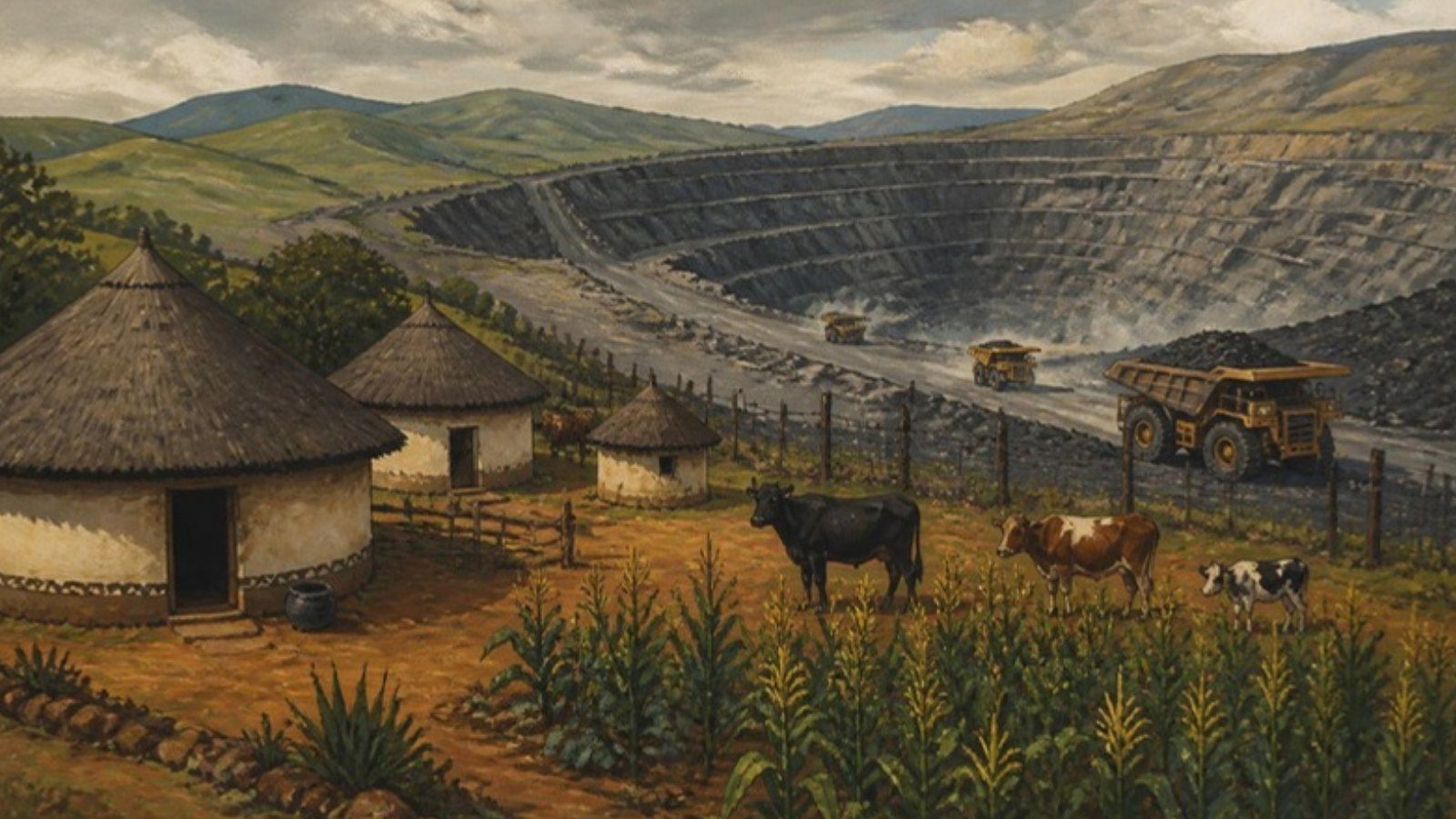
Durban — Families displaced by a coal mine in rural KwaZulu-Natal received less than 5% of the value of what they lost, according to a study by researchers from King's College London and the University of KwaZulu-Natal, reported by Daily Maverick. The mining company disputes how the research was done.
The study looks at the Somkhele mine near Mtubatuba, owned by Tendele Coal Mining, where full-scale extraction began in 2007.
The findings
Using surveys of 115 directly affected households carried out in 2018, Professor Sarah Bracking and Dr Danford Chibvongodze estimate:
- losses of more than R80 million in land, crops and livestock;
- compensation of about R3.6 million, or 4.7% of that;
- only 22% of households reporting any compensation at all.
Land held by the households fell from 270 hectares to 68. Crop yields dropped by 94% on average, and maize by 97%. Livestock numbers fell from 7,574 animals to 2,643. More than 200 houses and rondavels were lost.
Why the gap is so wide
The researchers say most mining compensation pays only the local market price at the moment of loss. They counted losses over 20 years instead. They also note that communal land tends to be valued below commercial land because of zoning inherited from apartheid.
Some losses, they say, cannot be priced at all: ancestral graves that were moved, indigenous plants, health and psychological harm.
A commissioner of the South African Human Rights Commission, Philile Ntuli, wrote the foreword.
The mine's response
Tendele's business development director, Nathi Kunene, said the surveys were conducted by All Rise Attorneys, the Durban firm that commissioned the study and that has represented a community organisation in litigation against the mine for years, and not by the university researchers.
He said the company had not seen the report before being approached, was not given the surveys or told how households were chosen, and that neither its staff nor the traditional council were contacted. The company is involved in litigation and regulatory proceedings over the mine's expansion, he said, and would not comment further.
This report is based on reporting by Daily Maverick.