Taï: the Ivorian rainforest where chimpanzees crack nuts with stone hammers
One of West Africa's last great primary forests, the World Heritage park shelters pygmy hippos, forest elephants and thousands of tool-using chimpanzees.
Lire cet article en français →
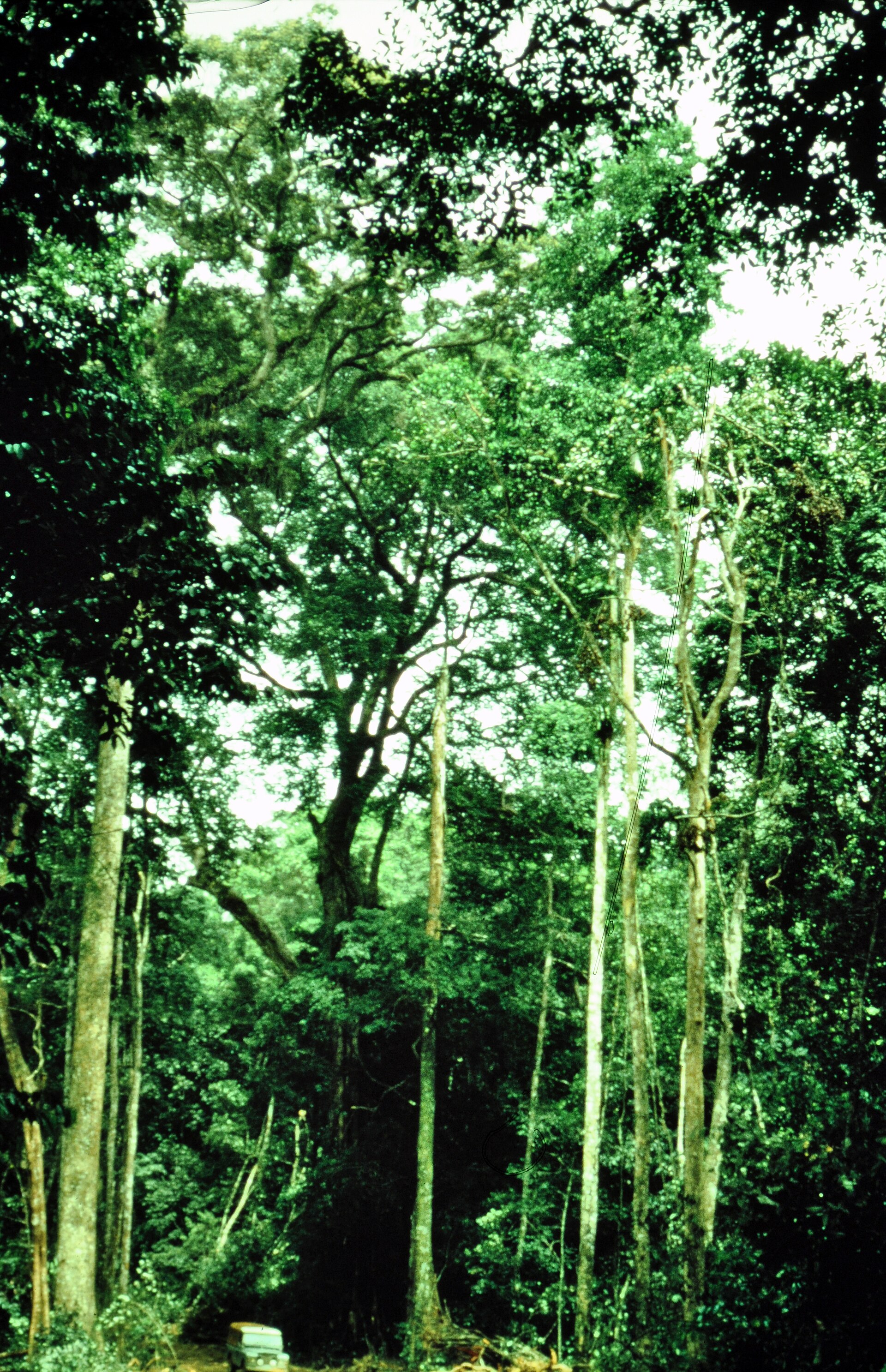
Taï — In the south-west corner of Côte d'Ivoire, on the border with Liberia, lies one of the last large blocks of primary rainforest left in West Africa: Taï National Park. It was recognised as a UNESCO biosphere reserve in 1978 and listed as a World Heritage Site in 1982.
An old forest
The reserve was first protected in 1926 and became a national park in 1972. It covers about 3,300 square kilometres of evergreen forest between the Cavalla and Sassandra rivers, with granite outcrops such as Mount Niénokoué rising above the canopy. Rivers that are wide in the rainy season shrink to shallow streams in the dry months.
The chimpanzees' workshop
Taï is famous for its West African chimpanzees, estimated at several thousand in the park. They are known for using tools: they carry stones and pieces of wood to tree roots and use them as hammers and anvils to crack open hard nuts, a skill young chimpanzees learn by watching their mothers. Researchers have studied the park's chimpanzees for decades, making Taï one of the most important places in the world for understanding our closest relatives.
Rare animals
The park is one of the few remaining strongholds of the pygmy hippopotamus, a small forest hippo found only in West Africa; around 500 lived there in the 1990s. It also shelters forest elephants, leopards, olive colobus monkeys and the rare Jentink's duiker, all on the Red List of threatened species.
People as protectors
The Guéré and Oubi peoples, the original inhabitants of the forest region, traditionally did not eat chimpanzees, for totemic reasons, and that custom helped the apes survive.
Background: Wikipedia.