The dam that ended a village's dry-season quarrels
In Torla, in northern Côte d'Ivoire, a herder and his partner, a vegetable grower, used to compete for the same water. A rebuilt dam changed that.
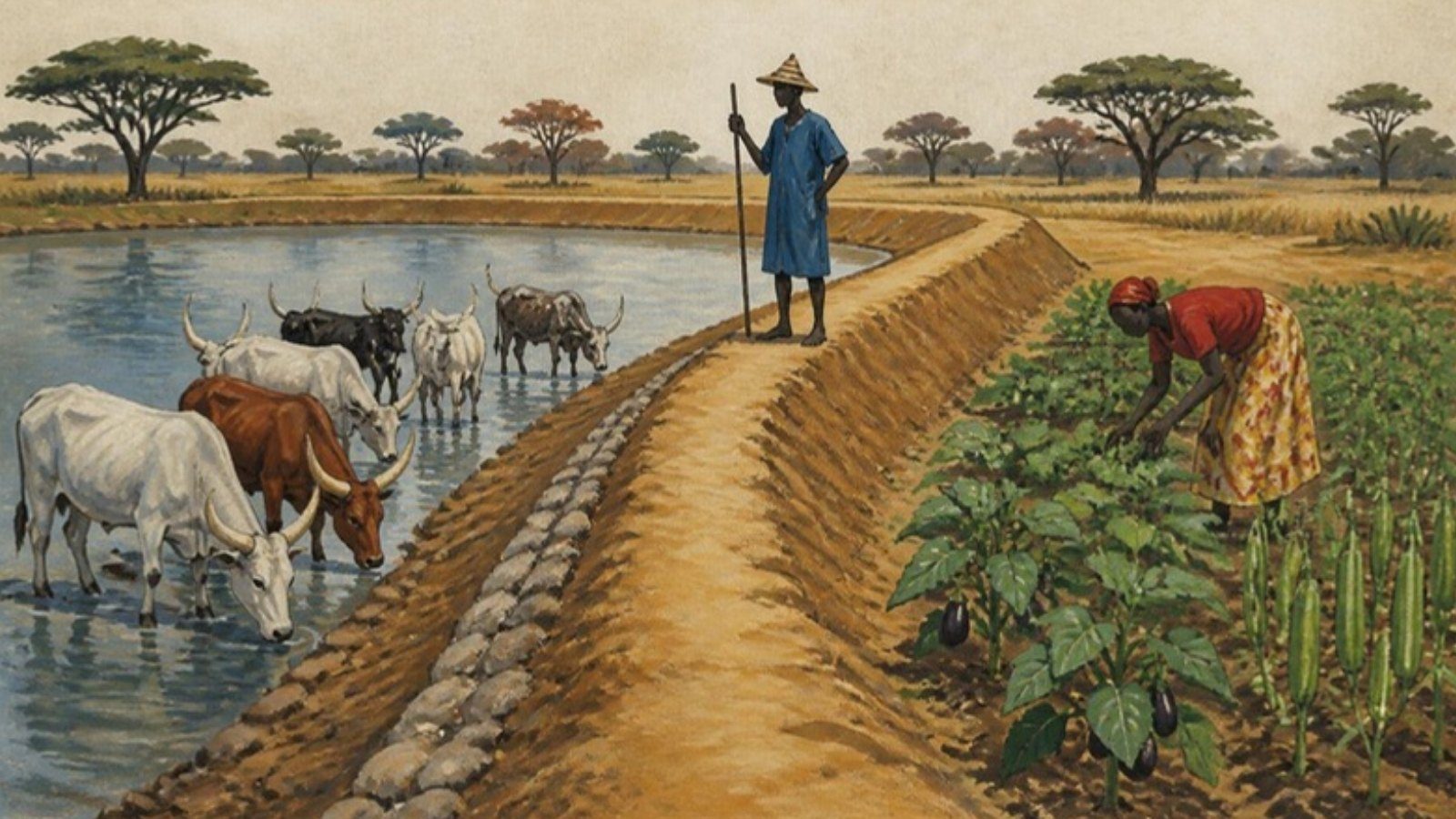
Torla — Every dry season in Torla, a village in northern Côte d'Ivoire, the same household felt both sides of an old argument. Adam Ouattara herds cattle. His partner, Makongo Traoré, grows aubergines, okra and tomatoes on a small plot near their home. They have four children. When the water ran low, his livelihood and hers pulled in opposite directions.
Their story is told by UN News in a report on a rebuilt dam that the village now runs itself.
How the trouble started each year
Northern Côte d'Ivoire is a region where seasonal herding and expanding farmland compete for the same ground. In the dry months, grazing land and water points dried up, and herders had to take their cattle further from the village, often straight through cultivated fields.
The rains brought a different squeeze. As more land went under crops, there was less left for livestock, and animals had to move further still, sometimes towards the borders.
Mr Ouattara has led the local herders' association since 2021 and speaks for pastoralists when disputes arise. When resources become scarce, he told UN News, everyone tries to protect their own living.
What changed
The village's agropastoral dam was rehabilitated and completed in August 2026, with support from the International Organization for Migration, the UN Peacebuilding Fund and partners. It now holds more water and releases it more reliably through the dry season, for both livestock and irrigation. The community manages it.
The aim was to head off conflict over natural resources before it began.
Mr Ouattara says there are fewer confrontations, and that herders and farmers now sit down together to talk problems through. In his view, the dam has brought peace to the village.
What it means at home
Ms Traoré has enlarged her vegetable plot. The income, she says, helps pay for her children's schooling, and she can now work harder towards a better future for them.
She is not alone. Reliable water is opening up market gardening to other women in the village, and it is an important source of household income there.
Source: UN News, 10 October 2026.