Clearing Waterside Without Protecting Livelihoods: Poor Liberians Pay the Price as Market Tables Are Removed
The removal of market tables at Monrovia's Waterside commercial district raises concerns about the economic survival of market women and informal traders. As authorities pursue urban order and improved sanitation, affected vendors need answers about relocation, alternative vending spaces, and the protection of their livelihoods.
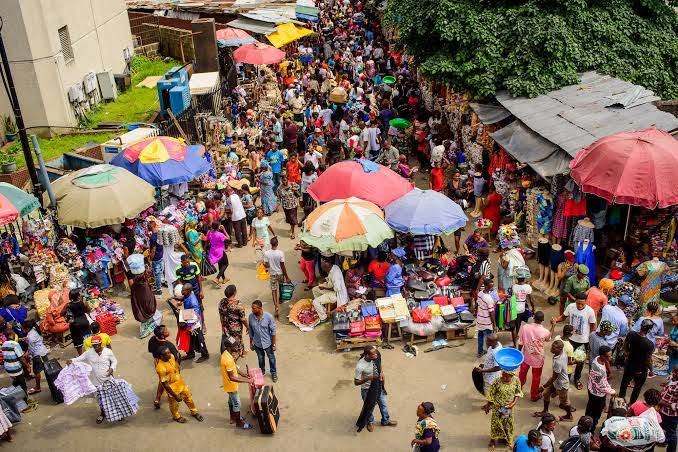
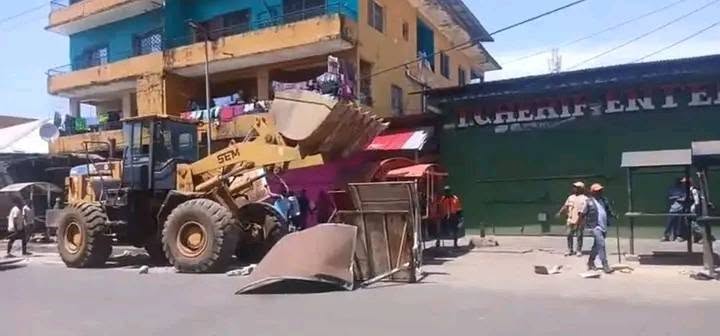
Monrovia — The removal of market tables at Waterside by the Ministry of Public Works has reignited an important national debate about urban order, poverty, economic survival, and the government's responsibility to protect the livelihoods of ordinary Liberians.
While maintaining clean streets, improving sanitation, and restoring order in commercial areas are legitimate public responsibilities, the manner in which these objectives are pursued deserves serious public scrutiny, particularly when the consequences fall heavily on people whose daily survival depends on informal trading.
For many market women and small-scale vendors at Waterside, selling goods is not simply a business activity. It is their primary source of income, their means of feeding their families, paying school fees, covering medical expenses, and meeting other basic household needs. For these women, losing a vending table can mean losing the economic foundation upon which their families depend.
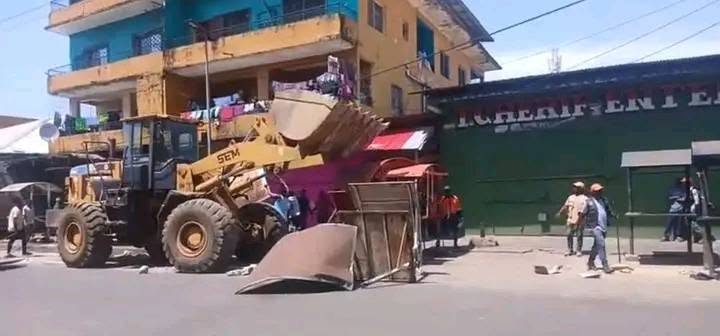
The central question, therefore, is not whether government authorities have the responsibility to regulate public spaces. They do. The more important question is whether the government has adequately considered the human and economic consequences of its enforcement actions.
Urban Development Must Not Become Economic Displacement
Waterside is one of Monrovia's important commercial areas, where formal and informal economic activities provide livelihoods for many people. Its commercial environment reflects the economic realities of a country where formal employment opportunities remain limited and many citizens depend on small businesses and informal trading to survive.
For a significant number of vendors, access to a small space along a busy commercial street can determine whether they earn enough money to support their households.
Consequently, removing market tables without a clearly communicated relocation plan, alternative vending arrangements, or meaningful support measures raises legitimate concerns about economic displacement.
Government interventions should not be measured only by the number of structures removed, streets cleared, or public spaces recovered. They must also be assessed by their effects on the people whose livelihoods are directly affected.
A cleaner commercial district may represent progress in urban management, but such progress becomes difficult to sustain when the people who depend on those spaces are left without practical alternatives.
The Economic Burden on Women and Vulnerable Families
The consequences of removing vending structures extend beyond the immediate loss of a table. They can affect entire households, particularly those headed or financially supported by women.
Many women engaged in informal trading operate with limited capital. Their businesses are often built from small daily profits, which are reinvested to purchase new goods and maintain household expenses.
When their selling spaces are removed, they may lose customers, experience declining sales, or be forced to operate in less accessible locations. If their tables or other business materials are destroyed rather than relocated or returned, the financial consequences may be even greater.
For women already struggling with rising living costs, limited access to credit, and the absence of stable employment, such disruptions can deepen economic insecurity.
The government must therefore consider the social implications of its decisions. Public policy should recognize that informal traders are part of Liberia's economic system, not obstacles that can simply be removed without considering what happens to them afterward.
Where Is the Alternative Plan for Affected Vendors?
The Ministry of Public Works has a responsibility to explain the objectives of its operation and clarify what arrangements, if any, have been made for affected traders.
Were the vendors adequately informed before the operation?
Were consultations conducted with market women and their representatives?
Were alternative vending locations identified?
Were affected vendors given reasonable time to relocate their goods and business materials?
Were any measures established to protect those whose only source of income was directly affected?
These are legitimate public-interest questions that deserve clear answers.
If the objective is to restore order and improve sanitation, the government should demonstrate how those goals can be achieved without unnecessarily destroying the economic opportunities of vulnerable citizens.
Relocation, designated vending areas, reasonable enforcement procedures, consultation, and transitional support should form part of a comprehensive approach to urban management.
Clearing public spaces should not automatically mean eliminating people's ability to earn an income.
President Boakai's Government Must Address the Human Impact
President Joseph Nyuma Boakai's administration has an opportunity to demonstrate that its development and governance priorities include the economic protection of ordinary citizens.
The President should request a clear assessment of the impact of the Waterside operation and ensure that the relevant government institutions explain what support or alternative arrangements are available to affected vendors.
The Ministry of Public Works, working with relevant municipal authorities and other government institutions, should engage the affected traders and identify practical solutions.
These solutions could include designated vending spaces, transparent relocation arrangements, opportunities for small traders to access approved markets, and reasonable procedures for recovering or replacing business materials where appropriate.
The government should also establish a consultation mechanism through which market associations and affected vendors can participate in decisions concerning their economic activities.
Such measures would help balance the government's responsibility to maintain public order with its obligation to consider the welfare of citizens.
Development Must Be Measured by Its Impact on People
Liberia cannot meaningfully address poverty by overlooking the economic realities of the people who experience it every day.
Urban renewal, sanitation, and infrastructure improvements are important. However, development should not be reduced to the physical appearance of cities while the economic survival of vulnerable communities receives insufficient attention.
The informal economy remains an important source of employment and income for many Liberians. Public authorities must therefore approach its regulation with planning, consultation, fairness, and an understanding of the consequences of displacement.
Market women are not asking for disorder. They are asking for the opportunity to earn an honest living within a properly regulated environment.
The government must demonstrate that it can enforce public regulations while protecting the dignity and economic interests of those affected.
Ultimately, the success of an urban improvement programme should not be determined solely by how many tables are removed or how much street space is recovered. It should also be determined by whether the people affected are given a fair opportunity to continue earning a living.
Clearing the streets should not mean clearing people's livelihoods. A government committed to development must ensure that the pursuit of order does not leave its poorest citizens further behind.