El Anatsui: the Ghanaian sculptor who turns bottle tops into shimmering metal cloth
From Anyako in the Volta Region to 36 years teaching in Nsukka, he won Venice's Golden Lion and filled Tate Modern's Turbine Hall without leaving his African base.
Lire cet article en français →
Nsukka — El Anatsui was born on 4 February 1944 in Anyako, in Ghana's Volta Region, the youngest of his father's 32 children. Raised by his uncle after losing his mother, he first fell for art drawing letters on a school chalkboard; the headmaster encouraged him with extra chalk.
Finding his own language
He studied at the Kwame Nkrumah University of Science and Technology in Kumasi, graduating in 1968, and felt his training was too Western. Visiting the National Cultural Centre in Kumasi, he met musicians, textile artists and printers and discovered Adinkra symbols, which opened the door to abstract art. In the 1970s he carved market trays and wall panels in wood, marked with chain saws, gouges and flame, and later explored clay pots.
In 1975 he began teaching at the University of Nigeria, Nsukka, where he became professor of sculpture and head of department, staying until 2011. He built a global career while living and working in the Nigerian university town.
Metal that moves like cloth
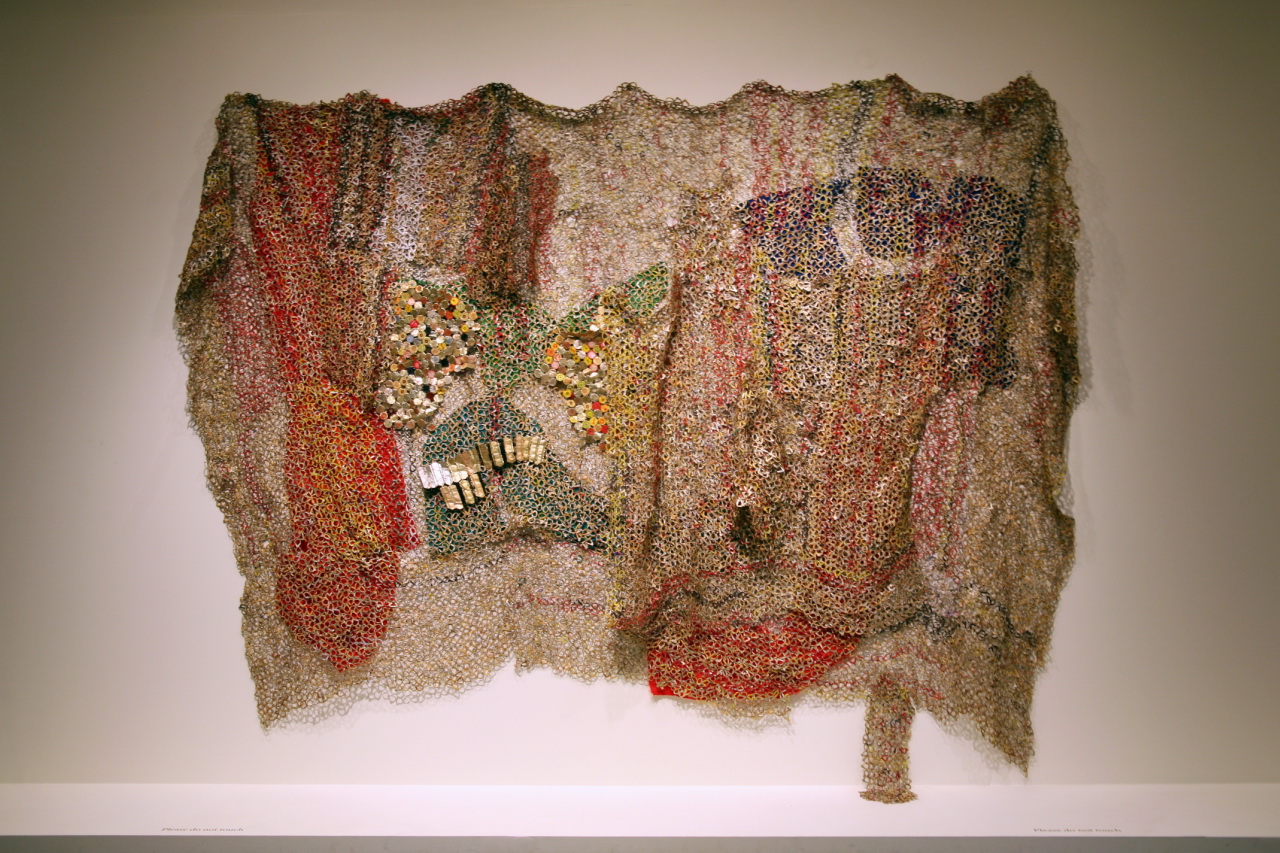
He is best known for vast hangings made of thousands of aluminium bottle tops from recycling stations, sewn together with copper wire. Though made of metal, they fold and drape like fabric and can take a new shape each time they are hung.
His work has been shown at the Metropolitan Museum of Art and the Brooklyn Museum. The Venice Biennale gave him its Golden Lion for Lifetime Achievement in 2015; in 2017 he became the first Ghanaian to win the Praemium Imperiale; and in 2023 he filled Tate Modern's Turbine Hall with Behind the Red Moon. Time named him one of the world's 100 most influential people that year.
Background: Wikipedia.