El Jem: Tunisia's great amphitheatre, built for 35,000 spectators in the Roman province of Africa
Built around 238 AD in the olive-rich town of Thysdrus, it is one of the best-preserved Roman monuments in the world and a World Heritage Site since 1979.
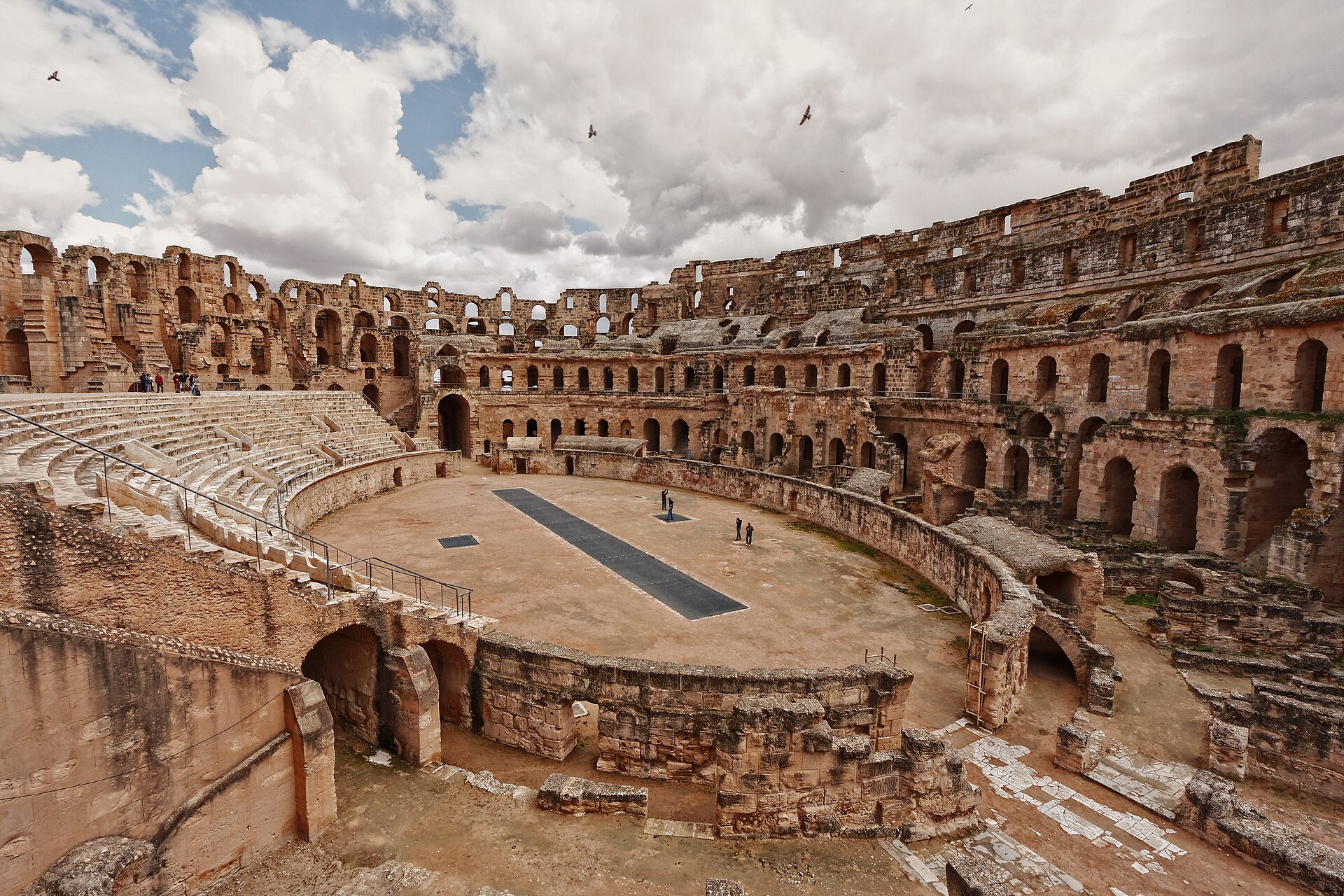
El Jem — Rising above the low houses of the town of El Jem, in eastern Tunisia, is one of the largest and best-preserved Roman amphitheatres anywhere: the Amphitheatre of El Jem. UNESCO has listed it as a World Heritage Site since 1979.
A stadium in Africa
It was built around 238 AD in Thysdrus, a wealthy town in the Roman province of Africa Proconsularis that grew rich on olive oil. Oval, built of stone blocks on flat ground, it measures 148 metres by 122 and could hold an estimated 35,000 spectators. It was the third amphitheatre built on the same spot. Historians think it may have been planned by the emperor Gordian III, possibly born nearby, as a gift to his home town, and left unfinished after his death.
Many lives
In the Middle Ages its walls became a fortress where local people sheltered from attacks, in 430 and 647. In 1695 a breach was made in one wall during a power struggle in Tunis, and in the 19th century it was used as a saltpetre works, then for shops, homes and grain stores.
On screen
Its arena has appeared in films and television, from Monty Python's Life of Brian to the travel series Long Way Down, and Nike filmed a famous 1996 football advert, "Good vs Evil", inside it.
Visiting
Today the amphitheatre is one of Tunisia's most visited sites, and in summer it hosts an international festival of symphonic music, when orchestras play under the stars where crowds once gathered for games.
Background: Wikipedia.