Fish River Canyon: Africa's largest canyon and its five-day, 88-kilometre trail
Carved over hundreds of millions of years, the Namibian ravine runs about 160 kilometres and drops to 549 metres. Hikers finish at the hot springs of ǀAi-ǀAis.
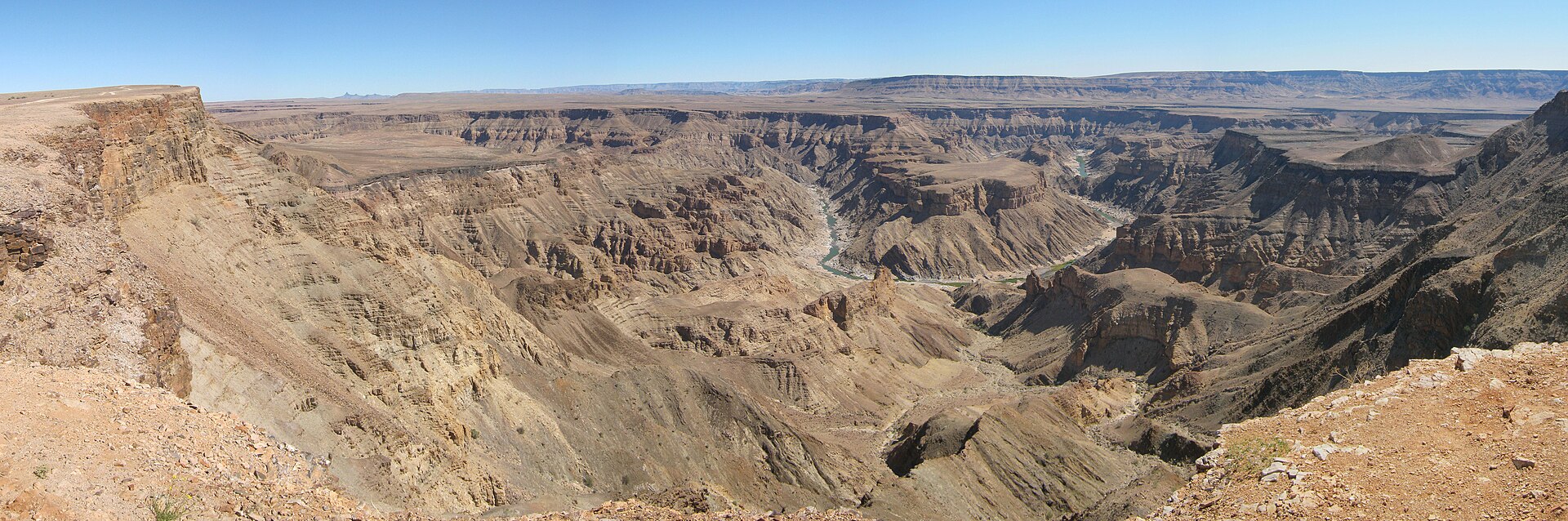
Keetmanshoop — In the south of Namibia, the Fish River has cut the largest canyon in Africa. The ravine runs about 160 kilometres, is up to 27 kilometres wide and, at its deepest, drops 549 metres. It is the country's second most visited tourist attraction.
Written in rock
About 650 million years ago, movements of the Earth's crust created a long, sunken valley along which the ancient river began to flow. Glaciers deepened it around 300 million years ago. When Africa and South America split apart and the African continent rose, the river ran faster and carved the twisting lower canyon through hard gneiss. Both the upper and lower canyons were declared a national monument in 1962.
The Fish River is Namibia's longest interior river. It usually floods in late summer; for the rest of the year it is a chain of long, narrow pools.
The trail
The Fish River Canyon hiking trail follows about 88 kilometres of the river from Hobas to the hot springs resort of ǀAi-ǀAis and usually takes five days. There are no facilities along the way, open fires are not allowed, and hikers carry everything and sleep under the stars.
Because summer temperatures can reach 48°C, permits are issued only between 1 May and 15 September, for groups of three to 30 people aged over 12, each with a doctor's certificate of fitness. Bookings for each season open a year ahead. Part of the canyon lies within the ǀAi-ǀAis/Richtersveld Transfrontier Park, shared with South Africa.
Background: Wikipedia.