Lamu: Kenya's oldest living town, where the Swahili golden age still shows
Founded around 1370, the island town of 23 mosques, carved doors and narrow lanes was a centre of poetry, scholarship and trade, and is now a World Heritage Site.
Lire cet article en français →
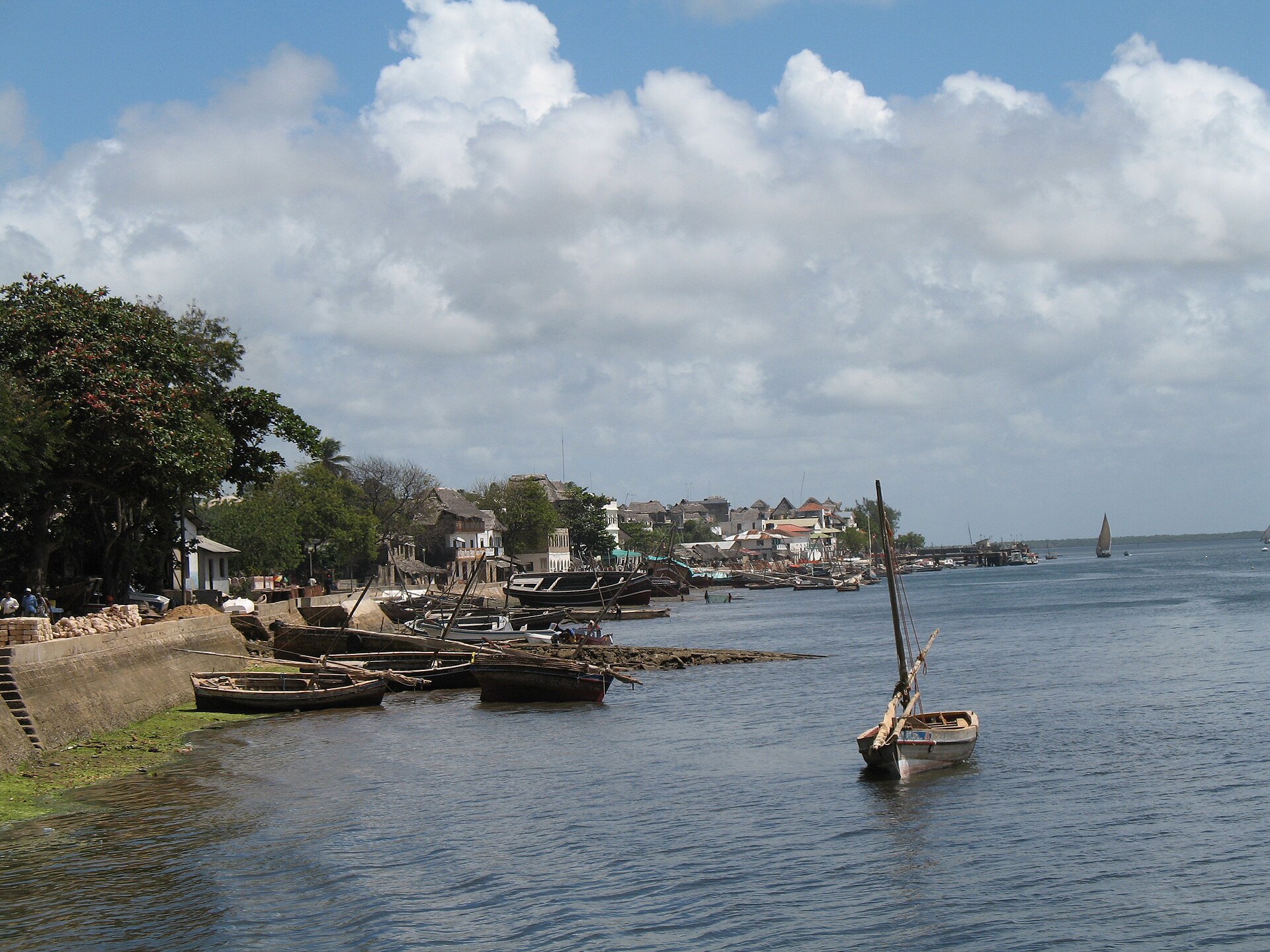
Lamu — Lamu Town, on Lamu Island off Kenya's northern coast, is believed to have been founded in 1370. It is the country's oldest continuously inhabited town and one of the original Swahili settlements of the East African coast. To get there, travellers take the road 341 kilometres north-east from Mombasa to Mokowe Jetty, then cross the channel by boat.
Its original name was Amu. The town was first mentioned in writing by the Arab traveller Abu-al-Mahasini, who met a judge from Lamu visiting Mecca in 1441.
A golden age
From the late 17th to the early 19th century, Lamu enjoyed its golden age. It was governed as a republic by a council of elders known as the Yumbe and became a centre of poetry, politics, arts, crafts and trade. Many of its buildings date from this time, in a distinct classical style. It was also a place of learning, where women writers such as the poet Mwana Kupona enjoyed a higher standing than was usual elsewhere at the time.
What visitors see today
On the seafront stands Lamu Fort, completed in the early 1820s. The town has 23 mosques, including the Riyadha Mosque, built in 1900, and a sanctuary for the donkeys that remain the main way of getting around its narrow streets. The first post office on the East African coast opened here in 1888 and is now the German Post Office Museum.
Lamu Old Town is a UNESCO World Heritage Site and the headquarters of Lamu County, and it continues to enjoy a degree of local autonomy.
Background: Wikipedia.