Manu Dibango: the Douala saxophonist whose 'Soul Makossa' became Africa's most sampled song
His 1972 hit fused makossa, jazz and funk, earned two Grammy nominations and echoed through Michael Jackson's 'Thriller'.
Lire cet article en français →
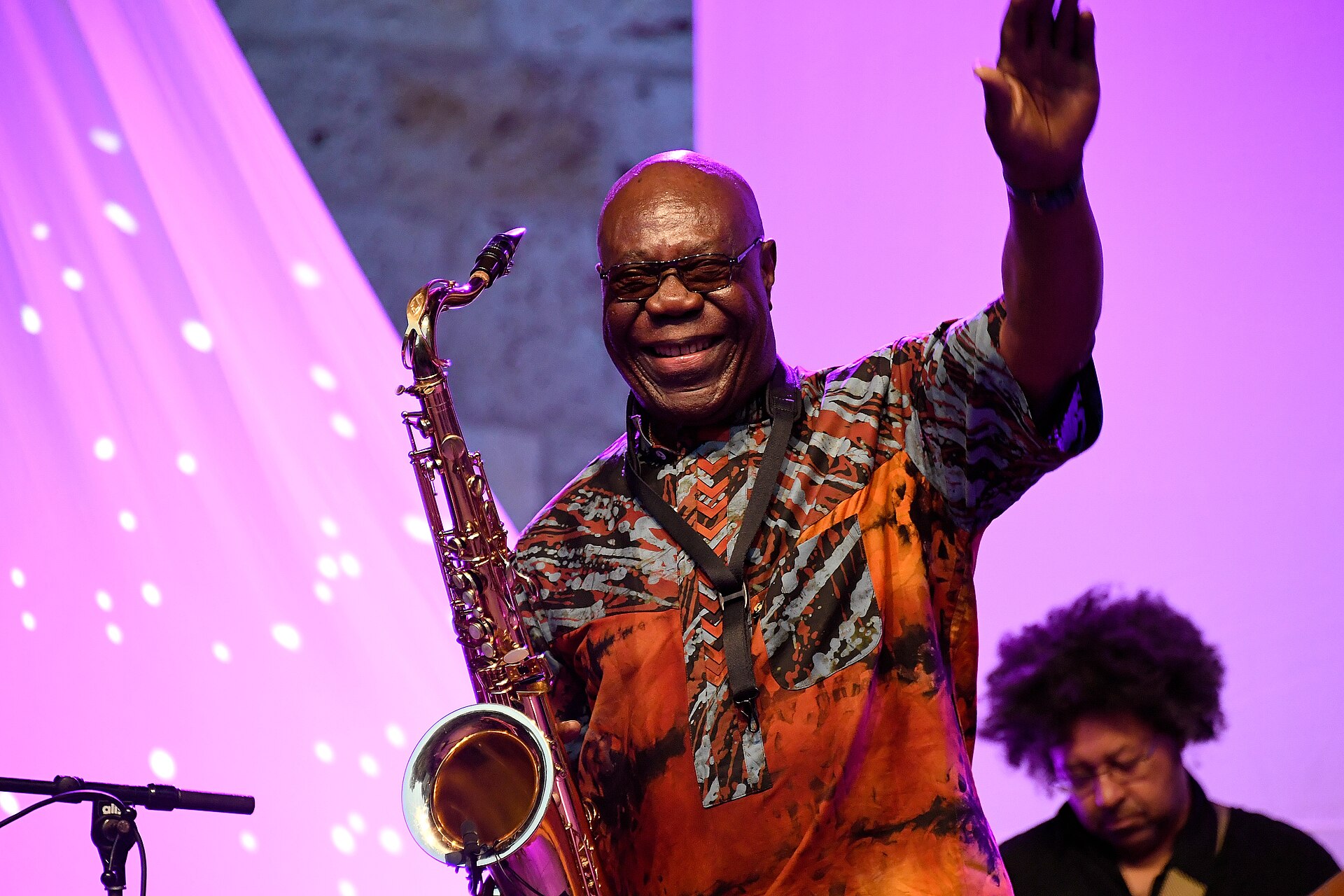
Douala — Emmanuel N'Djoké "Manu" Dibango was a Cameroonian saxophonist, vibraphonist and songwriter who blended jazz, funk and the music of his homeland into a sound the whole world danced to. His 1972 single "Soul Makossa" is often called the most sampled African song, and Dibango the most sampled African musician.
From Douala's church choir
He was born in Douala on 12 December 1933, to a Yabassi father and a Duala mother who ran her own fashion business. As a boy he went to Protestant church every evening, where he learned music quickly. He later went to school in France, played in French jazz clubs and moved to Belgium.
African Jazz and Kinshasa
In Brussels he was hired by Joseph Kabasele, "Le Grand Kallé", whose band African Jazz was leading a Congolese music revolution. In 1959 Kabasele recorded the pan-African anthem "Indépendance Cha Cha" and invited Dibango to Léopoldville, today's Kinshasa. Over his career he played with Fela Kuti, Herbie Hancock, Ladysmith Black Mambazo, King Sunny Adé and the Cuban star Eliades Ochoa.
Soul Makossa
Makossa is a Cameroonian urban dance music; the word means "(I) dance" in Duala. "Soul Makossa" made it a global hit and earned Dibango two Grammy nominations in 1974. Its chant, "Ma ma-se, ma ma-sa, ma ma-kossa", turned up in Michael Jackson's "Wanna Be Startin' Somethin'" on Thriller; Jackson admitted borrowing it and the matter was settled out of court. Rihanna's "Don't Stop the Music" later used the same hook.
Standing up for artists
Dibango was the first chairman of the Cameroon Music Corporation, fighting for musicians' royalties, and became a UNESCO Artist for Peace in 2004. He died on 24 March 2020, aged 86.
Background: Wikipedia.