Nigeria and Kenya vote in 2027. Will their young people?
Both countries spent 2026 signing up young voters by the million. The numbers look similar. The politics behind them do not.
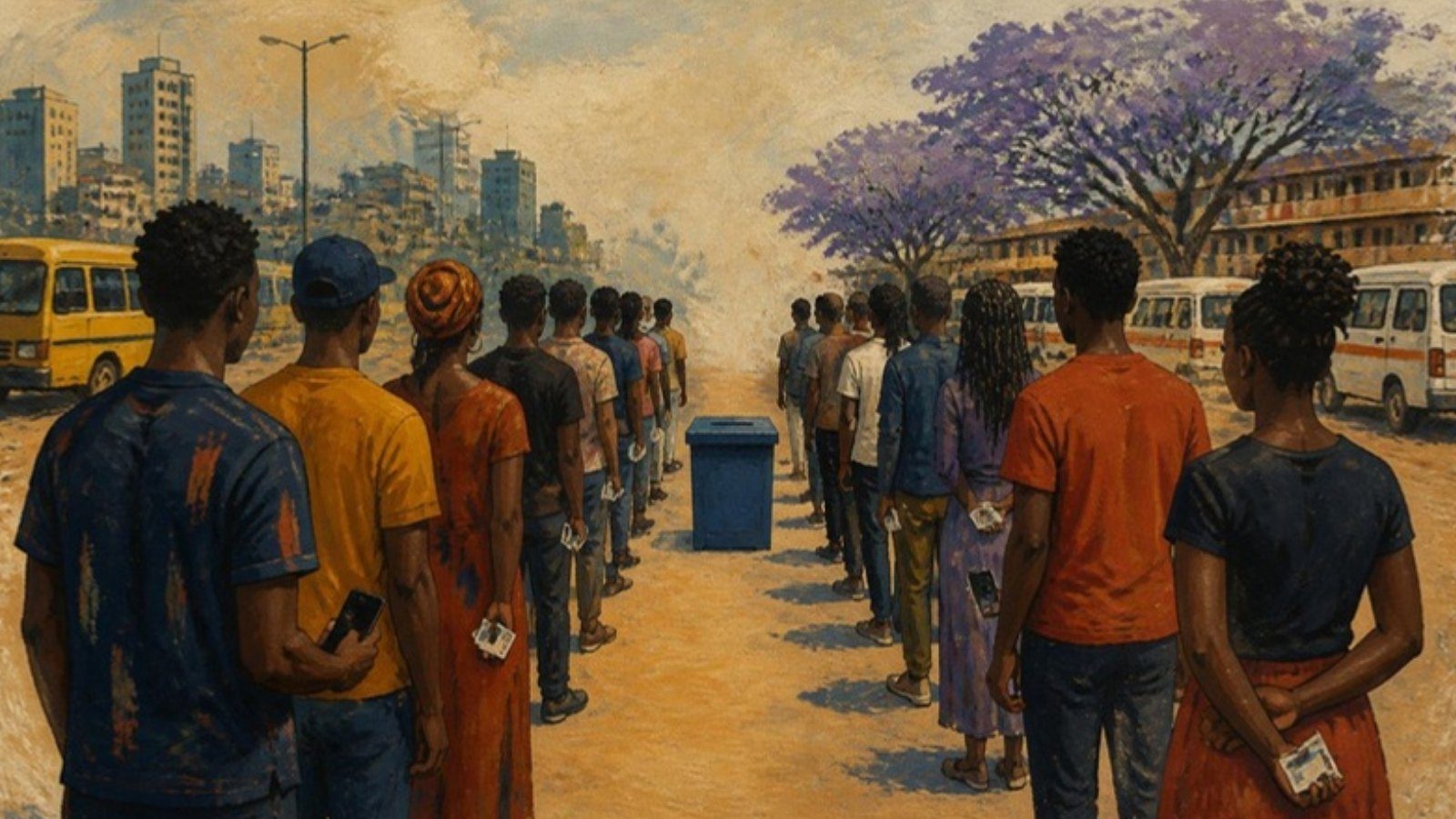
Lagos — Nigeria and Kenya, two of Africa's largest democracies, both go to the polls in 2027: Nigeria on 16 January, when it elects a president, and Kenya later in the year. In both, 2026 has been the year of the voter register, and in both the story of the register has been a story about the young.
The headline figures point the same way. What lies behind them is different, and the difference says something about how young Africans are choosing to do politics.
Nigeria: a big register, an older one than it looks
Nigeria's electoral commission says 9,324,349 young Nigerians were newly registered during this year's registration exercises. It has appointed youth ambassadors to carry the message further, on the reasoning, in the words of its chairman, Professor Joash Amupitan, that young people respond to voices they trust.
But new registrants are not the whole register. Figures the commission presented at a meeting marking 100 days to the election show:
- voters aged 18 to 34: 29,777,576, or 28.79% of the register;
- voters aged 35 to 49: 43,265,946, or 41.83%, the largest group;
- voters aged 70 and above: 7.16%.
So the under-35s, for all their numbers, are the second-largest block, not the first.
There is also a gap between being young and being registered. A survey across 34 tertiary institutions, discussed at an event hosted by the Centre for Journalism Innovation and Development in August, found that 52.1% of respondents were not registered to vote. Among those aged 18 to 21 it was about 59%. The survey covered students, so it does not describe the whole country.
The reasons they gave were practical and political at once: long queues, distant registration centres, an online portal that was hard to use, poor internet, and distrust of the system. A senior official of the electoral commission at the same event acknowledged that the commission has a trust deficit and said it was working to close it.
And registering is not voting. Turnout in Nigeria's 2023 elections was 26.72% of registered voters.
Then there is the question of who is on the ballot. The final list has 18 presidential candidates. The youngest is 35. The oldest, Atiku Abubakar, is 79.
Kenya: a movement that started in the street
Kenya's electoral commission set itself a target of 6.3 million new voters before the 2027 election. Of those, 5.1 million were expected to be members of Generation Z, born between 2006 and 2009 and too young to vote in 2022. Meeting the target would lift the register from 22.1 million to about 28 million.
A 30-day mass registration drive ran from 30 March to 28 April. The commission's final report counts 2,345,476 people registered in those 30 days and 2,612,725 since continuous registration resumed in September 2025. Its chairperson, Erastus Ethekon, called young people the energy that powered the exercise. That still leaves the commission well short of 6.3 million.
What is distinctive in Kenya is where the energy came from. In 2024, protests led by young people against a finance bill forced the government to withdraw it and the president to dissolve his cabinet. Out of that came a campaign, Niko Kadi, which loosely means "I am a registered voter", begun by young people to turn street anger into votes.
It has been successful enough that everyone now wants a share of it. President William Ruto has joined in. His former deputy, Rigathi Gachagua, accuses him of trying to hijack it and tells young people that registering is the way to remove him.
Kenya has the same weak point as Nigeria. The electoral commission's own review found that turnout among young voters in 2022 was remarkably low. One of its commissioners, Anne Nderitu, has said the real issue is not the numbers but the gap between potential and actual participation.
Side by side
- When they vote. Nigeria: 16 January 2027, for president. Kenya: later in 2027.
- What drove youth registration. Nigeria: the electoral commission's own drive and its youth ambassadors. Kenya: a youth-led campaign, Niko Kadi, born of the 2024 protests.
- The headline number. Nigeria: 9.3 million young people newly registered in 2026. Kenya: 2.6 million new voters since September 2025, against a target of 6.3 million.
- Young people's weight. Nigeria: 18 to 34-year-olds are 28.79% of the register. Kenya: 17.8 million Kenyans will be aged 18 to 34 in 2027.
- The warning sign. Nigeria: 26.72% turnout in 2023, and half of the students surveyed unregistered. Kenya: youth turnout in 2022 described as remarkably low.
What to watch
In Nigeria the test comes first and soon. If the newly registered turn out in January, the 18-to-34 block is large enough to matter anywhere. If turnout stays near 2023's level, the register will have grown without the electorate changing.
In Kenya the question is whether a movement that has already forced a government to back down once can do the slower work of voting. Its politicians evidently think it can, which is why they are competing to wear its slogan.
In neither country is the outcome settled by registration figures. They measure who could vote. The elections will show who does.
Sources: Nigeria's Independent National Electoral Commission figures as reported by ThisDay and Business Post; the Centre for Journalism Innovation and Development, via AllAfrica; Nairametrics; Kenya's Independent Electoral and Boundaries Commission figures as reported by the Kenya News Agency and the Daily Nation.