Old skulls reopen the question of sacrifice in ancient Egypt
A new study of 46 skulls from the tombs of Egypt's first kings finds injuries around the time of death in 18 of them.
Lire cet article en français →
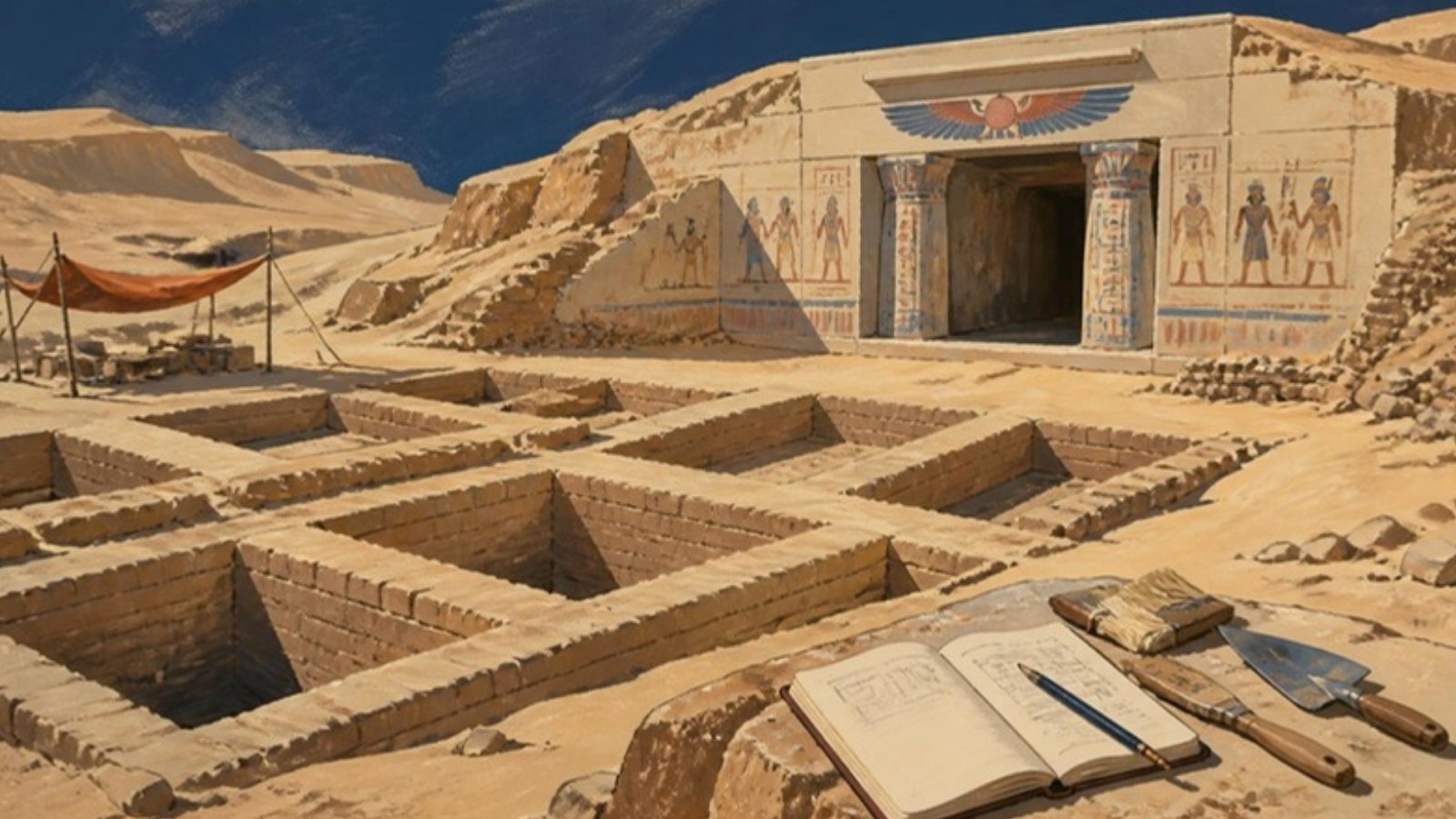
Abydos — Skulls dug up more than a century ago from the graves around Egypt's earliest royal tombs show signs of violence at the time of death, a new study has found, Daily News Egypt reports.
The finding revives an old debate: whether servants and officials were killed to be buried with the first pharaohs.
The graves
The remains come from Umm el-Qa'ab at Abydos in Upper Egypt, the burial ground of the First Dynasty kings, who ruled from roughly 3078 to 2900 BCE. Around each royal tomb are rows of smaller graves holding members of the royal household, officials and craftspeople.
The British archaeologist Flinders Petrie excavated them. The skulls studied are held in the Duckworth Laboratory collection at the University of Cambridge.
What the study found
Roselyn Campbell, an anthropologist at Purdue University in the United States, examined 46 of the skulls using modern forensic methods.
She found injuries sustained around the time of death in 18 of them, about 39% of the sample. They include linear fractures and wounds made by a sharp weapon.
"The main problem was not necessarily a lack of evidence, but the limitations of the methods available to early researchers," she said.
The study is published in the journal Frontiers in Environmental Archaeology.
This report is based on reporting by Daily News Egypt.