Rooibos: the red bush that grows only in South Africa's Cederberg
Farmed in a 60,000-hectare patch north of Cape Town, the caffeine-free tea now has protected origin status in the European Union.
Cederberg — A broom-like shrub from a small mountain area of the Western Cape has become a global drink. Rooibos, Afrikaans for "red bush", is farmed exclusively in about 60,000 hectares of the Cederberg, some 250 kilometres north of Cape Town.
From hillside to export
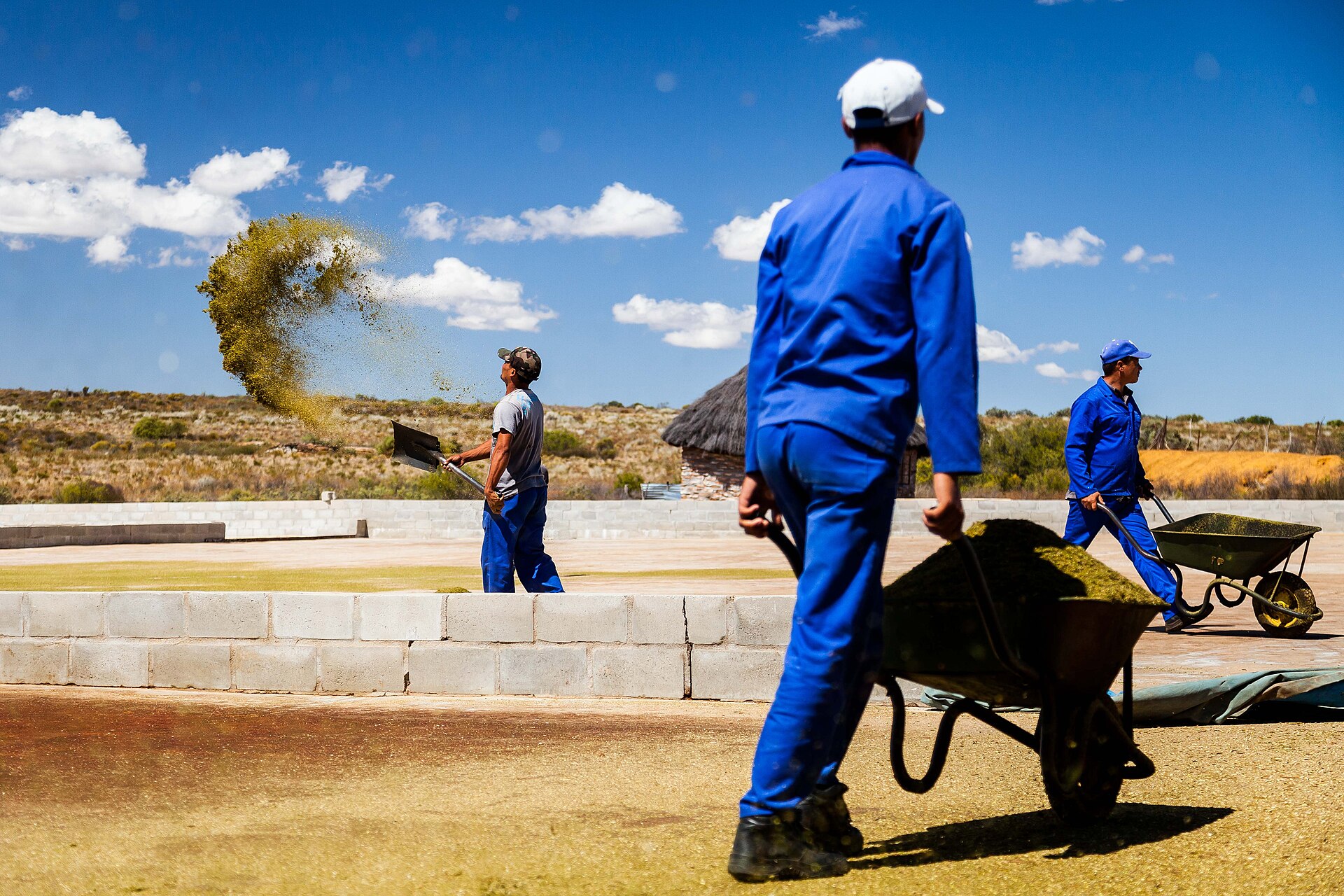
Workers cut the bushes in summer, when the industry is a major employer in the region, and lay them in the sun. The drying turns the green leaves a dark red. The high-grade product is exported, with Germany and the rest of the European Union the major consumers.
The infusion has been drunk in southern Africa for generations and has been more widely consumed abroad since the early 2000s. It contains no caffeine and is low in tannins compared with black or green tea. It is served plain, with milk, lemon, sugar or honey, and increasingly as lattes, cappuccinos and iced tea.
Building an industry
The roots of the commercial trade go back to 1904, when the businessman Benjamin Ginsberg experimented with curing the leaves at Rondegat Farm, drawing on the Chinese method of fermenting Keemun tea in barrels. The great hurdle for growers was that seeds were hard to find and hard to germinate.
The name is now protected in South Africa and holds protected designation of origin status in the EU. That means a name, and a place, that belong to the region where the plant grows.
Background: Wikipedia.