South Africa's cervical cancer vaccine is working
Infection with the virus behind the disease is 83% lower among teenage girls who were offered the jab. Now a doctor born two kilometres away is taking same-day screening to rural Mpumalanga.
Bushbuckridge — Twelve years after South Africa began vaccinating schoolgirls against the virus that causes cervical cancer, the evidence that it works is in. A landmark study has found that rates of the human papillomavirus, or HPV, were 83% lower among 17- and 18-year-old girls who had been eligible for the vaccine than among girls of the same age before the programme, Daily Maverick and the health news service Spotlight report.
About 3.6 million girls have been vaccinated since the programme began in 2014 as a joint effort of the health and basic education departments. It now covers girls in public, private and independent schools.
A gynaecological oncologist at Stellenbosch University, Professor Hennie Botha, calls it a major win, and describes the vaccine as highly effective and good value for money.
Why it matters
Cervical cancer is the second most common cancer among South African women and the second biggest cause of cancer death, after breast cancer in both cases. In 2024 it killed 5,165 South African women, according to the International Agency for Research on Cancer.
Those deaths are largely preventable, says Dr Nonhlanhla Ndlovu, a deputy director-general in the national health department, through vaccination and early detection.
The clinic that comes to you
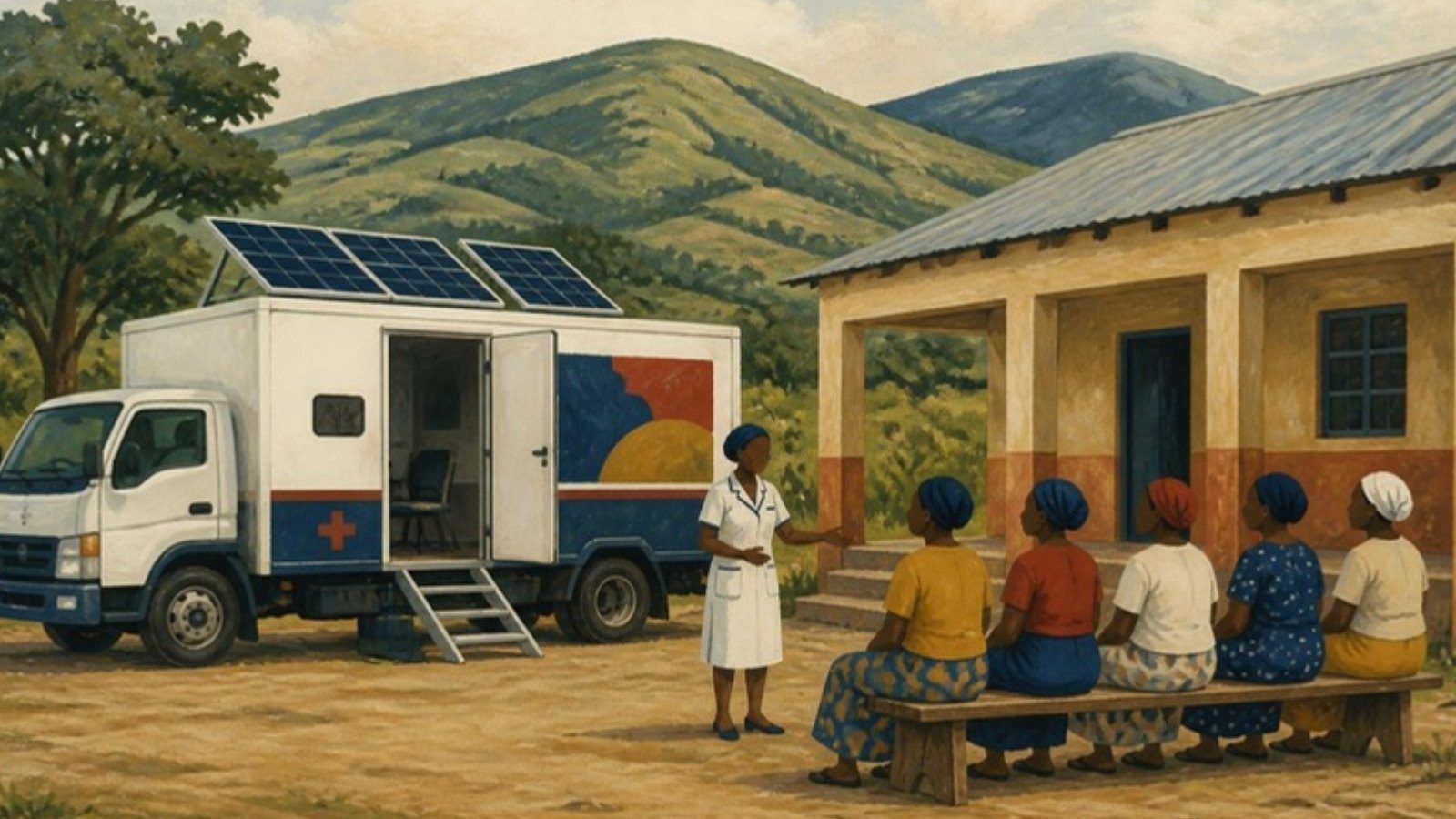
Early detection is where the second advance comes in. On 1 October, a purpose-built mobile clinic was unveiled at a community hall in Bushbuckridge, in Mpumalanga.
It runs on solar power, cost R2 million, and is a partnership between the provincial health department and Discovery Health, with the Breast Health Foundation as its driving force. It will move around the area and see about 20 patients a day.
What sets it apart is speed. A woman can be tested for the high-risk strains of HPV and have the result in about an hour, and if a precancerous lesion is found it can be treated the same day. The test runs on a machine normally used to screen for tuberculosis, and uses a shallow swab that a woman can take herself.
Compare that with the usual route. Results from a state laboratory can take up to 12 weeks, some patients never come back for them, and even after a positive result a procedure can be two or three months away.
One of the two specialists staffing the clinic, Dr Vincent Shongwe, was born at a hospital about two kilometres from where it was launched. A member of his family died of cervical cancer, and his mother was treated for a malignant lesion and is well.
Made in Khayelitsha
The rapid test has South African roots. The late Professor Lynette Denny, of the University of Cape Town, helped to develop and validate HPV testing on that machine in Khayelitsha about a decade ago, and wanted it used across the country.
Traditional healers are part of the plan as well. The foundation trains them in cancer awareness, and a healer at the launch, Chantel Mokoena, said many people with cervical cancer do not disclose it.
What is still to do
- Coverage among girls in the target group is 78%, according to Professor Helen Rees of the University of the Witwatersrand. The World Health Organization's benchmark is 90%.
- Private schools have been slower, because parents there have been more hesitant to consent.
- Vaccinating boys would be needed to prevent the virus fully, Dr Ndlovu says, but the cost currently rules it out.
- Rapid tests and self-sampling are, in her words, on the horizon, but the department cannot yet budget for a national roll-out.
In 2025, 928,811 women were screened for HPV in the public sector, and high-risk strains were found in 322,611 of them.
A Grade 10 pupil, Manala Makua, put the remaining task simply at a national webinar on 8 October: teenagers have a right to know what they are being given, and adults should talk to them, not only about them.
This report is based on reporting by Biénne Huisman for Daily Maverick and Spotlight. Daily Maverick notes that Discovery Health paid for the reporter's travel and accommodation.