The Avenue of the Baobabs: Madagascar's 'mothers of the forest' on a dirt road at sunset
Some 25 giant Grandidier's baobabs, 30 metres tall, line a road near Morondava. They are what is left of a forest, and locals chose to keep them.
Lire cet article en français →
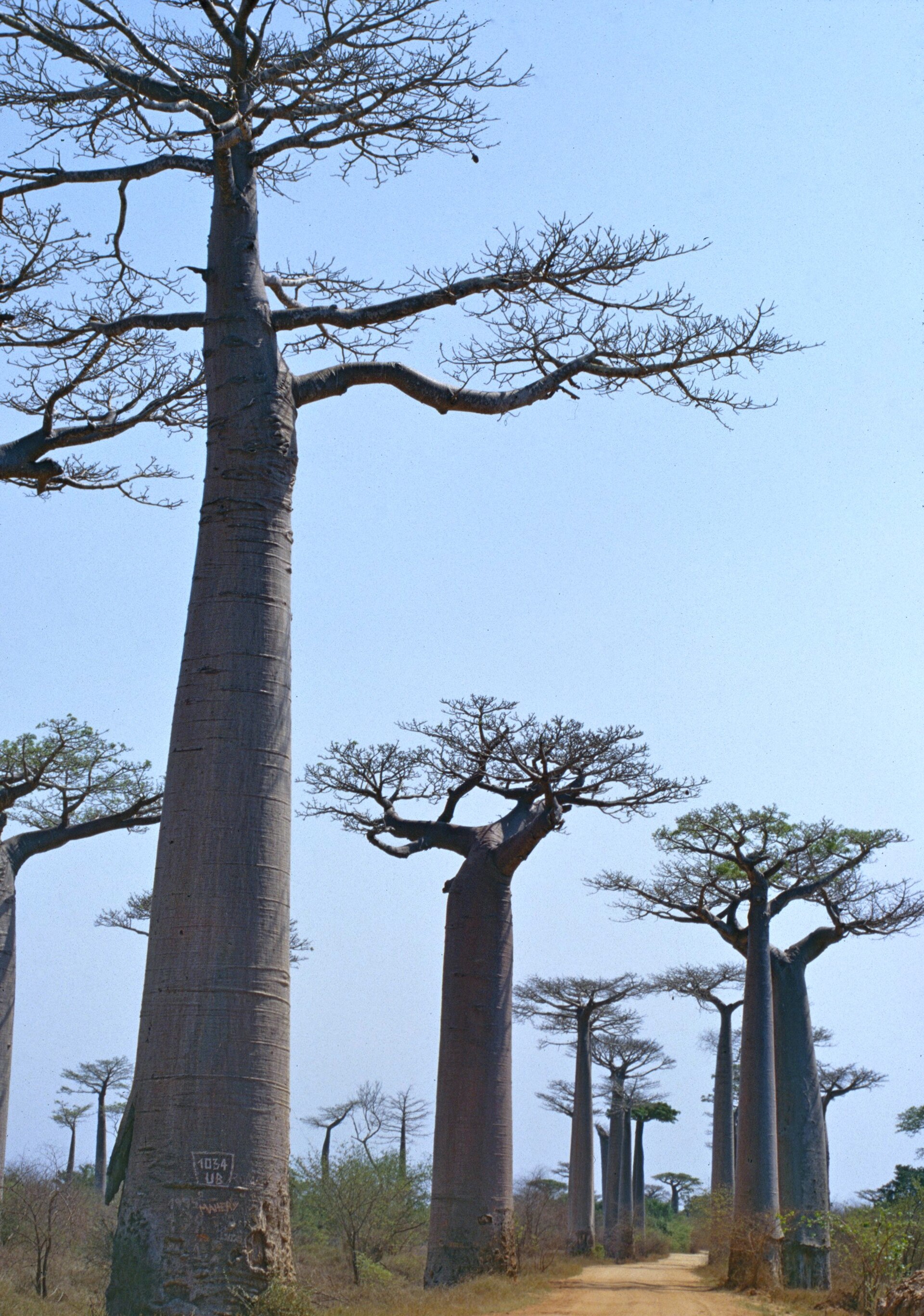
Morondava — On a dusty stretch of road in western Madagascar stands one of the most photographed landscapes in Africa: the Avenue of the Baobabs. Along about 260 metres of Road No. 8, between Morondava and Belon'i Tsiribihina in the Menabe region, some 20 to 25 giant baobabs rise from the flat land like columns. About 25 more grow in the rice paddies and meadows nearby.
Mothers of the forest
The trees are Grandidier's baobabs, Adansonia grandidieri, a species found only in Madagascar, and they reach about 30 metres high. In Malagasy they are called renala or reniala, from reny ala, "mother of the forest". They did not always stand alone. They are a legacy of the dense tropical forest that once covered the area. As the population grew and land was cleared for farming, local people chose to spare the baobabs, valued for themselves and as a source of food and building material.
The baobabs in love
About seven kilometres to the north-west stand the Baobab Amoureux, two trees of another Malagasy species, Adansonia za, that have grown twisted around each other. Legend says they were a young man and woman from nearby villages who were promised to others, and who asked their god to let them live together for ever.
Protecting the giants
The avenue was given temporary protection in 2007 and has been a natural monument under conservation since 2015, Madagascar's first. The trees still face threats from deforestation, run-off from encroaching rice fields and bushfires, and the Malagasy organisation Fanamby works with local people to protect them. Visitors pay a small parking fee, and the best time to come is at sunrise or sunset, when the trunks turn gold.
Background: Wikipedia.