The Island of Mozambique: the small island that gave a country its name
Three kilometres long and a World Heritage Site, it holds a 16th-century fort, a chapel described as the oldest European building in the Southern Hemisphere, mosques, a Hindu temple and the reed houses of Makuti Town.
Lire cet article en français →
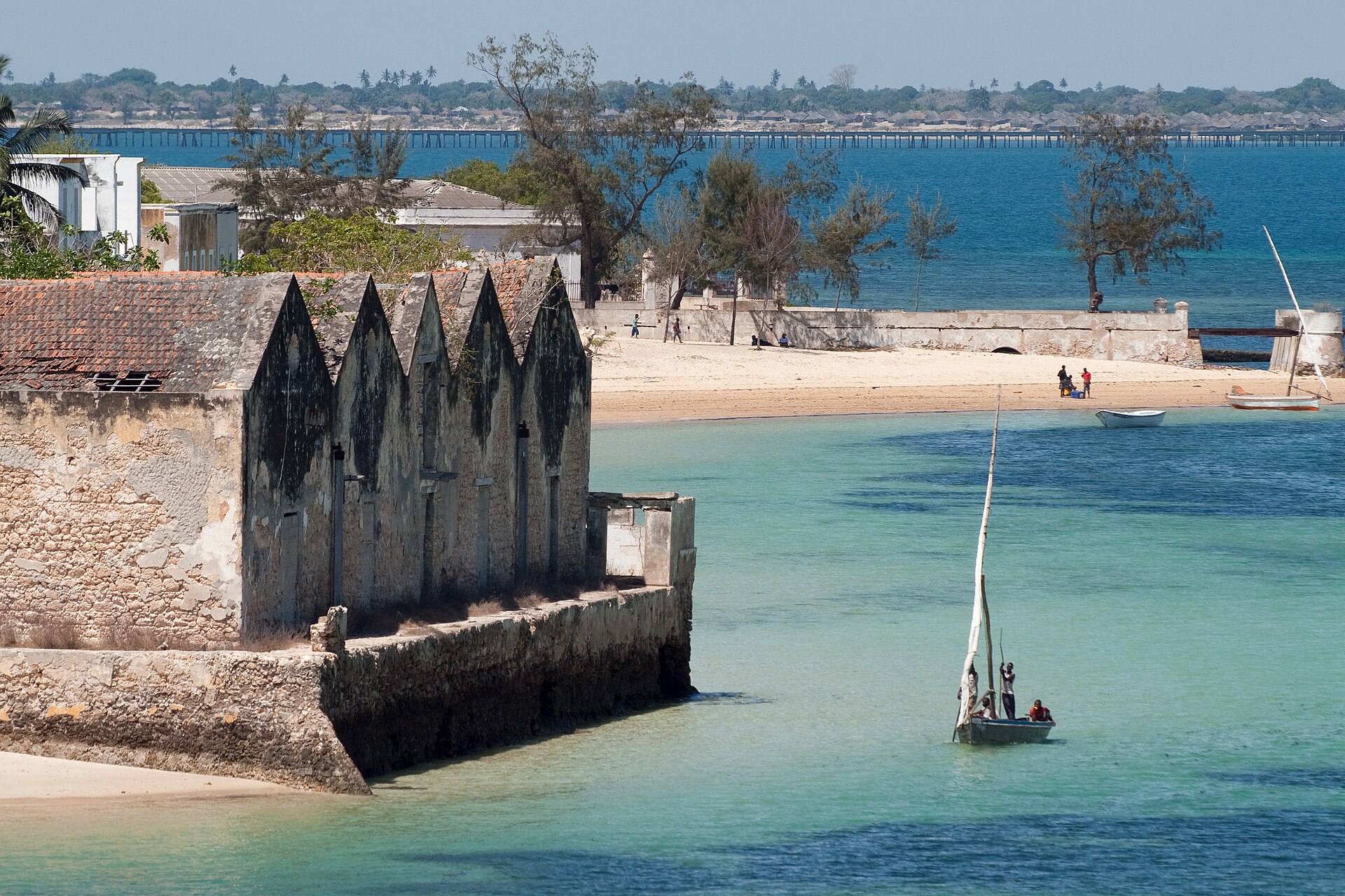
Ilha de Moçambique — Off the coast of Nampula province, between the Mozambique Channel and Mossuril Bay, lies an island only about three kilometres long and 200 to 500 metres wide. It gave its name to a whole country.
Swahili roots
Pottery shows the town existed by the 14th century at the latest. According to tradition, its first Swahili inhabitants came from Kilwa, and in 1514 a visitor noted that its Muslim people spoke the same Swahili dialect as Angoche. The name comes from Ali Musa Mbiki, the island's sultan when Vasco da Gama arrived; it was later given to the mainland.
The Portuguese set up a port in 1507 and in 1522 built the Chapel of Nossa Senhora de Baluarte, considered the oldest European building in the Southern Hemisphere. Fort São Sebastião followed in the 16th century, and the island served as the capital of Portuguese East Africa until 1898, when the capital moved to Lourenço Marques, now Maputo.
A living heritage town
The northern end, known as Stone Town, holds most of the historic buildings: the Palace and Chapel of São Paulo, built in 1640 and now a museum; the Museum of Sacred Art, with a celebrated Makonde crucifix; and a neo-classical hospital from 1877, once the largest south of the Sahara. The island also has several mosques and a Hindu temple. Most of its roughly 14,000 residents live in the reed houses of Makuti Town at the southern end.
A three-kilometre bridge built in the 1960s links it to the mainland. Now a UNESCO World Heritage Site, it is one of Mozambique's fastest-growing tourist destinations.
Background: Wikipedia.