A Congolese photographer puts the women history left out back in the frame
Pamela Tulizo's series Mababu uses costume and staged scenes to portray African women who resisted slavery and colonisation.
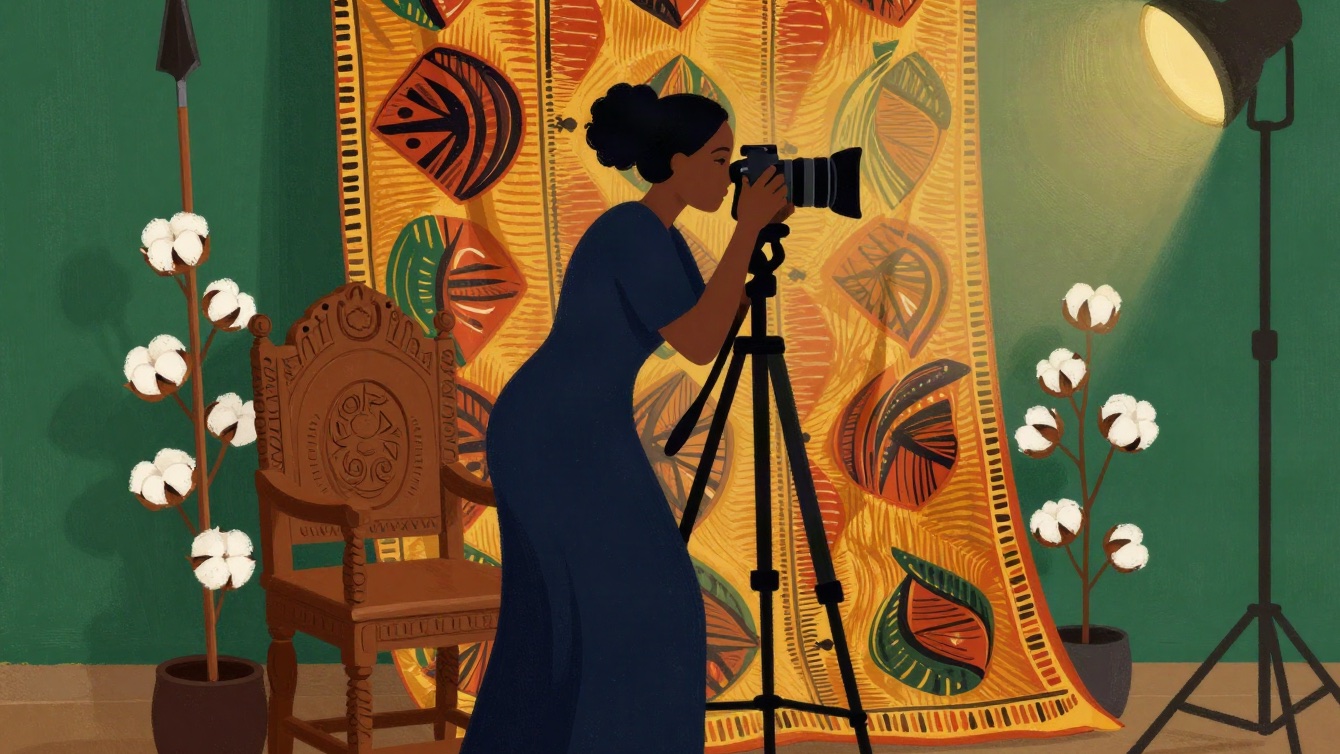
Goma — The Congolese artist Pamela Tulizo has made a series of 23 staged photographs that place women at the centre of the history of slavery and resistance, the Guardian reports.
The series is called Mababu, the Swahili word for ancestors. In it, Tulizo portrays figures including Kimpa Vita and Queen Nzinga, both remembered for resisting European colonisation in the 17th and early 18th centuries. Cotton, tobacco and sugar cane, the commodities that drove the transatlantic slave trade, appear throughout the images.
Where the idea came from
Tulizo grew up in Goma, in the east of the Democratic Republic of Congo, surrounded by her mother, sisters and neighbours. She told the Guardian the project began with a question about where the strength of the women around her came from.
Her research led her to slavery, a history usually told through the men who were taken across the ocean. Women, she found, were largely missing from the account. She says she wanted to challenge the portrayal of African women as victims by showing that they endured and fought for freedom.
A hard road into photography
Tulizo began as a reporter and turned to photography to cover what she could not write about. There was nowhere to train in Goma, so she taught herself, becoming one of only a few women photographers in the city. She says neither her family nor other photographers accepted her at first, and that the obstacles made her more determined.
Her earlier work Double Identity won the Dior photography award in 2020.
This report is based on reporting by the Guardian.