Abebe Bikila: the barefoot soldier who conquered Rome and then Tokyo
Ethiopia's first Olympic champion won the 1960 marathon without shoes, then became the first to defend the title, both in world record time.
Lire cet article en français →
Addis Ababa — When new running shoes gave him blisters in Rome in 1960, Abebe Bikila decided to run the Olympic marathon without any. That night he crossed the line at the Arch of Constantine in 2:15:16.2, a world record, and became Ethiopia's first Olympic gold medallist.
The Imperial Guard runner
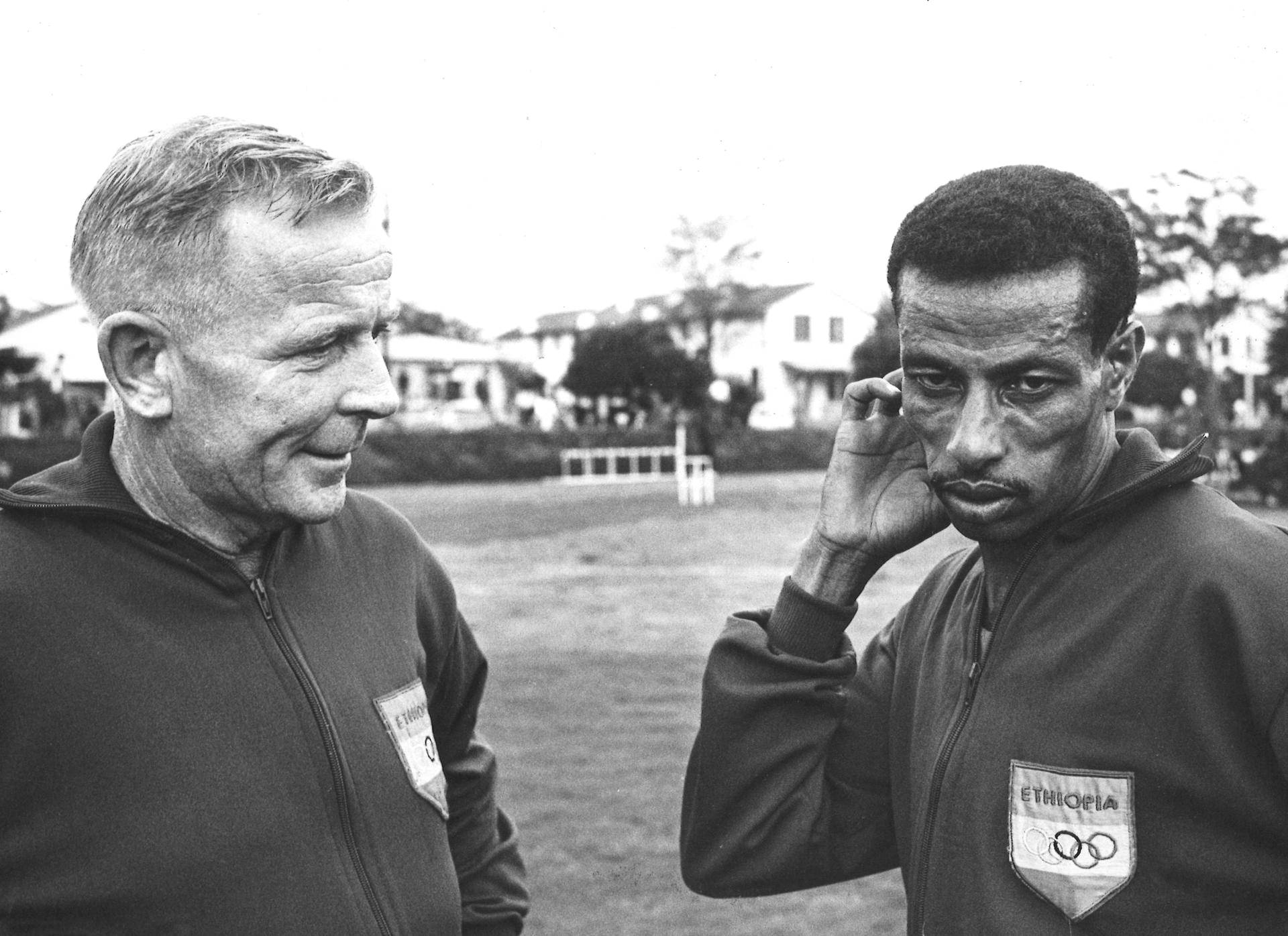
Born in 1932 in the small community of Jato, in Shewa, he moved to Addis Ababa and joined the Imperial Guard. In the mid-1950s he ran 20 kilometres from the hills of Sululta to the capital and back every day. The Swedish coach Onni Niskanen noticed him and trained him for the marathon.
The Rome course twice passed the Obelisk of Axum, then standing in the Italian capital. Afterwards he touched his toes, ran on the spot and said he could have gone on for another 10 to 15 kilometres.
Tokyo, weeks after surgery
In 1964 he had his appendix removed on 16 September. On 21 October he lined up in Tokyo, this time in shoes, and won in 2:12:11.2, again a world record, finishing more than four minutes clear. No athlete had defended the Olympic marathon title before.
A wider legacy
A 1969 car accident left him paralysed, yet he went on to compete in archery and table tennis at the 1970 Stoke Mandeville Games, a forerunner of the Paralympics. He died in 1973, aged 41, after a cerebral haemorrhage linked to the accident. A national day of mourning was declared.
The stadium in Addis Ababa bears his name. Writers credit him with opening the way for generations of East African distance runners, including Haile Gebrselassie, Paul Tergat and Tegla Loroupe.
Background: Wikipedia.