Abu Simbel: the temples Africa and the world moved to save
Cut into blocks by handsaw and rebuilt on higher ground, Ramesses II's twin temples escaped the rising Nile in the 1960s.
Lire cet article en français →
Abu Simbel — In southern Egypt, near the border with Sudan, four giant figures of Ramesses II stare out across Lake Nasser. They were carved out of a mountainside in the 13th century BC. They now sit on a hill built by modern engineers, and that second story is as remarkable as the first.
A race against the water
The Aswan High Dam was going to raise the water at the site by up to 60 metres. Sandstone loses its strength when submerged, so doing nothing meant losing the temples. In 1959 an international campaign began to save the monuments of Nubia.
Early ideas included sealing the temples behind a dam and floating them on concrete barges. Egypt adopted a third plan in 1963: take the temples apart in the largest blocks possible, lift them and put them back together higher up. Engineers feared up to a third of the blocks could crack. To protect the carved surfaces, handsaws were used for almost all the cutting on the facades and interiors.
Rebuilt under an artificial hill
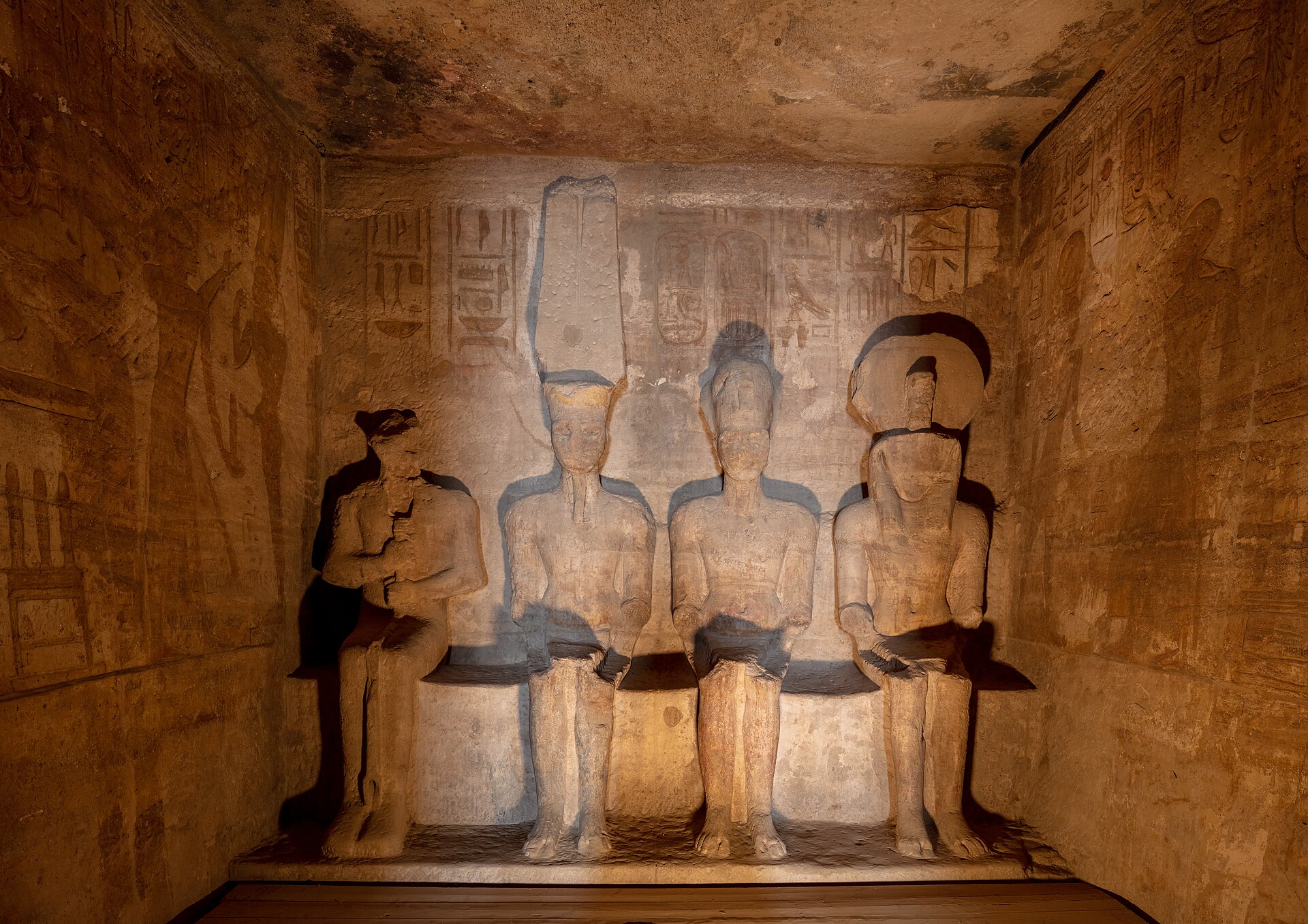
About 1,000 people were working at the site by spring 1964. On 22 February 1966 the team gathered at sunrise to check a famous effect: the sun's rays still reached the statues of Ramesses, Amun and Ra-Horakhty, more than 60 metres inside the Great Temple.
The work finished in 1968, 18 months ahead of schedule. Half the cost was borne by Egypt and half came from 48 countries. Hundreds of visitors now reach the temples each day, part of the UNESCO World Heritage Site known as the Nubian Monuments.
Background: Wikipedia.