Almost all of West Africa's cotton leaves as raw fibre. Growers say the money is made later.
On World Cotton Day, a South African industry voice argues the continent should spin, weave and sew more of what it grows, and points to one farmer's rise from four hectares to 200.
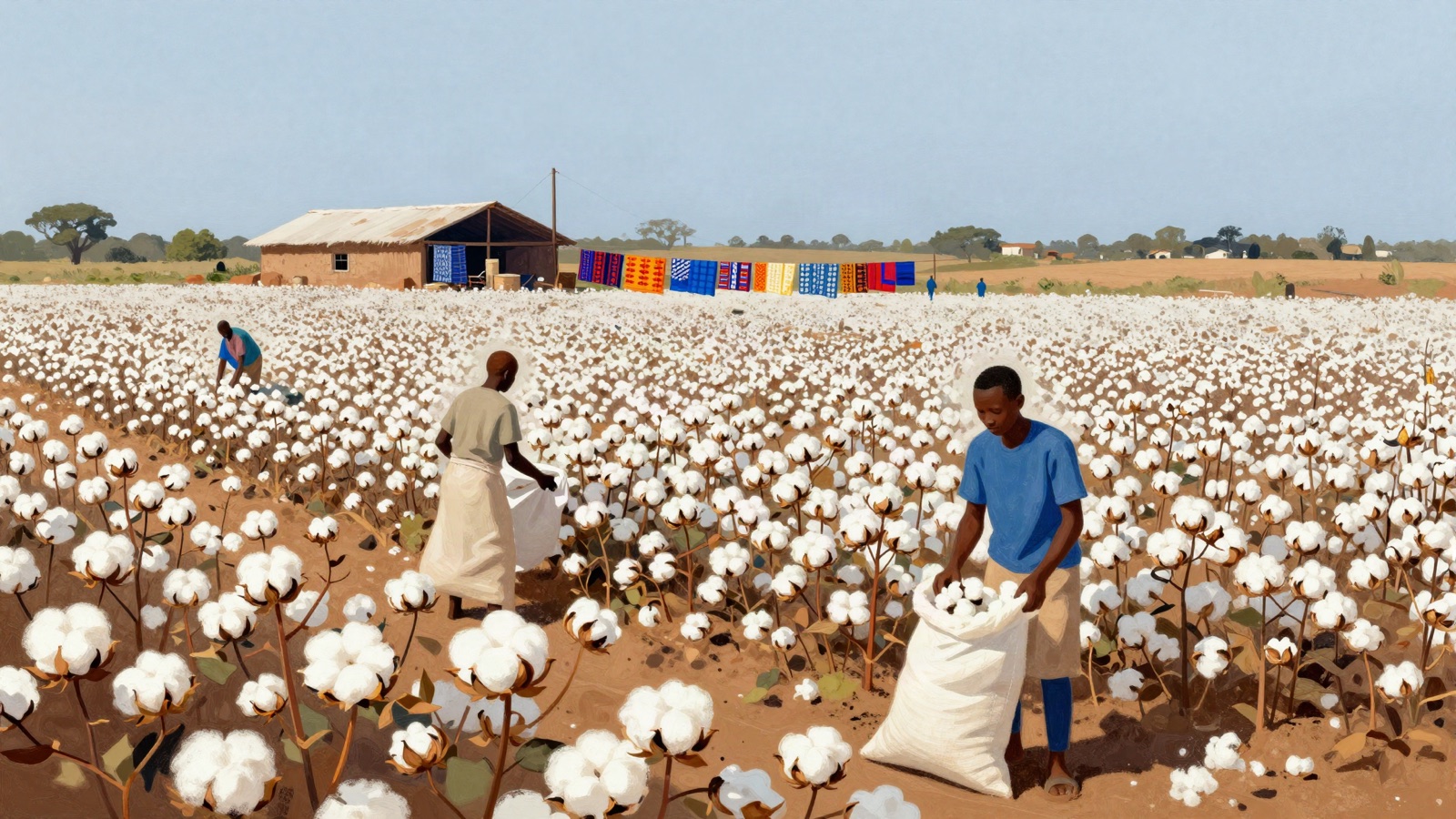
PANM — About 98 per cent of the cotton grown in West and Central Africa is exported as raw fibre, according to World Trade Organization figures from March. The spinning, weaving and garment-making that add most of the value happen somewhere else.
In an article published for World Cotton Day on 7 October by Bird Story Agency, Erica Vogel, a senior quality control officer at the industry body Cotton SA, argues that African producers should build complete value chains, from the farm through to manufacturing.
One farmer's example
Vogel points to Frans Malela, a South African farmer who left a job in Johannesburg and began growing cotton on four hectares in 1984. He now farms more than 200 hectares and employs about 40 seasonal workers. His yields rose from 800 kilograms a hectare to 1.2 tonnes in a normal season, and reached three tonnes in 2021/22.
She presents his story as evidence of what support for growers, clear standards and reliable links to buyers can do.
A home-grown standard
South Africa is piloting its own sustainability benchmark, the South African Cotton Standard, over three years. It covers management, the environment, people and socio-economic impact, and is meant to give local spinners and retailers a product they can trace.
The piece is written from inside the industry and is an argument, not an independent assessment. But the figure at its centre is not in dispute: the continent sells most of its cotton before the profitable part begins.
This report is based on an article by Erica Vogel for Bird Story Agency, via AllAfrica.