Cesária Évora: the Barefoot Diva who carried morna to the world
Raised in poverty in Mindelo, she gave up singing for years, returned in her forties and won a Grammy in 2004.
Lire cet article en français →
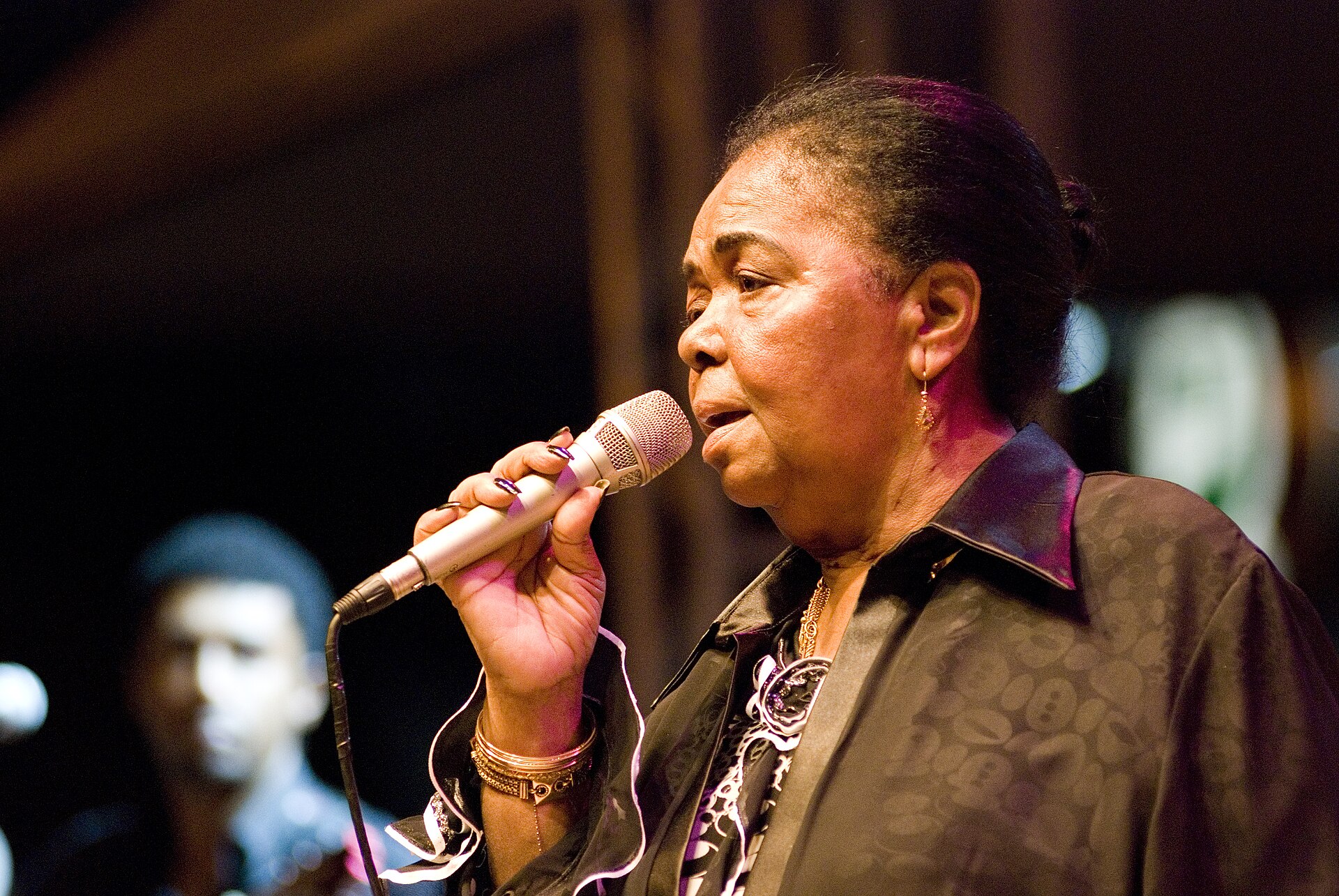
Mindelo — Cesária Évora sang of love, homesickness, nostalgia and the history of the Cape Verdean people, in Cape Verdean Creole, and she performed without shoes. It earned her a name that stayed: the Barefoot Diva.
The port of Mindelo
She was born in Mindelo, on São Vicente, on 27 August 1941, one of seven children. Her father, a violinist, died when she was young, and at 10 she moved to an orphanage because her family could not support her. At 16 she began singing morna and coladeira in local bars. The port's lively nightlife gave her venues, and Radio Mindelo gave her a wider audience.
She stopped singing when it did not earn enough to care for her children.
A return in her forties
In 1985 the Organization of Cape Verdean Women asked her to go to Portugal to record for a women's music anthology. In Lisbon she met the producer José "Djô" da Silva, who took her to Paris. Her debut, La Diva Aux Pieds Nus, came out in 1988.
Mar Azul became a hit, and Miss Perfumado in 1992 sold hundreds of thousands of copies. She toured Brazil, Canada, the United States, Africa and Europe.
The honours
Voz d'Amor won her a Grammy in 2004, and she received six nominations in all. She was also a World Food Programme ambassador and held the French Legion of Honour. She died on 17 December 2011, and her influence lives on in musicians of the Cape Verdean diaspora.
Background: Wikipedia.