Great Zimbabwe: the stone city that gave a nation its name
Built without mortar from the 11th century, Great Zimbabwe traded gold as far as China. Colonial authorities tried to deny Africans built it. They failed.
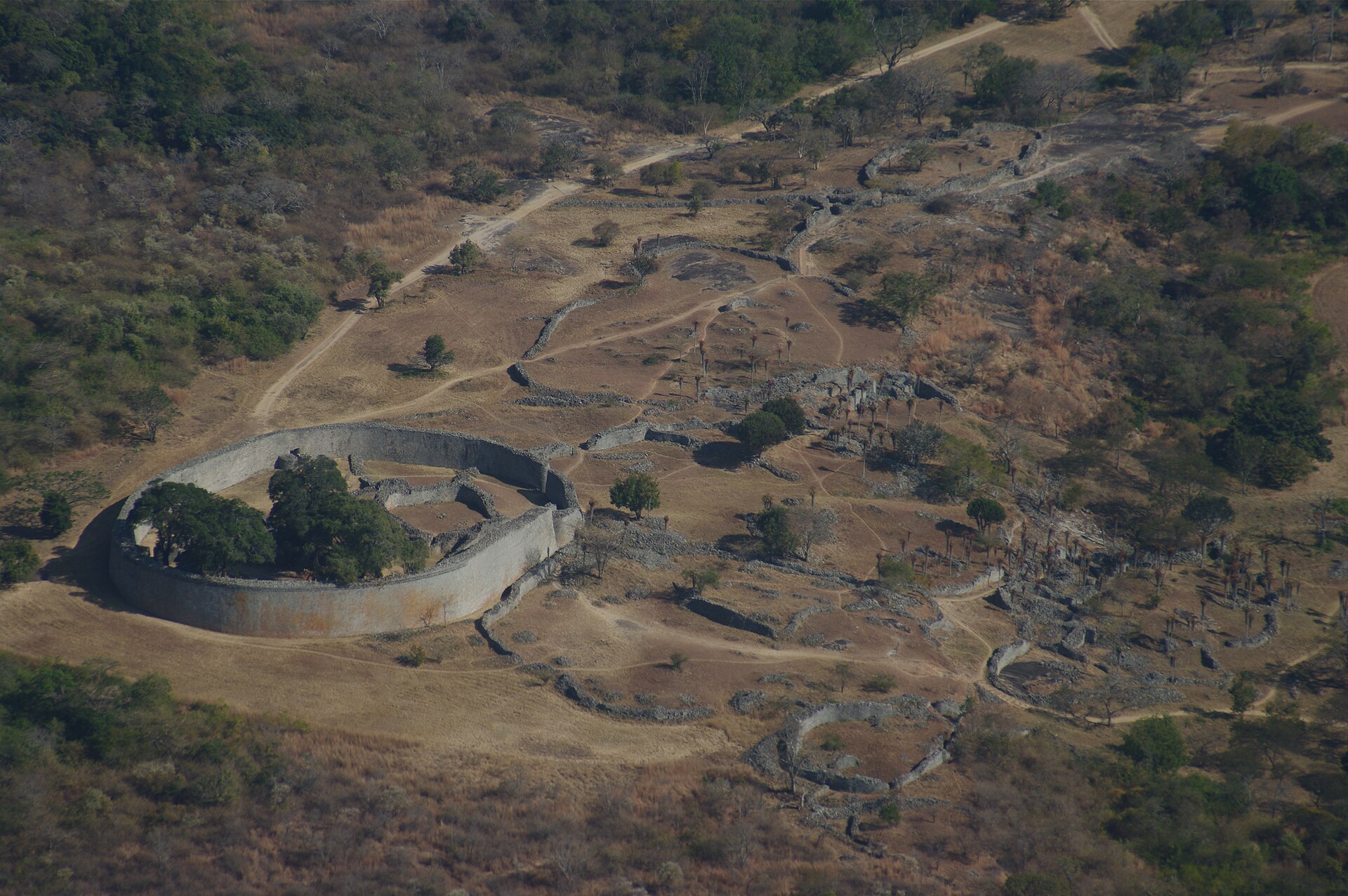
Masvingo — Near Masvingo in south-eastern Zimbabwe stand the walls of Great Zimbabwe, the largest pre-colonial stone structure in southern Africa. When the country won independence in 1980, it took the city's name, and the soapstone bird found there became a national symbol.
The city
- Built: stone construction began in the 11th century and continued for about 300 years; the site was abandoned in the 16th or 17th century.
- Size: about 730 hectares.
- People: older estimates put the peak at 18,000 to 20,000; a recent study suggests it was likely under 10,000.
What still stands
- The Hill Complex, the oldest part, occupied from the 11th to 13th centuries.
- The Great Enclosure, from the 13th to 15th centuries, whose dry-stone walls, laid without mortar, rise up to 11 metres and run about 250 metres. It was probably a royal residence.
- The Conical Tower, about 9 metres tall, between the Enclosure's two walls.
- The Valley Complex, from the 14th to 16th centuries.
The Zimbabwe birds
Eight carved soapstone birds once stood on top of monoliths. They are thought to show the bateleur eagle, in Shona culture a messenger and a sign of good fortune.
A trading power
Great Zimbabwe grew rich on gold and ivory sent through Swahili coastal ports such as Sofala into the Indian Ocean trade. Archaeologists have found Chinese porcelain, glass beads and items linked to Persia.
The truth wins
Under Rhodesian rule, officials pressured archaeologists to deny that Africans had built the city. Gertrude Caton-Thompson showed in 1929 that it was African-built; by the 1950s that was the scholarly consensus. Great Zimbabwe became a UNESCO World Heritage Site in 1986, and it stands as proof of what African builders, traders and rulers achieved centuries ago.
Background: Wikipedia.