Mo Ibrahim: the engineer who bet on Africa's phones, then on its leaders
When banks would not lend, he built Celtel across 14 countries and sold it for $3.4bn. He then set up a $5m prize for good governance.
Lire cet article en français →
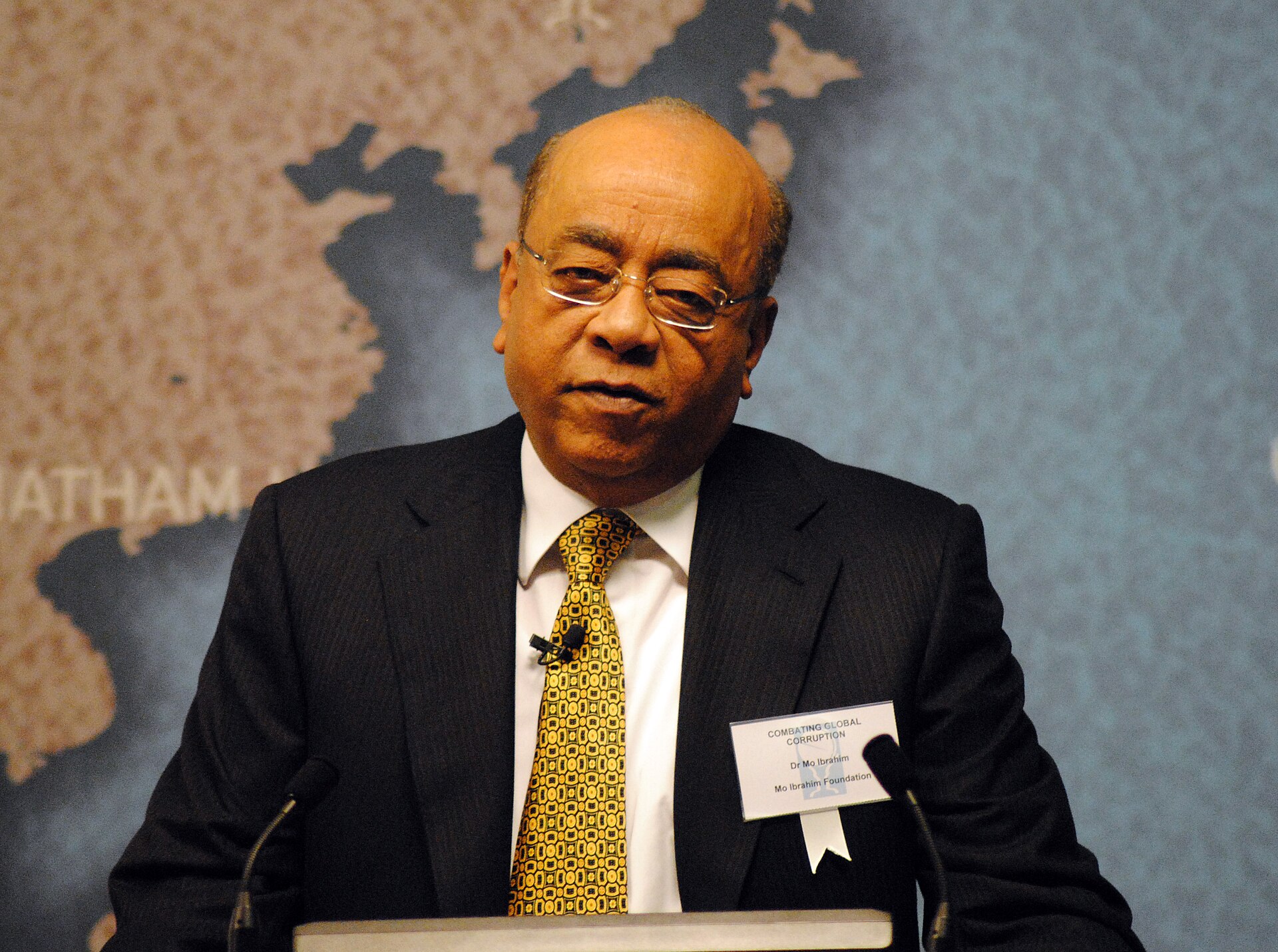
London — In the late 1990s, international banks did not want to invest in African mobile phones. Mo Ibrahim went ahead anyway, financing his company largely with equity. When he sold it in 2005, it had more than 24 million subscribers in 14 countries.
An engineer's path
Born in Sudan on 3 May 1946, of Nubian descent, he grew up in Alexandria, Egypt, and took a degree in electrical engineering at Alexandria University. In 1974 he went home to work for Sudan Telecom. He then earned a master's at the University of Bradford and a PhD in mobile communications at the University of Birmingham.
He worked for British Telecom and was technical director at Cellnet, where he launched the UK's first cellular network. In 1989 he founded the consultancy and software firm MSI.
Celtel
In 1998, MSI spun off the business that became Celtel. It sold to Kuwait's Mobile Telecommunications Company in 2005 for $3.4 billion. Of its 4,000 employees, 98% were African.
A new kind of investment
In 2006 he set up the Mo Ibrahim Foundation, based in London and Dakar. Every two years it publishes the Ibrahim Index of African Governance, ranking all 54 countries. Its Prize for Achievement in African Leadership awards $5 million to former leaders who delivered security, health, education and development and handed over power democratically. Joaquim Chissano of Mozambique was the first winner, and Mahamadou Issoufou of Niger the winner in 2021.
He has also pledged to give at least half of his wealth to charity.
Background: Wikipedia.