Nok: the terracotta figures that open West Africa's art history
First found in 1928 in Kaduna State, they are regarded as continental Africa's earliest large figurative sculptures outside ancient Egypt.
Lire cet article en français →
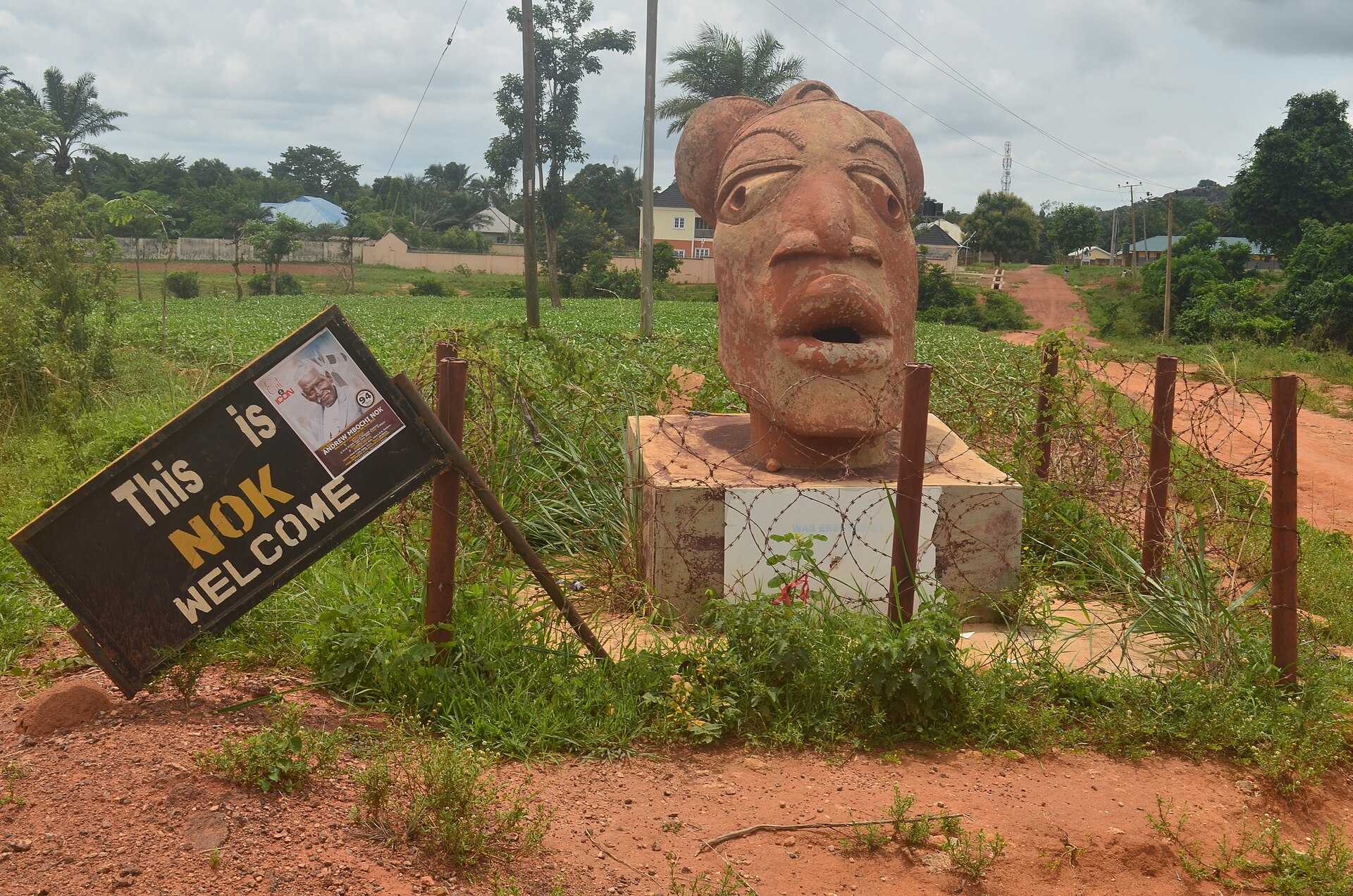
Nok — In 1928, terracotta sculptures came to light at the village of Nok, in southern Kaduna State, Nigeria. They gave their name to a culture that may have emerged around 1500 BCE and lasted until about 1 BCE.
Africa's earliest large sculpture
Leaving aside ancient Egyptian art, Nok sculptures are regarded as the earliest large three-dimensional figurative art in continental Africa. The earliest may date to about 900 BCE. Later traditions in West Africa, including Igbo-Ukwu in Nigeria and Koma in Ghana, came long after.
They may have formed part of a complex funerary culture that included feasting.
What the figures tell us
The sculptures offer glimpses of daily life, though scholars read them with caution:
- Figures with slingshots, bows and arrows may point to hunting.
- One shows two people paddling a dugout canoe with their goods, which may mean that the Nok moved cargo along tributaries of the Niger.
- A figure with a seashell on its head may suggest that trade routes reached the Atlantic coast.
- Ceramics may have been used to prepare roots and bark for medicine.
Iron, too
There is also evidence of iron working. It may have developed in the Nok culture between 750 and 550 BCE, and some researchers suggest that the Nok people may have invented it independently. Taken together, the finds point to a society with skilled makers and wide connections, more than 2,000 years ago.
Background: Wikipedia.