Ousmane Sembène: the docker who became the father of African film
Self-taught in French, he called cinema the people's night school and made the first feature released by a sub-Saharan African director.
Lire cet article en français →
Dakar — Ousmane Sembène did not begin as a filmmaker. The son of a fisherman from Ziguinchor, in Casamance, he worked with his father, moved to Dakar at 15 to take manual jobs and served in the Senegalese Tirailleurs during the second world war. He taught himself to read and write French.
From the docks of Marseille to the page
His first novel, Le Docker Noir, published in 1956, drew on his own life and told of an African stevedore mistreated on the Marseille docks. Later works, including Xala, turned a critical eye on the corrupt elites who took over after independence.
"The people's night school"
He came to believe that books reached only cultural elites, while film could reach a much broader African audience. In 1962 and 1963 he studied filmmaking for a year at the Gorky Film Studio in Moscow.
His short Borom Sarret came in 1963. La Noire de..., in 1966, was the first feature film released by a sub-Saharan African director, and won the Prix Jean Vigo. With Mandabi he achieved his dream of producing a film in his native Wolof, and Xala, Ceddo, Camp de Thiaroye and Guelwaar followed.
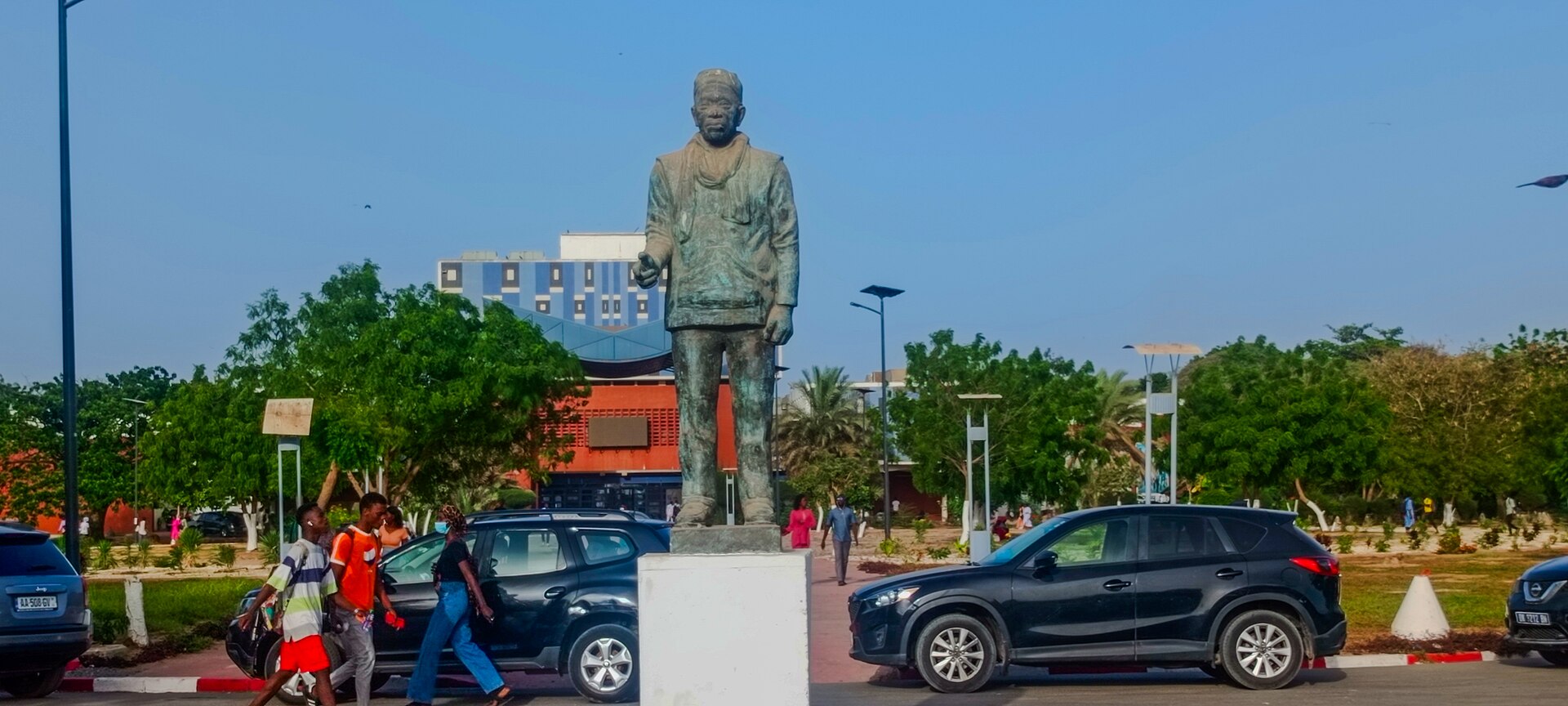
His last film, Moolaadé, tackled female genital mutilation and won awards at Cannes and at FESPACO in 2004. He died on 9 June 2007, aged 84, and a monument at Cheikh Anta Diop University in Dakar honours him.
Background: Wikipedia.