Philae: the temple of Isis that was taken apart stone by stone and rebuilt on a higher island
Threatened by the waters of the Aswan dams, the 'Pearl of the Nile' was moved to Agilkia between 1977 and 1980. It holds the last known hieroglyphic inscription, from AD 394.
Lire cet article en français →
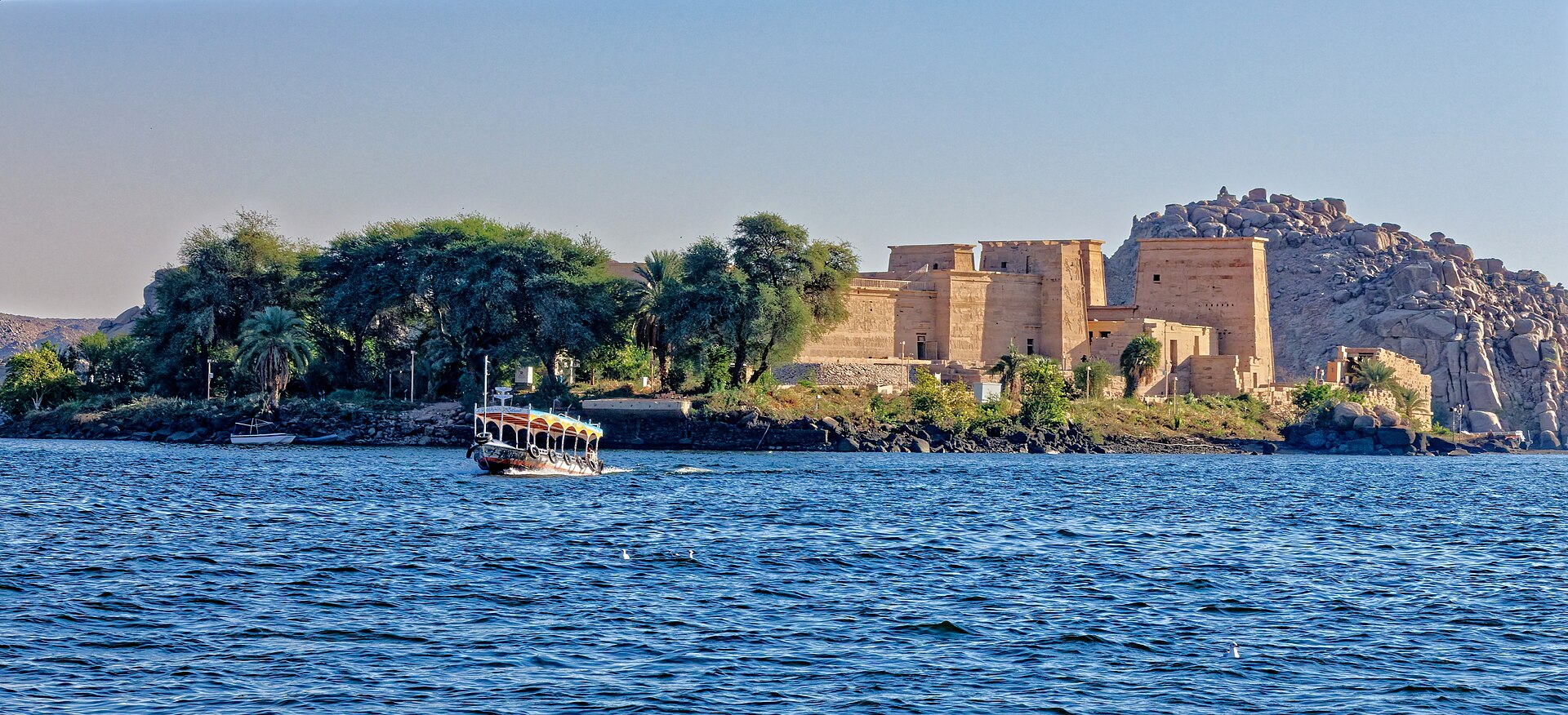
Aswan — Near the First Cataract of the Nile, close to Aswan, stood an island temple complex the ancient world knew as Philae, later called the Pearl of the Nile. It was a place of pilgrimage for worshippers of Isis and a trading post between Egypt and Nubia.
Centuries of worship
The first evidence of Isis worship there is a small kiosk built by the pharaoh Psamtik II. Nectanebo I, founder of Egypt's last native dynasty, added a temple between 380 and 362 BC, and Ptolemaic and Roman rulers enlarged the complex. In AD 394, someone carved what is the last known inscription in Egyptian hieroglyphs on its walls; the last known inscription in Demotic script followed in 452. Five temples were later converted into churches.
A rescue in stone
The first Aswan dam, completed in 1902, flooded the island for part of each year. When the High Dam was built upstream between 1960 and 1970, Philae faced total submersion. UNESCO member countries launched an international effort to save it, and a plan by a consortium of Egyptian designers was chosen.
From 1977 to 1980, the 95 monuments on the island were documented, dismantled and rebuilt on the nearby island of Agilkia, which was levelled to receive them at a site 12.4 metres higher. The work was carried out by an Italian consortium, with the Egyptian High Dam Company draining the original site and preparing the new foundations. Today scholars of the Austrian Academy of Sciences continue to study and publish its hieroglyphic reliefs.
Background: Wikipedia.