Street medicine is booming in Central Africa. A UN report says weak health systems are why.
More than 250 tonnes of medical products were seized in five countries in six years. Where a pharmacy is too far or too expensive, the UN finds, illicit sellers fill the gap.
PANM — Authorities in five Central African countries seized 251 tonnes of illicit medical products between 2020 and 2025, according to a new report from the United Nations Office on Drugs and Crime, described by UN News.
The seizures were made in Cameroon, the Republic of Congo, Gabon, the Central African Republic and Chad. They rose from about five tonnes in 2020 to nearly 116 tonnes in 2024, and were above 97 tonnes in 2025. Cameroon accounted for almost all of last year's total, with 96 tonnes intercepted.
The UN cautions that bigger seizures do not simply mean a bigger trade: they can also reflect tougher enforcement, and the data vary widely between countries and years.
More than fake drugs
The trade is not limited to falsified medicines. It also includes genuine products diverted from legitimate supply chains, unapproved products and drugs smuggled across borders. Items seized range from antibiotics, antimalarials and painkillers to psychoactive drugs such as tramadol and pregabalin.
Sylvie Bertrand, the agency's regional representative for West and Central Africa, said traffickers use sea, river, air and road routes and involve a wide range of actors.
Why people buy on the street
The report, produced with the World Health Organization and the regional economic bloc CEMAC, argues that the roots of the trade lie partly outside the reach of the police.
Malaria, tuberculosis and HIV are widespread, while public health systems struggle to provide treatment. All six countries in the bloc rank among the world's weakest on the WHO's universal health coverage index; Chad scored 26 out of 100, against a global average of 71.
Distance and price add to the problem. In the Central African Republic and Chad, more than half the population lives at least two hours from a public hospital offering emergency care. In Chad, a prefilled insulin syringe costs the lowest-paid government employee the equivalent of nearly 16 days' wages.
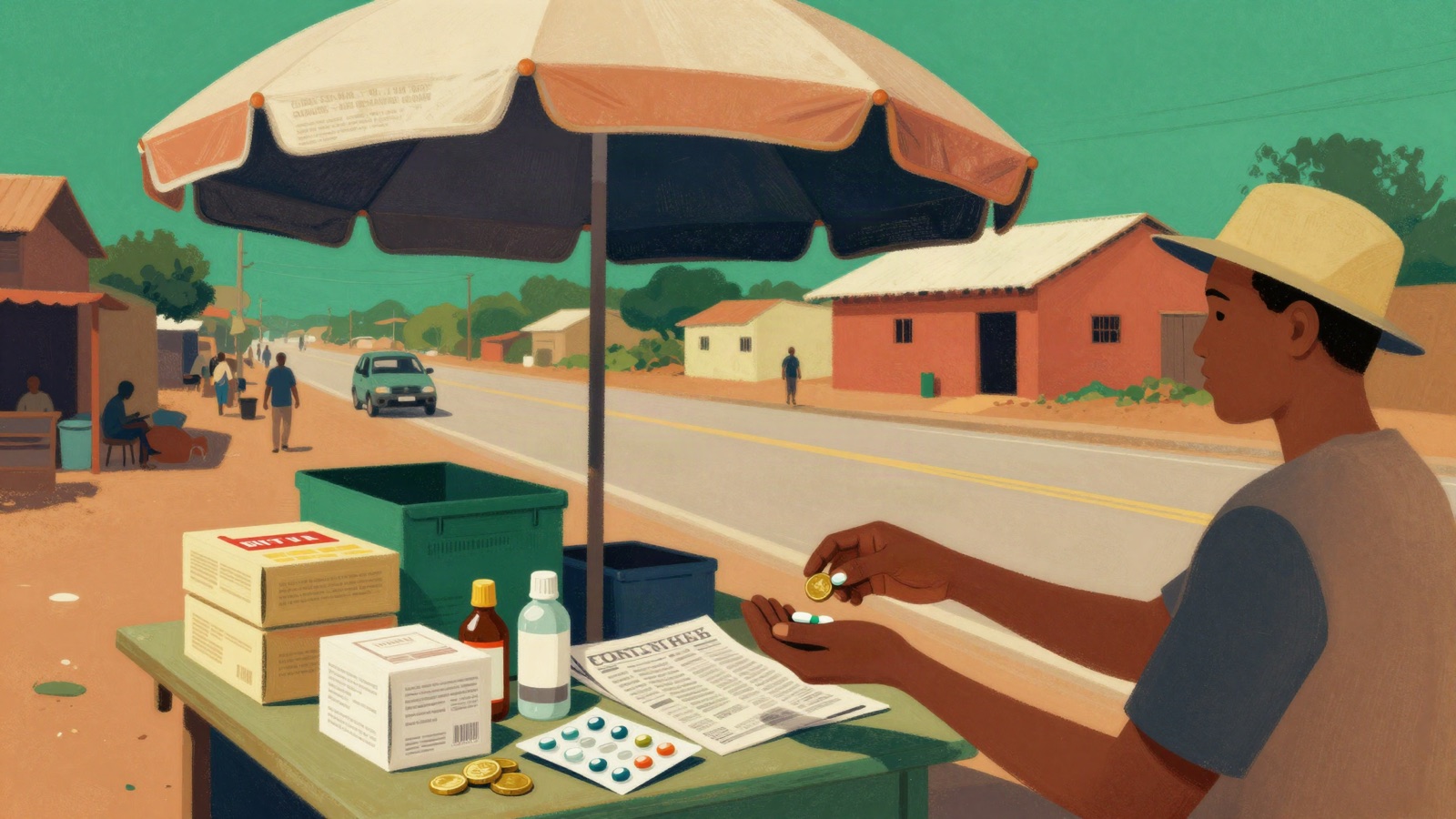
Street sellers, by contrast, will sell one or two tablets at a time for about 100 CFA francs, people in the Central African Republic told researchers.
Pharmacies are not immune
Between 2013 and 2025, the WHO recorded incidents involving 228 medical products in the bloc. Of those, 71 per cent were classed as falsified and 11 per cent as substandard. A third of the incidents were found in regulated supply chains, which suggests that buying from an authorised outlet does not remove the risk.
This report is based on reporting by UN News.