Table Mountain: Cape Town's 'sea-emerging' landmark and its 2,285 plant species
The Khoekhoe called it Huriǂoaxa. Its flat top, cloud 'tablecloth' and fynbos draw 4.2 million visitors a year to South Africa's most visited national park.
Lire cet article en français →
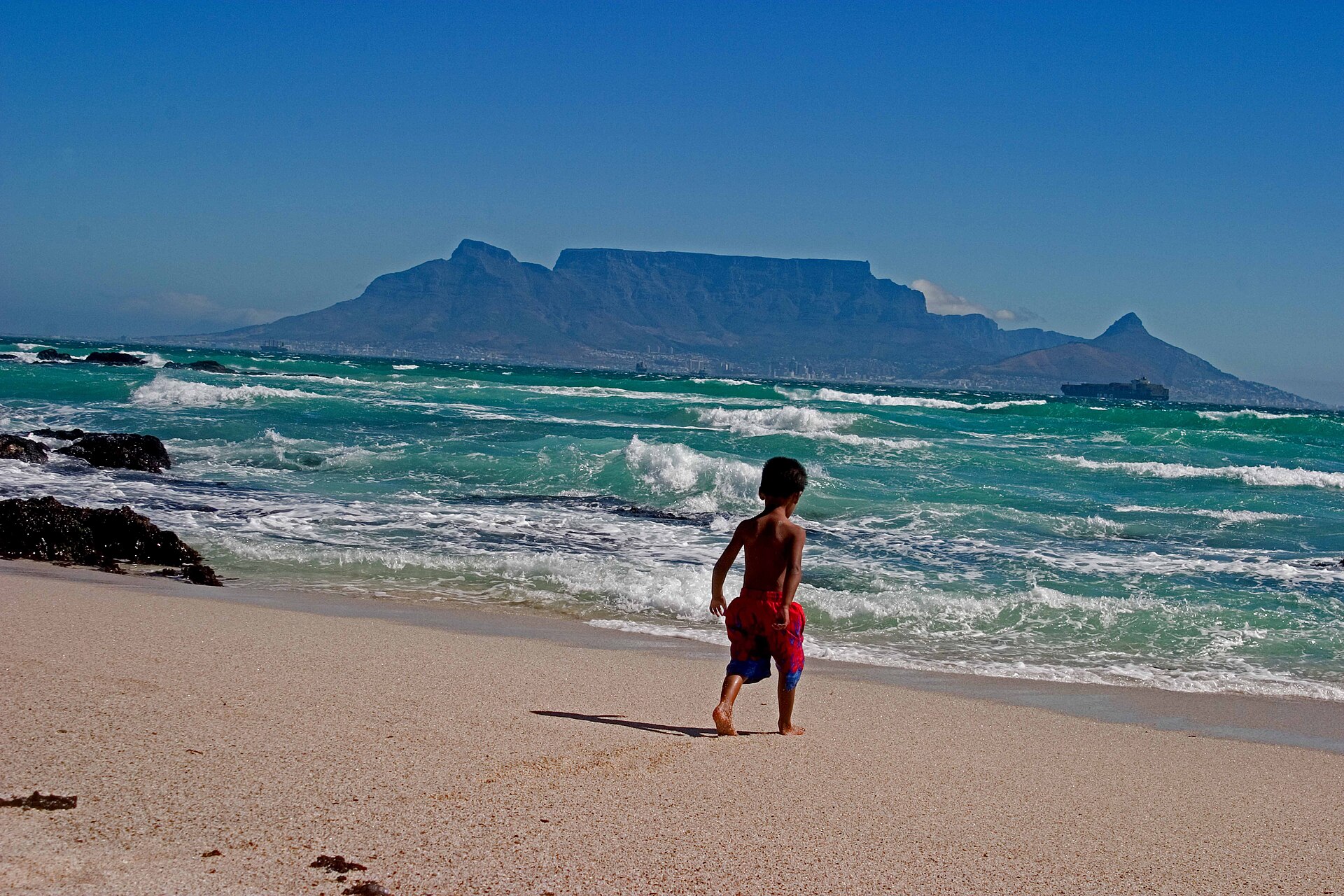
Cape Town — The Khoekhoe name for Table Mountain is Huriǂoaxa, "sea-emerging". The flat-topped mountain rises about 1,000 metres above Cape Town, on land once home to Khoe-speaking clans such as the !Uriǁʼaes, the "High Clan".
A plateau three kilometres wide
Its level top runs about three kilometres from side to side, edged by steep cliffs and flanked by Devil's Peak and Lion's Head. The highest point, Maclear's Beacon, a stone cairn built in 1865 for a survey, stands 1,086 metres above sea level.
When a south-easterly wind pushes moist air up the slopes, it condenses into a sheet of cloud known as the "tablecloth". The upper rocks are hard quartzitic sandstone between 450 and 510 million years old, laid over maroon mudstones that can be seen along Chapman's Peak Drive.
A garden in the sky
The mountain is home to about 2,285 plant species, around 80% of them fynbos, or "fine bush", many found nowhere else on Earth, including many proteas. It is part of a World Heritage Site, and in November 2011 it was named one of the New7Wonders of Nature.
Table Mountain National Park is South Africa's most visited national park, attracting 4.2 million people a year. Many ride the cableway, which opened on 4 October 1929 and has since been refurbished three times. Others climb, often by Platteklip Gorge, the route of the first recorded ascent in 1503. The hike is a serious mountain walk that needs fitness and preparation.
Background: Wikipedia.