At 85, Navi Pillay says she is not done yet
South Africa's Nobel Peace laureate says she will keep "fighting for victims" — and calls on Europe to stand up for the International Criminal Court.
Lire cet article en français →
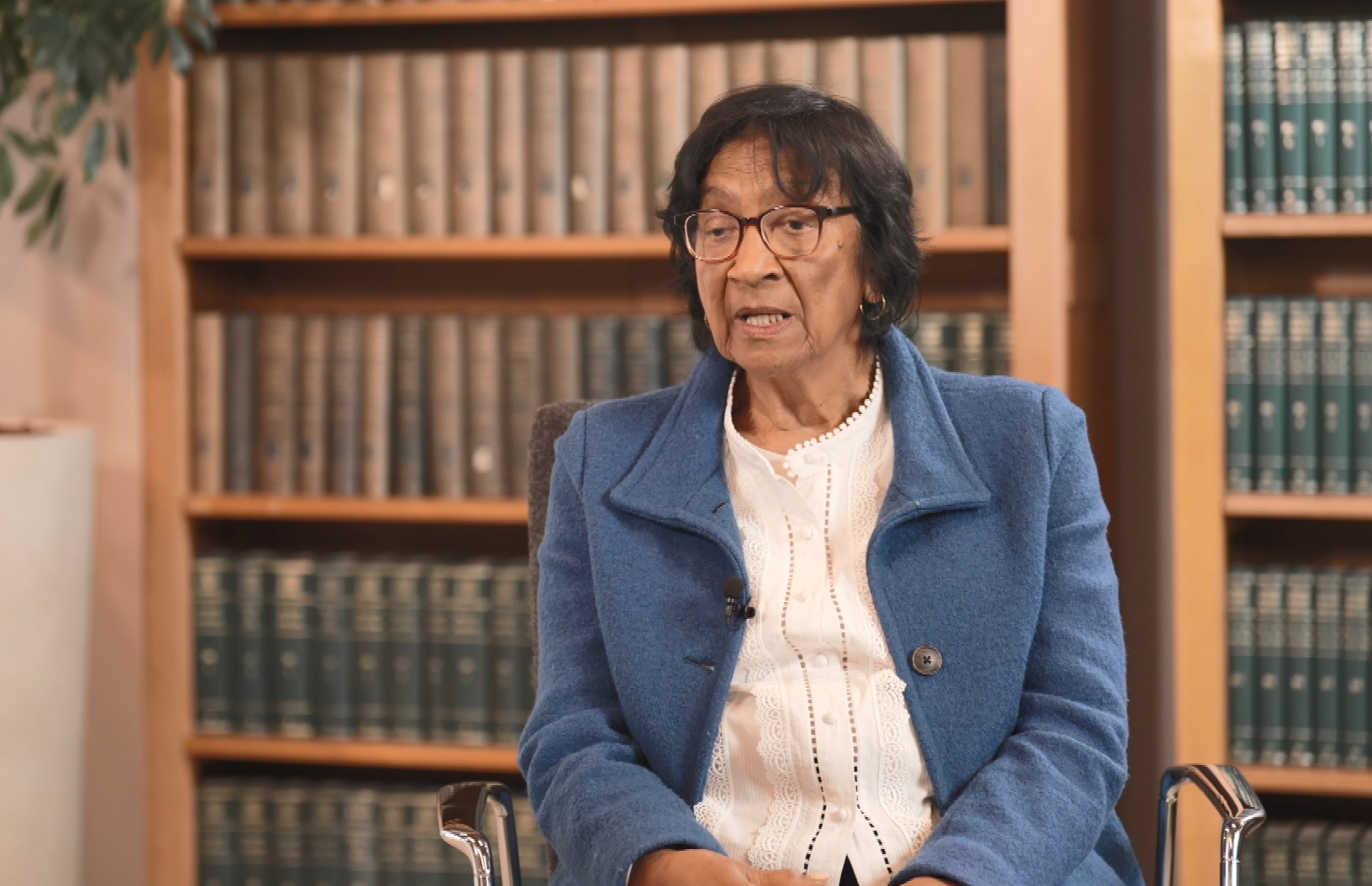
THE HAGUE — Navi Pillay, the South African judge who won the 2026 Nobel Peace Prize, says she has no plans to retire while injustice continues. She is 85.
Speaking to the Turkish broadcaster TRT Arabi at the International Court of Justice in The Hague, Pillay said the prize honours victims of international crimes who have been denied justice, and that it will help her carry on the work she has done for decades.
Her career runs from apartheid South Africa to the top of international law. She became the first non-white woman to serve as a judge on South Africa's High Court, later sat as a judge at the International Criminal Tribunal for Rwanda, served as UN High Commissioner for Human Rights, and chaired the UN's independent commission of inquiry on the Occupied Palestinian Territory and Israel.
"Completely unlawful"
The Nobel Committee announced her prize on 9 October. Within hours, the United States announced new sanctions on the International Criminal Court. Pillay told TRT Arabi she went to the court's headquarters as soon as she reached The Hague, to meet its judges, staff and prosecutor.
"Imposing sanctions on judges for issuing lawful judicial orders is completely unlawful and unacceptable," she said. She said the sanctions affect staff members' work and pay, and that some judges' children have also been targeted.
Asked about US Secretary of State Marco Rubio's call to reform the court, she said what Washington wants is a guarantee that the court will not prosecute Israel or US soldiers over alleged crimes in Afghanistan. No country, she said, has the right to dictate whom the court investigates. She urged European governments, among the court's strongest backers, to take a united stand, and said the risks were now serious enough to justify activating the EU's Blocking Statute, which can shield European firms and people from the effect of foreign sanctions.
Threats and the safety of witnesses
Pillay said she had received death threats in the past, including during her time as UN High Commissioner. She recalled the ICC's Kenya cases, in which the prosecution told the court it had lost its witnesses — some killed, others disappeared — and said protecting investigations and witnesses from surveillance and intimidation must be taken extremely seriously.
She also said the five permanent members of the UN Security Council should stop using the veto to block action on human rights violations, adding that redress for victims of conflict is "a right, not a favour".
Pillay stood by the commission's September 2025 finding that Israeli authorities and forces had committed genocide in Gaza, while noting that the commission is an investigative body and not a court. Israel rejected the report and accused the commission of bias.
For Pillay, the lesson of South Africa's own struggle is solidarity. She said international support for Palestinians today is broader than the support her country's anti-apartheid movement received.
Watch: the full TRT Arabi interview (in Arabic) and TRT World's English interview with Pillay.
Source: TRT Arabi, 16 October 2026. Quotes are from TRT Arabi's English summary of the interview.