Congolese scientist Jean-Jacques Muyembe receives the 2026 Virchow Prize in Berlin
Fifty years after he confronted the first Ebola outbreak in Yambuku, the Congolese virologist is honoured alongside Peter Piot with one of global health's most prestigious awards — a recognition of African scientific leadership.
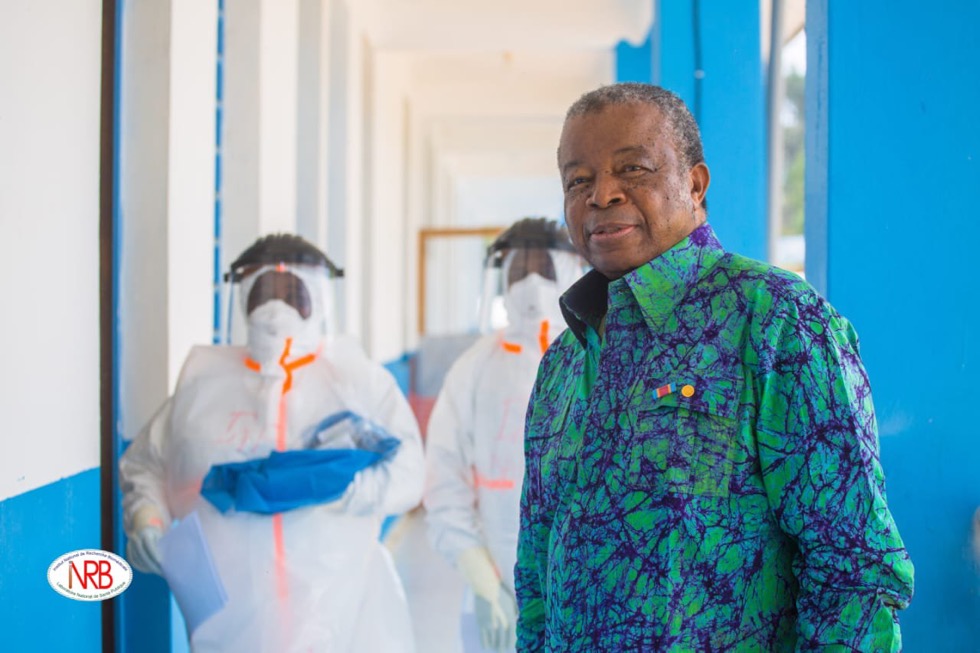
Berlin — Congolese virologist Jean-Jacques Muyembe-Tamfum received the 2026 Virchow Prize for Global Health on Saturday, October 10, at Berlin's City Hall, the Rotes Rathaus. He shares the prize with Belgian scientist Peter Piot, his long-time collaborator in the fight against Ebola.
The Virchow Prize Committee honoured the two men for their pioneering leadership in discovering, controlling and understanding epidemic threats, and for strengthening equitable, multilateral cooperation in the face of infectious disease outbreaks.
Fifty years after Yambuku
The award carries a powerful symbolism. In 1976, exactly fifty years ago, Muyembe was among the first scientists to confront a mysterious and deadly disease in Yambuku, in what is now the Democratic Republic of Congo. Working without protective equipment or proper laboratory infrastructure, he investigated the outbreak and collected the samples that, analysed in Antwerp by Peter Piot and his colleagues, led to the identification of a previously unknown virus: Ebola.
Piot later travelled to Yambuku to join Muyembe's team in the field. Their collaboration, and their friendship, have lasted ever since.
A scientist who chose to stay
What sets Muyembe apart is a choice: he stayed in his country to build scientific capacity where it was most needed.
Over five decades, he has led the investigation of numerous Ebola outbreaks in the DRC. He is the co-inventor of mAb114, a monoclonal antibody that became the first Ebola treatment approved by the US Food and Drug Administration.
As head of the National Institute of Biomedical Research (INRB), a WHO Collaborating Centre since 2018, he built a surveillance, diagnostic and clinical network that has been on the front line of every major health crisis in the country, from COVID-19 to mpox and the Ebola outbreak of 2026. He was also the first President of the Congolese Academy of Sciences.
For the prize committee, his career challenges the historical marginalisation of scientists from the Global South and shows the value of investing in research systems rooted in local expertise.
Recognition for African science
Muyembe joins a short list of laureates that already includes Cameroonian scientist John Nkengasong, honoured in 2022. His previous distinctions include the Hideyo Noguchi Africa Prize, the Royal Society Africa Prize and the Christophe Mérieux Prize.
In a joint statement, the two laureates dedicated the award to the colleagues who worked alongside them for decades, often in extremely difficult conditions during Ebola outbreaks. They stressed that epidemics are tests not only of medicine, but also of trust, equity and leadership.
Why this matters for the DRC:
- it recognises a Congolese scientist at the highest level of global health;
- it highlights the INRB as a centre of excellence built on Congolese soil;
- it comes as the country faces a new Ebola outbreak, a reminder that investing in national research is a matter of survival.
The response to an epidemic is only as strong as the institutions and people who lead it on the ground.
Fifty years after Yambuku, the world is honouring a Congolese scientist who never stopped standing between his country and the next epidemic.