Is a lost queen hidden behind Tutankhamun's tomb?
Scans suggest structures beyond Tutankhamun's burial chamber. Egypt may soon decide whether to drill a tiny hole and send in a camera.
Luxor — More than a century after its discovery, Tutankhamun's tomb in Egypt's Valley of the Kings may still hold a secret. Jay Silverstein of Nottingham Trent University explains the latest in The Conversation.
The theory
For more than a decade, archaeologist Nicholas Reeves has argued that the tomb, known as KV62, is only the outer part of a larger royal complex from the Amarna period (roughly 1350–1325 BC), and that hidden chambers could hold the burial of Nefertiti, Tutankhamun's stepmother and mother-in-law, famous from the painted bust found at Tell el-Amarna in 1912. He points to painted-over hieroglyphs on the north wall of the burial chamber.
What the scans show
- Ground-penetrating radar, at increasingly high frequencies, and microgravity surveys from above, carried out in 2023–24.
- Lead researcher Mamdouh Eldamaty told Nature the results suggest concealed structures beyond KV62.
- The data do not yet show an unmistakable open chamber, and some experts are not convinced. Supporters suggest passages may have been filled with rubble.
What happens next
A decision could come in the coming months on whether to drill a small borehole through the north wall and send in a miniature camera. Silverstein calls the theory intriguing and testable, but not yet a discovery.
A golden moment for Egypt
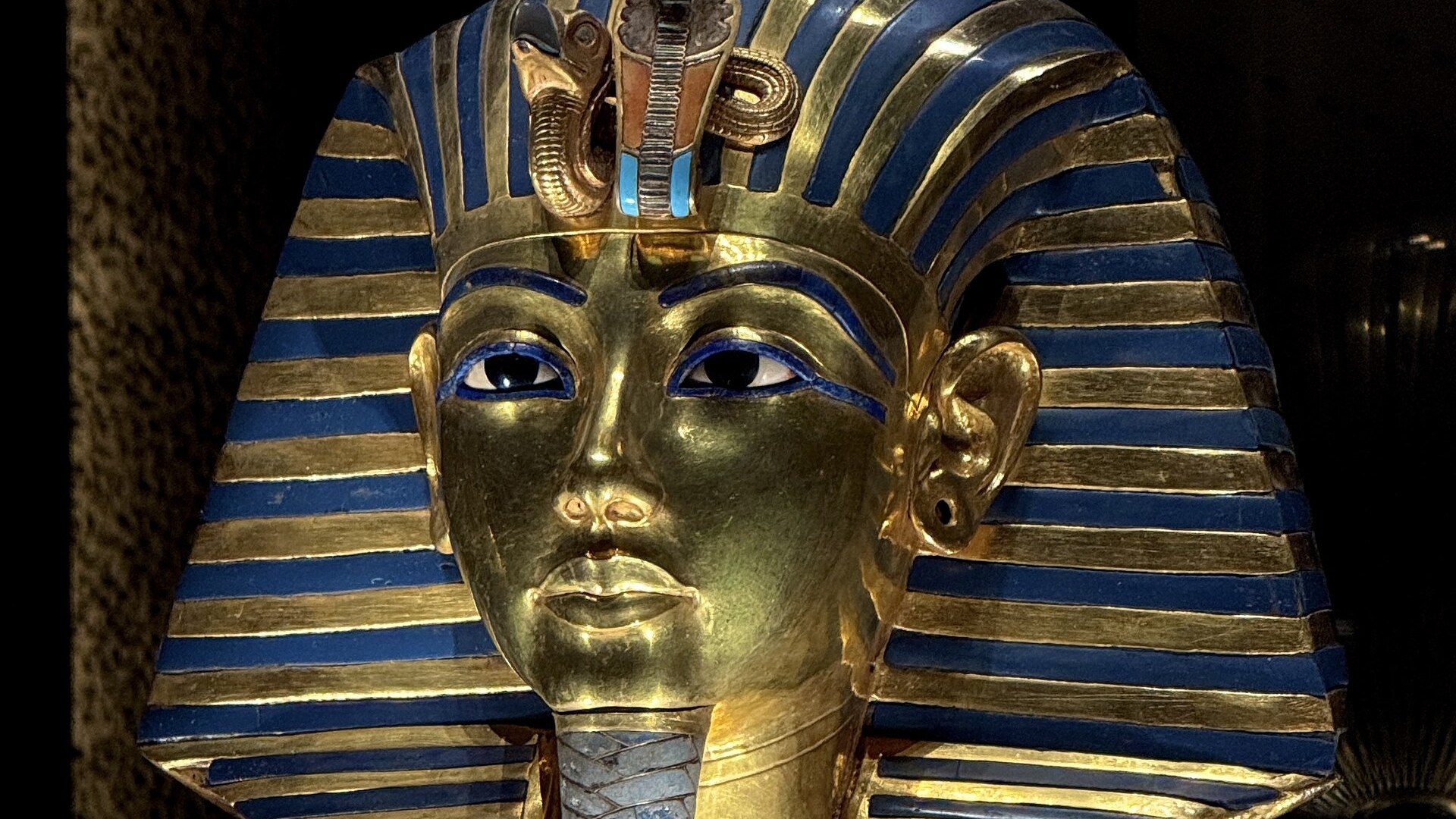
Whatever the result, Tutankhamun's treasures, including his golden mask, are on show at the Grand Egyptian Museum in Giza, and Egyptian archaeologists are leading the search for answers.
Source: The Conversation, 2 October 2026.