Jean-Jacques Muyembe: the Congolese scientist who met Ebola in 1976 and helped beat it
A farmers' son from Bandundu, he investigated the first outbreak at Yambuku and co-invented an antibody treatment now approved as Ebanga.
Lire cet article en français →
Kinshasa — Few scientists have spent as long fighting one disease as Professor Jean-Jacques Muyembe-Tamfum. The Congolese microbiologist was there when Ebola was first identified in 1976, and four decades later he helped develop one of the first effective treatments for it.
From Bandundu to Leuven
He grew up in Bandundu province, the child of farmers, and was educated in Jesuit schools. He studied medicine from 1962 at Lovanium University in Léopoldville, today's Kinshasa, graduating in 1969, and earned a PhD in virology at the University of Leuven in Belgium. Back home in 1973, his first crisis was a cholera outbreak in Matadi in 1974.
Yambuku, 1976
In 1976 he was part of the team that investigated a deadly new illness at the Catholic mission hospital in Yambuku, in what was then Zaire. That outbreak led to the discovery of the Ebola virus, and Muyembe is widely described as one of its co-discoverers. He went on to champion treatment using antibodies from the blood of survivors.
A treatment made in Kinshasa
As director-general of the National Institute for Biomedical Research (INRB) in Kinshasa, he led work from 2016, with colleagues at the INRB and the US National Institutes of Health, on a monoclonal antibody called mAb114. Developed from the antibodies of a Congolese Ebola survivor, it was tested during outbreaks in the DR Congo and in December 2020 was approved by the US Food and Drug Administration as an Ebola treatment under the name Ebanga.
Honours
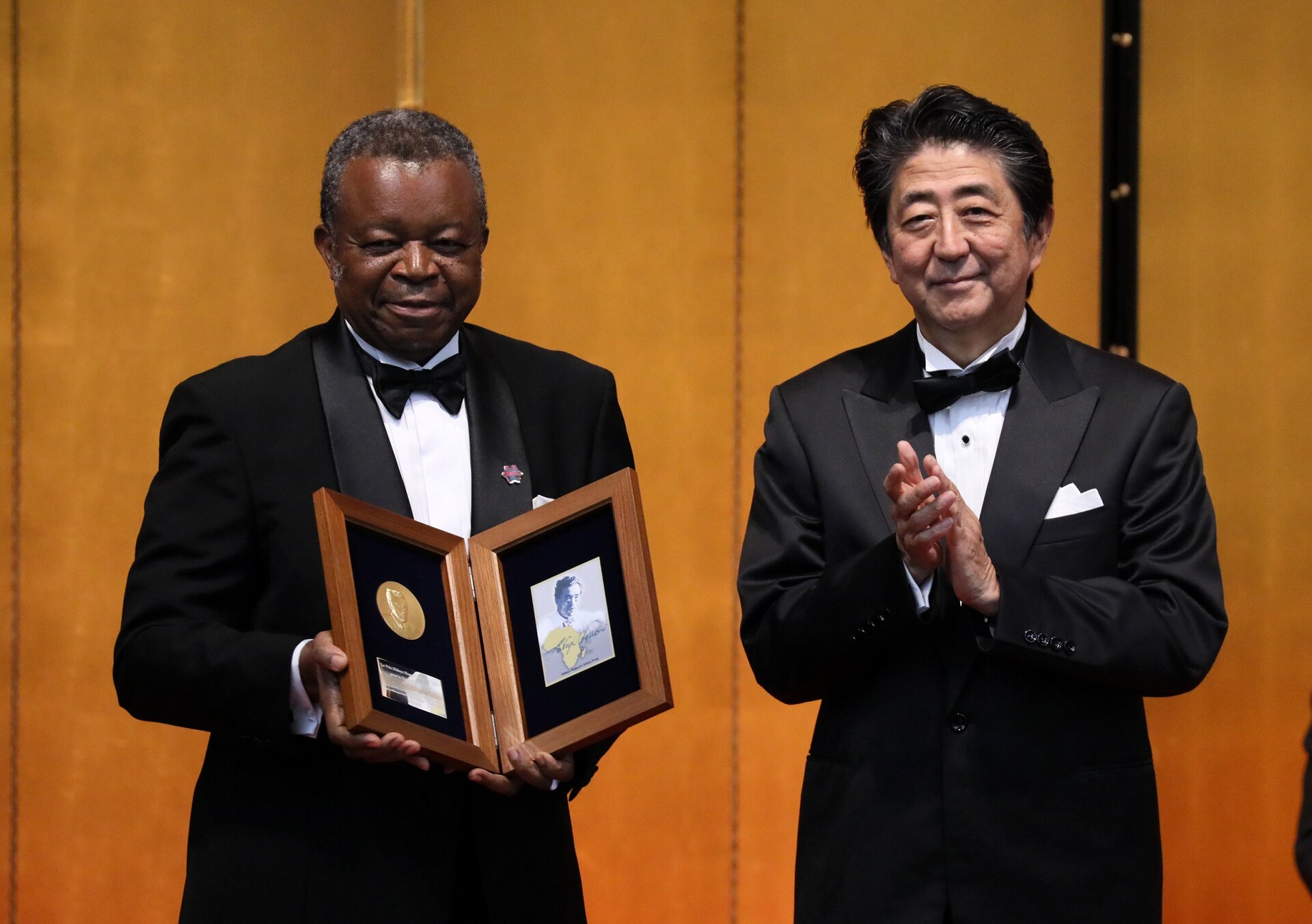
He won Japan's Hideyo Noguchi Africa Prize in 2019, received the Royal Society Africa Prize for his work on viral haemorrhagic fevers, and was named one of Time's 100 most influential people in 2020. His career shows that some of the most important answers to Africa's health challenges are being found in African laboratories.
Background: Wikipedia.