Lake Kivu's hidden gas: a danger to two million people, and a source of power
Shared by DR Congo and Rwanda, the lake holds an estimated 65 cubic kilometres of methane in its depths. Pumping it out makes electricity and lowers the risk.
Lire cet article en français →
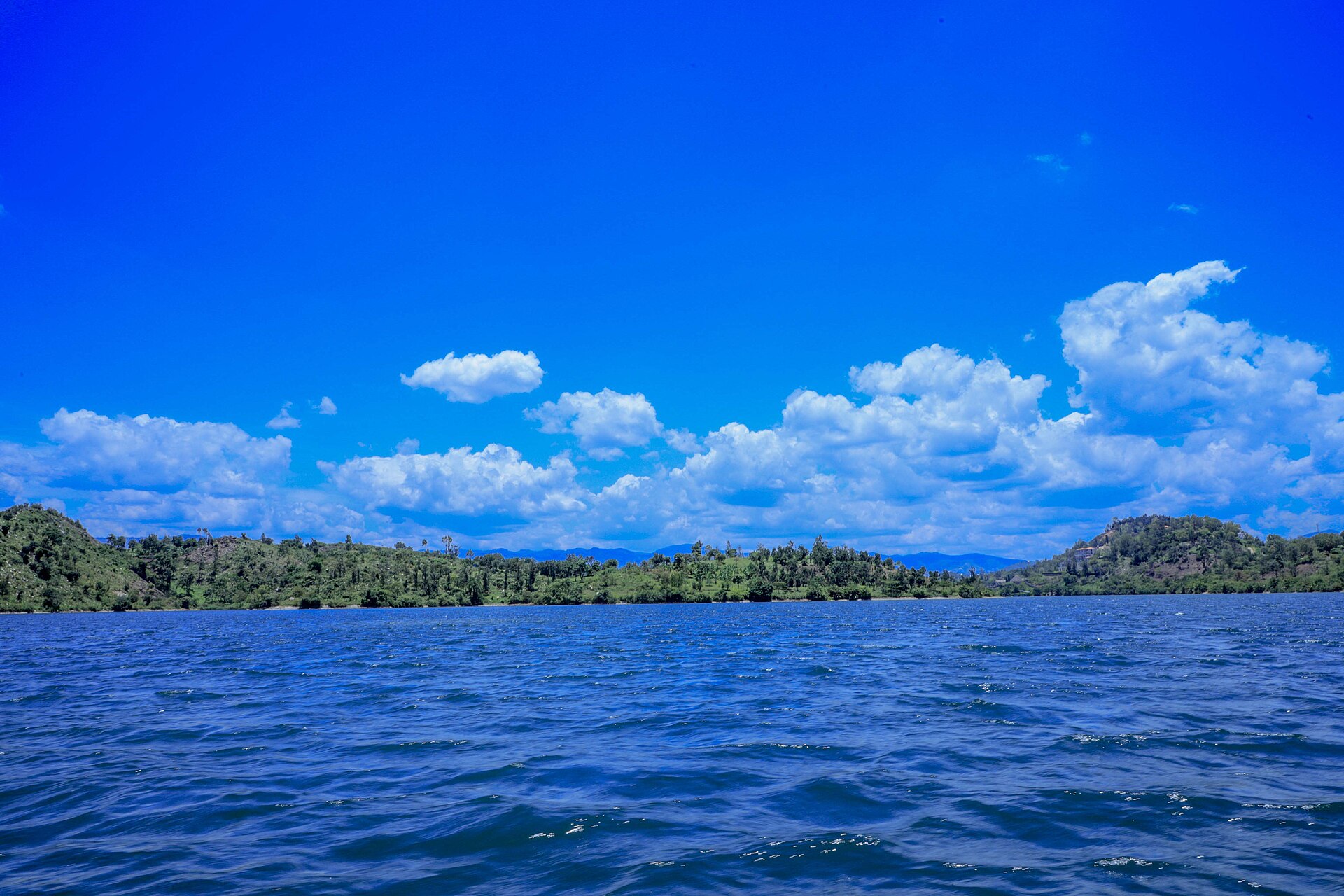
Rubavu — Lake Kivu, on the border between the Democratic Republic of the Congo and Rwanda, is one of the African Great Lakes, about 2,700 square kilometres in area and up to 475 metres deep. Goma and Bukavu sit on its DR Congo shore, Gisenyi (Rubavu) and Kibuye on the Rwandan side. About 58% of its waters lie in DR Congo.
Gas in the deep
Volcanic springs feed the bottom of the lake with carbon dioxide, and microbes turn some of it into methane. Scientists estimate that the deep water holds about 65 cubic kilometres of methane and 256 cubic kilometres of carbon dioxide.
Kivu is one of only three lakes in the world, with Lakes Nyos and Monoun in Cameroon, known to undergo limnic eruptions, in which deep, gas-rich water suddenly overturns and releases its gas. About two million people live near Kivu. A large release would be a catastrophe, which is why the lake is closely watched.
Turning risk into power
The same gas is an energy source. If burned in a modern power plant, the methane would yield the equivalent of around 40,000 megawatts for a whole year. Until 2004, small amounts were extracted to fire the boilers of the Bralirwa brewery in Gisenyi.
In 2011 the energy company ContourGlobal secured financing for a large project through a Rwandan company, KivuWatt. A barge on the lake pumps up deep water, separates and cleans the methane, and sends it by underwater pipeline to gas engines on shore. The $200 million plant was producing 26 megawatts in 2016, sold to the Rwandan grid.
Taking methane out of the lake also slowly reduces the gas stored in the deep water.
Background: Wikipedia.