Thiéboudienne: Senegal's rice-and-fish dish that UNESCO calls a heritage of humanity
Born in Saint-Louis in the 19th century and shared from one big tray, ceebu jën is the national dish and the taste of teranga.
Lire cet article en français →
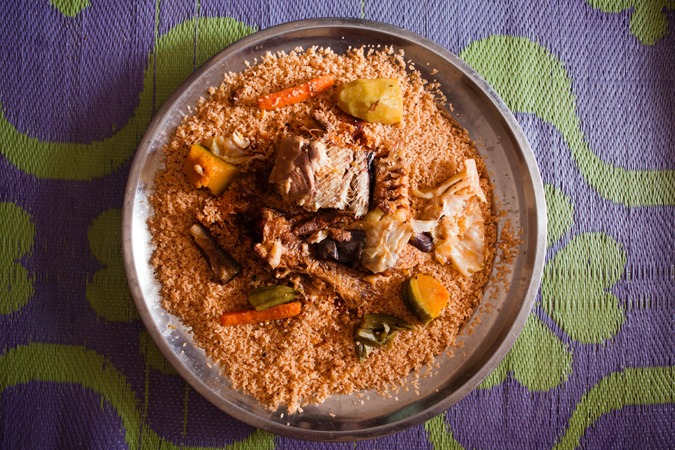
Saint-Louis — Ceebu jën, written thiéboudienne in French, is Senegal's national dish. The name is Wolof: ceeb means rice and jën means fish. In Pulaar it is maaro e liddi, "rice and fish". In 2021 UNESCO added the culinary art of ceebu jën to its list of the intangible cultural heritage of humanity.
What goes in
The classic version is cooked in one pot: fresh or dried fish, traditionally white grouper (thiof), broken rice and a tomato sauce. Cooks add whole vegetables such as cassava, carrot, cabbage and aubergine, with onion, hot pepper, lime and oil. There are also versions with meat (ceebu yapp) and chicken (ceebu ganaar).
Where it comes from
The dish is commonly traced to the city of Saint-Louis in the 19th century. It is eaten across Senegal and in Mauritania, The Gambia, Guinea, Guinea-Bissau and Mali. The famous jollof rice of West Africa is thought to have grown out of it.
One tray, many hands
Thiéboudienne is served on a large tray, with the rice at the bottom and the fish and vegetables in the middle. Family, friends and guests sit around the same dish and eat with a spoon or by hand. That shared tray is a symbol of teranga, the Senegalese art of hospitality.
A dish that crossed the ocean
The red rice of the Gullah Geechee communities on the coast of the United States closely resembles thiéboudienne, a sign of food traditions carried across the Atlantic by enslaved West Africans and their descendants. One worry today: the decline of white grouper stocks has made the classic version harder to find.
Background: Wikipedia.