Saint-Louis: Senegal's island city of jazz, lantern parades and the signares
Ndar, as it is known in Wolof, sits on a narrow island in the Senegal River. A World Heritage Site since 2000, it hosts Africa's leading jazz festival.
Lire cet article en français →
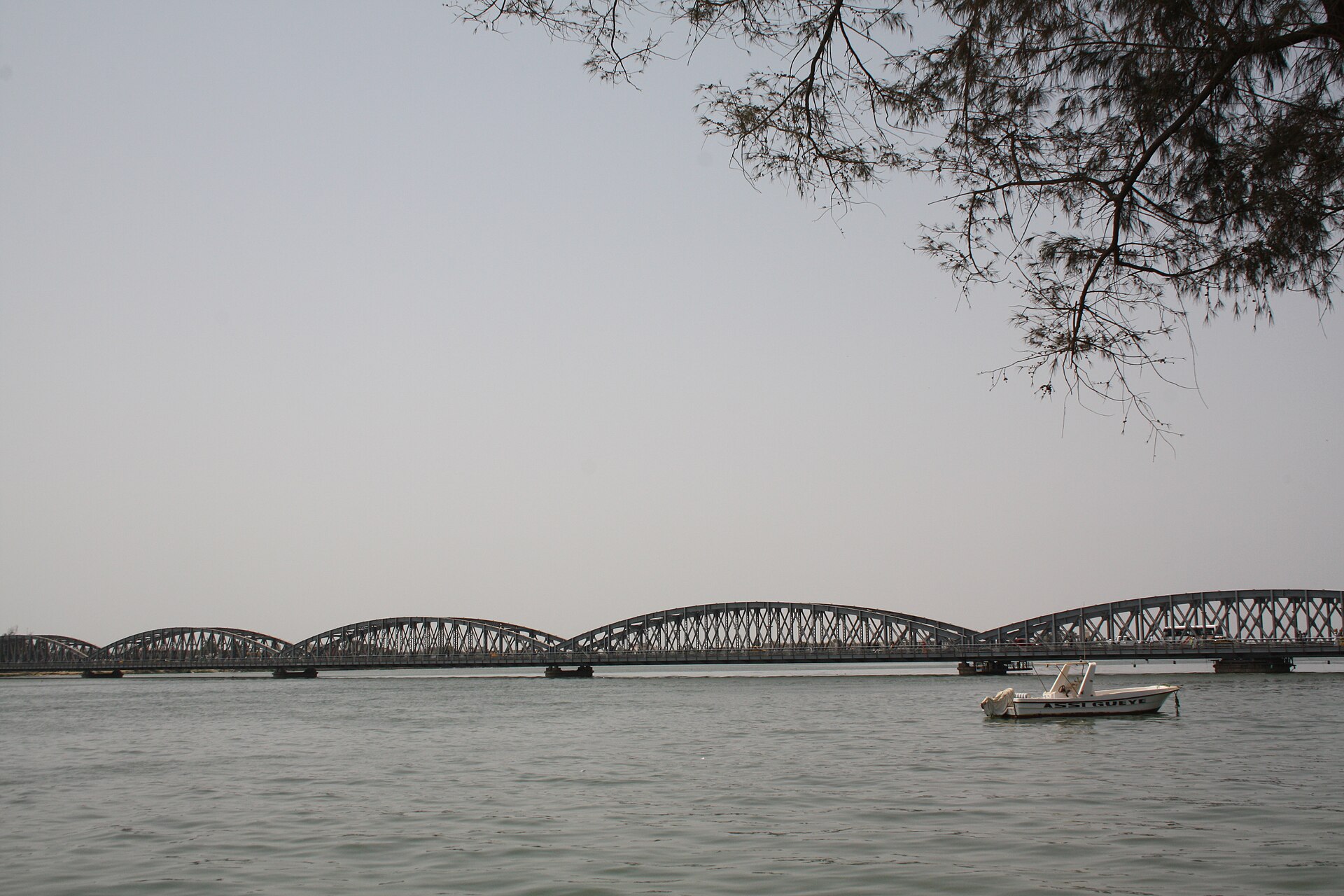
Saint-Louis — Saint-Louis lies in northern Senegal, 320 kilometres from Dakar, near the mouth of the Senegal River. Its Wolof name, Ndar, refers to a kind of island, and the heart of the old city is exactly that: a strip of land a little over two kilometres long and about 400 metres wide in the middle of the river.
To the west, the Langue de Barbarie, a sand spit just 300 metres wide, separates the river from the Atlantic and is home to the fishing neighbourhoods of Guet Ndar and Ndar Toute. On the mainland, marshes and mangroves fill with flamingos and pelicans in the rainy season. The city of about 254,000 people was the capital of French West Africa until 1902.
Signares and fanals
In the 17th and 18th centuries, Saint-Louis was home to a Creole merchant community famous for its signares, women entrepreneurs who were among the city's most prominent figures. Their legacy lives on in the city's festivals and its love of public display. At Christmas, fanals, night-time processions of giant paper lanterns, wind through the streets.
Jazz on the river
Jazz arrived in the 1930s through Cuban records on the radio, and by the 1950s local bands had adopted a Cuban sound. Since 1993 the city has hosted the Saint-Louis Jazz Festival, considered the most important on the continent.
The island has been a UNESCO World Heritage Site since 2000. Nearby are the Langue de Barbarie National Park and the Djoudj National Bird Sanctuary, one of West Africa's great refuges for migrating birds.
Background: Wikipedia.