The Golden Stool: the throne that holds the soul of the Asante nation
Sika Dwa Kofi, 'the Golden Stool born on a Friday', must never touch the ground. Asante tradition says it came down from the sky to the first king, Osei Tutu.
Lire cet article en français →
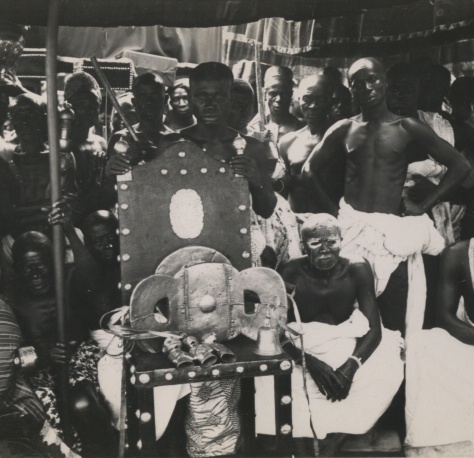
Kumasi — The Golden Stool, Sika Dwa Kofi in Asante Twi, "the Golden Stool born on a Friday", is the royal and sacred throne of the Asante kings and the supreme symbol of their authority.
From the sky
According to tradition, Okomfo Anokye, the high priest and one of the two founders of the Asante Confederacy, called the stool down from the sky so that it landed on the lap of the first Asantehene, Osei Tutu. Stools were already a symbol of a chief's leadership, but this one is believed to hold the spirit of the whole Asante nation: the living, the dead and those yet to be born.
Rules of respect
The Golden Stool must never touch the ground; it rests on a blanket. Only the Asantehene may handle it, and it is carried to him on a pillow. When a new king is enthroned, he is raised and lowered over it without touching it. On solemn occasions it sits on its own throne at the king's left, facing the crowd.
It is a curved seat 46 centimetres high, with a platform 61 centimetres wide, entirely inlaid with gold and hung with bells meant to warn the king of danger. Only the king, the queen and trusted advisers know where it is kept.
In 1900, when the colonial governor demanded to sit on it, the Asante rose in defence of the stool, and its sanctity was preserved. It was used in 1935 to enthrone Osei Tutu Agyeman Prempeh II. Every Asante stool is carved from a single block of wood and has its own meaning for the person whose soul it seats.
Background: Wikipedia.