The Obelisk of Axum: taken to Rome in 1937, home again since 2008
The 24-metre, 1,700-year-old stele stood in Rome for 68 years before Ethiopia brought it back.
Lire cet article en français →
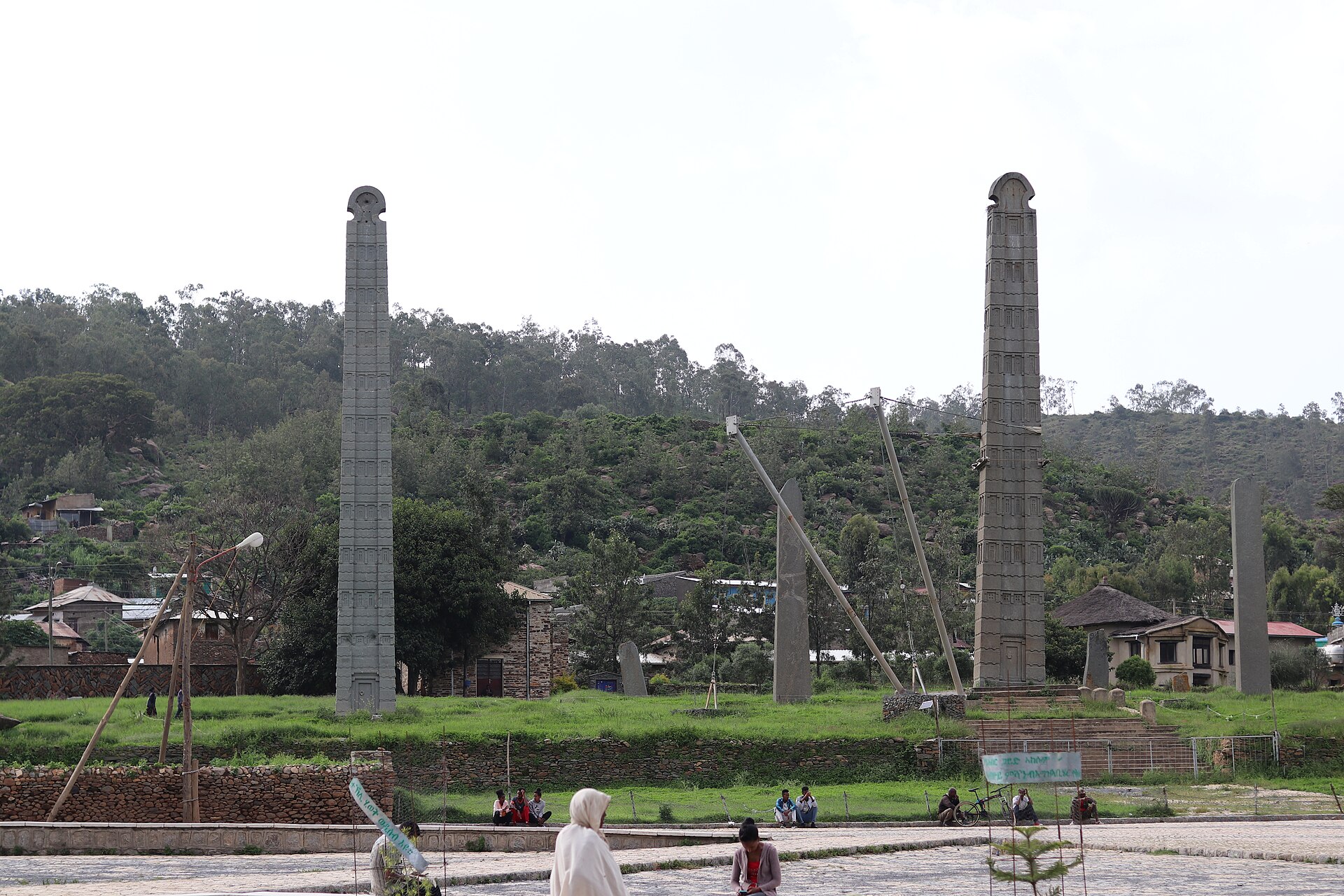
Axum — In the ancient city of Axum in northern Ethiopia stands a carved stone tower 24 metres tall and weighing 160 tonnes. The Obelisk of Axum, properly a stele, was carved in the 4th century AD by the people of the Kingdom of Aksum, one of the great civilisations of the ancient world.
Markers for kings
Axum has hundreds of steles. They are thought to have marked underground burial chambers. The largest, for royal tombs, were carved with false doors and multi-storey false windows, like this one, which ends in a rounded top. The practice ended after King Ezana brought Christianity to Aksum in the 4th century.
Over time many steles fell, through collapse, earthquakes or war. By the 19th century only King Ezana's Stele was still standing.
Looted and returned
During Italy's occupation of Ethiopia, the obelisk was taken as war booty. It arrived in Naples in March 1937 and was re-erected in Rome, near the Circus Maximus, and unveiled in October 1937.
In November 2003 work began to dismantle it. In April 2005 its three pieces were flown home on an Antonov An-124 cargo plane, to great celebration in Axum. A team chosen by UNESCO reassembled it, and on 4 September 2008 the obelisk was unveiled again in its original home.
Background: Wikipedia.