Adinkra: the Akan symbols that carry Ghana's proverbs on cloth, stools and walls
Stamped with carved calabashes and bark dye, the symbols once marked royal funeral cloth. The oldest surviving piece, from 1817, is in the British Museum.
Lire cet article en français →
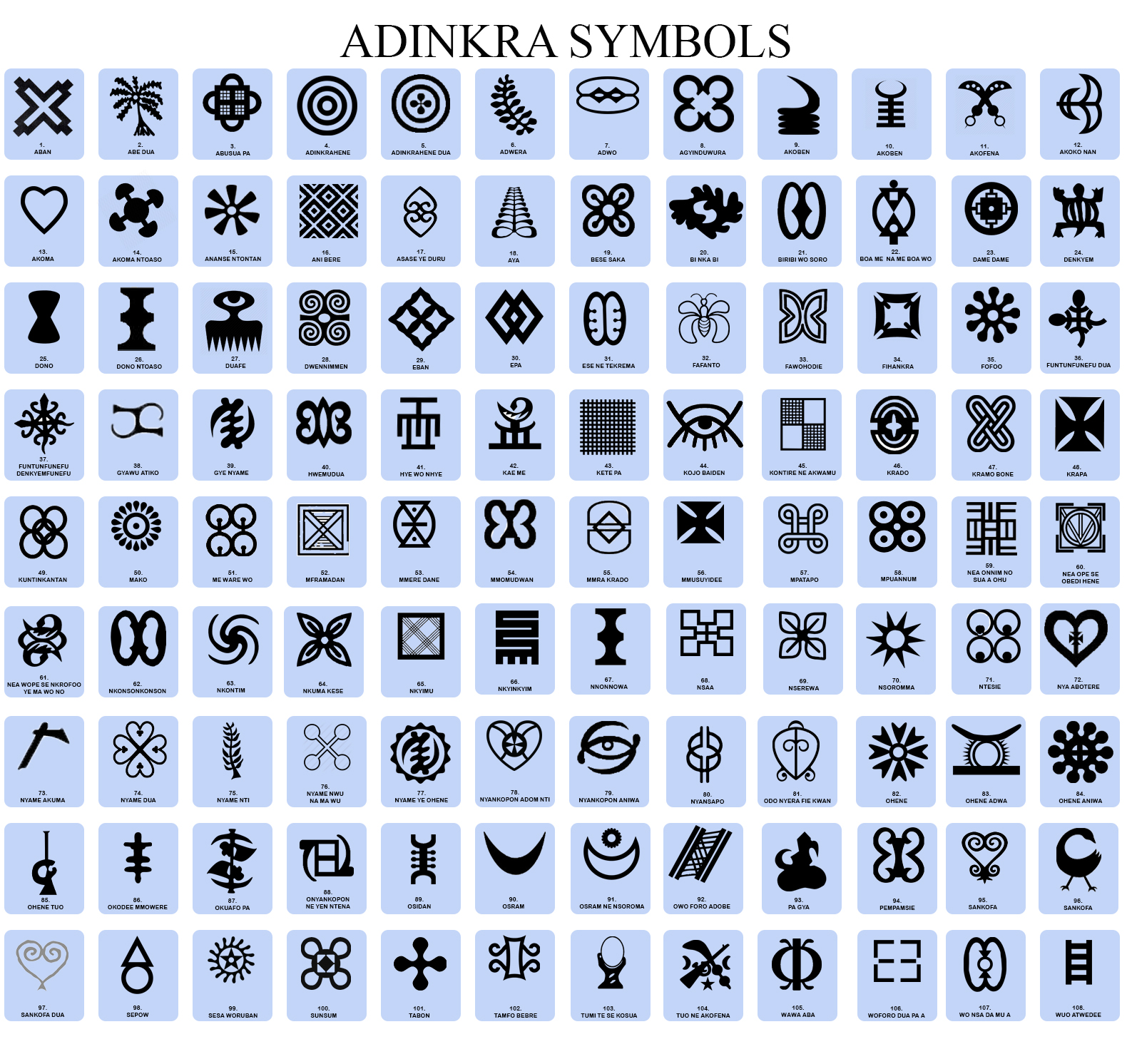
Ntonso — Adinkra are symbols of the Akan people of Ghana, each standing for an idea or a proverb. They appear on cloth, pottery, walls, traditional goldweights and carved stools, and today on T-shirts, jewellery and logos. The philosopher Kwame Anthony Appiah has described them as a way of "supporting the transmission of a complex and nuanced body of practice and belief".
Where they came from
One oral tradition credits Nana Kwadwo Agyemang Adinkra, king of Gyaman, with creating the symbols, which then spread to Asante after a war in 1818–1819. But the British visitor Thomas Bowdich saw adinkra cloth being made in Kumasi in 1817, before that war. Other accounts link the origin to Denkyira, and the exact story remains uncertain.
The oldest surviving adinkra cloth, made in 1817, is stamped with 15 symbols, including nsroma (stars) and dono ntoasuo (double drums), and has been in the British Museum since 1818. Another, sent from Elmina Castle in 1825, is in the National Museum of Ethnology in Leiden.
How the cloth is made
In Twi, adinkra refers to the cloth itself, once worn only by royalty and spiritual leaders at funerals and other special occasions. The main centre of traditional production is Ntonso, about 20 kilometres north-west of Kumasi. There, makers boil the bark and roots of the badie tree for hours to make a thick dark dye called aduro. Stamps five to eight centimetres square are carved from pieces of calabash, with a curved face so the dye can be applied with a rocking motion. Researchers have recorded the meanings of more than 50 symbols.
Background: Wikipedia.