Djenné's Great Mosque: the world's largest mud-brick building
Rebuilt in 1907 on a site used for worship since the 13th century, it is replastered by the whole town every year.
Lire cet article en français →
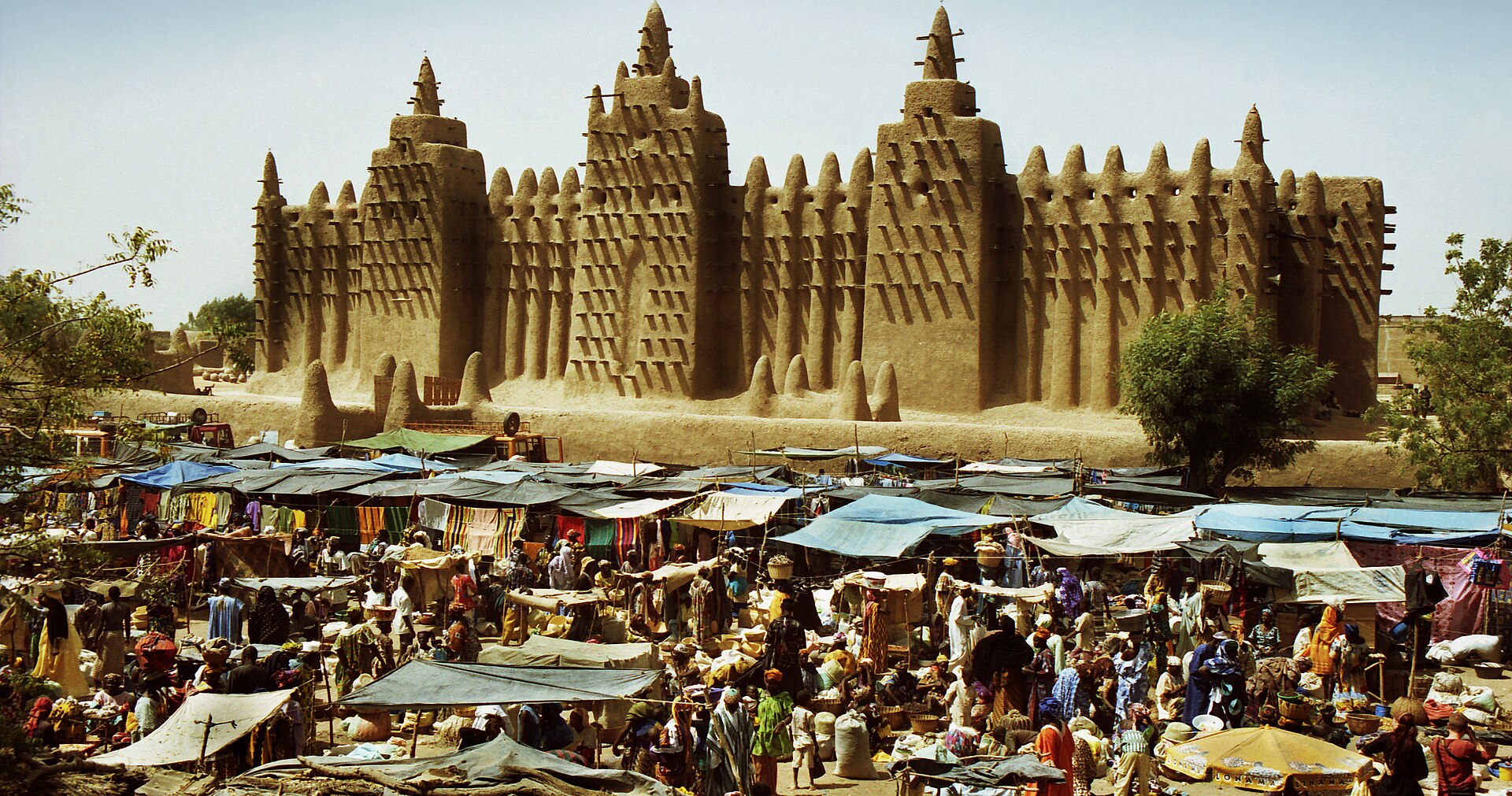
Djenné — Rising from the flood plain of the Bani River in central Mali, the Great Mosque of Djenné is the largest adobe building in the world and one of Africa's best-known landmarks.
Seven centuries on one site
A mosque has stood here since around the 13th century; historians suggest dates between 1200 and 1330. According to the 17th-century chronicle Tarikh al-Sudan, a ruler named Kunburu converted to Islam, pulled down his palace and turned the site into a mosque. Over the centuries it was rebuilt several times. The building that stands today dates from 1907.
It is built in the Sudano-Sahelian style, from sun-baked earth bricks called ferey laid with a mortar of sand and earth. A coat of plaster gives it its smooth, sculpted look, and bundles of palm wood stick out from the walls.
A town that cares for its mosque
Those palm beams are not decoration. They serve as built-in scaffolding. Rain wears the plaster away, so once a year the people of Djenné renew it in a festival. In the days before, plaster is mixed in pits. Then men climb the walls on the palm-wood beams and ladders and spread fresh plaster across the whole face of the mosque, while the community works together below.
The mosque is the centre of town life. Together with the old town of Djenné, it was named a UNESCO World Heritage Site in 1988.
Background: Wikipedia.