Fasil Ghebbi: Gondar's royal enclosure of castles
Emperor Fasilides ended the custom of a roving court and built a capital whose palaces mix Ethiopian, Arab, Hindu and Portuguese styles.
Lire cet article en français →
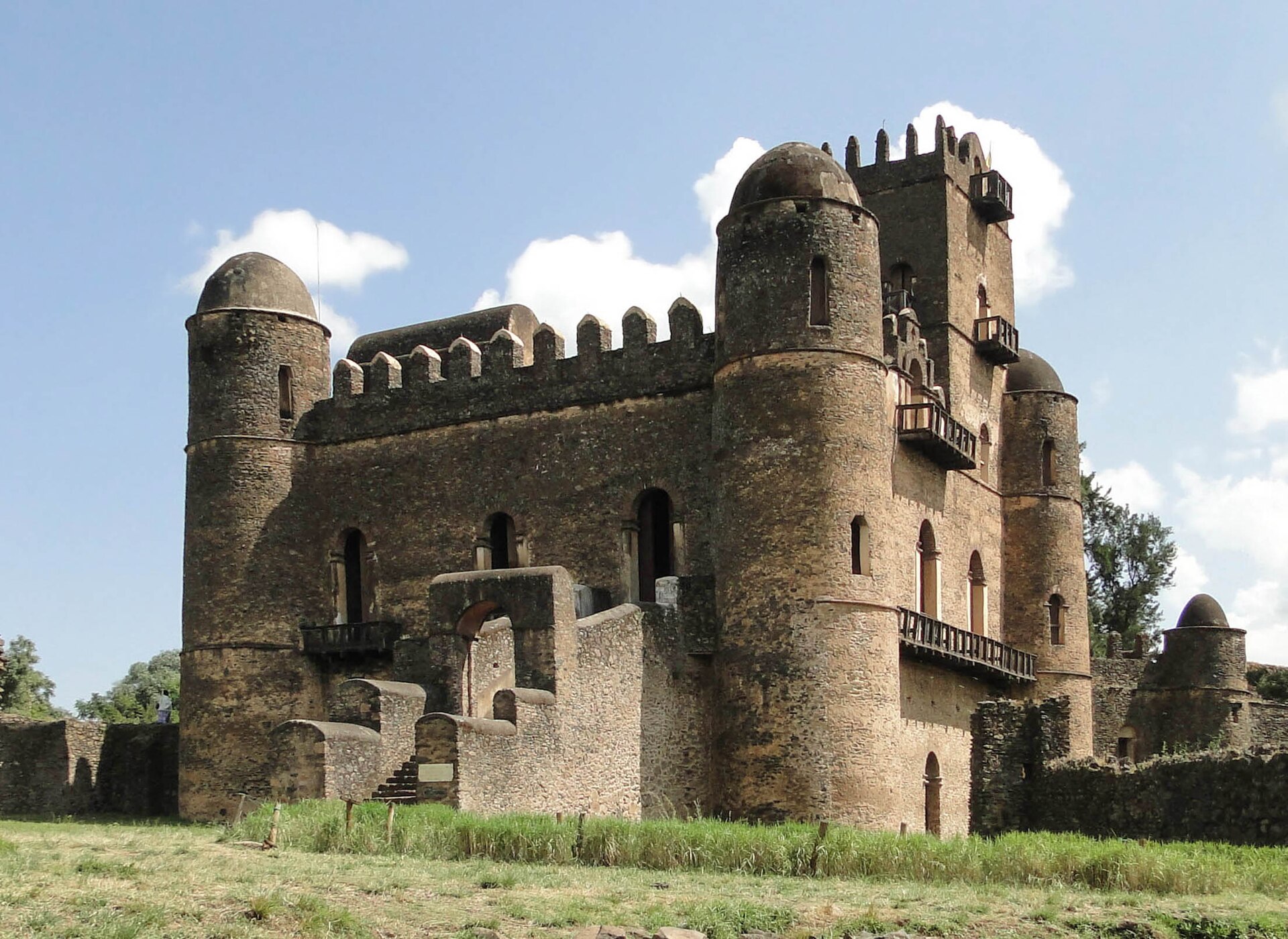
Gondar — In Gondar, in Ethiopia's Amhara region, stands the Fasil Ghebbi, a walled royal enclosure of castles, palaces and churches that was home to Ethiopia's emperors for generations. Ghebbi is the Amharic word for a compound or enclosure.
A court that stopped moving
For centuries Ethiopian emperors had no fixed capital. They travelled through their lands with their courts, living in tents. In the 17th century Emperor Fasilides broke with that tradition and founded Gondar as his permanent capital, which is why the city holds such an important place in Ethiopian history.
Castles of many influences
Inside the walls are Fasilides' castle and buildings added by later rulers: Iyasu I's palace, Dawit III's hall, Empress Mentewab's castle, a chancellery and library from Yohannes I, a banqueting hall from Emperor Bakaffa, stables and three churches. The architecture blends Portuguese, Hindu and Arab influences into something unique to Ethiopia.
UNESCO named the Fasil Ghebbi a World Heritage Site in 1979, and the complex underwent preservation work in 2025.
Background: Wikipedia.