Kilwa Kisiwani: the island that ruled the Swahili coast and minted its own coins
Ibn Battuta called it one of the world's most beautiful cities in 1331. Its coins have turned up as far away as Great Zimbabwe.
Lire cet article en français →
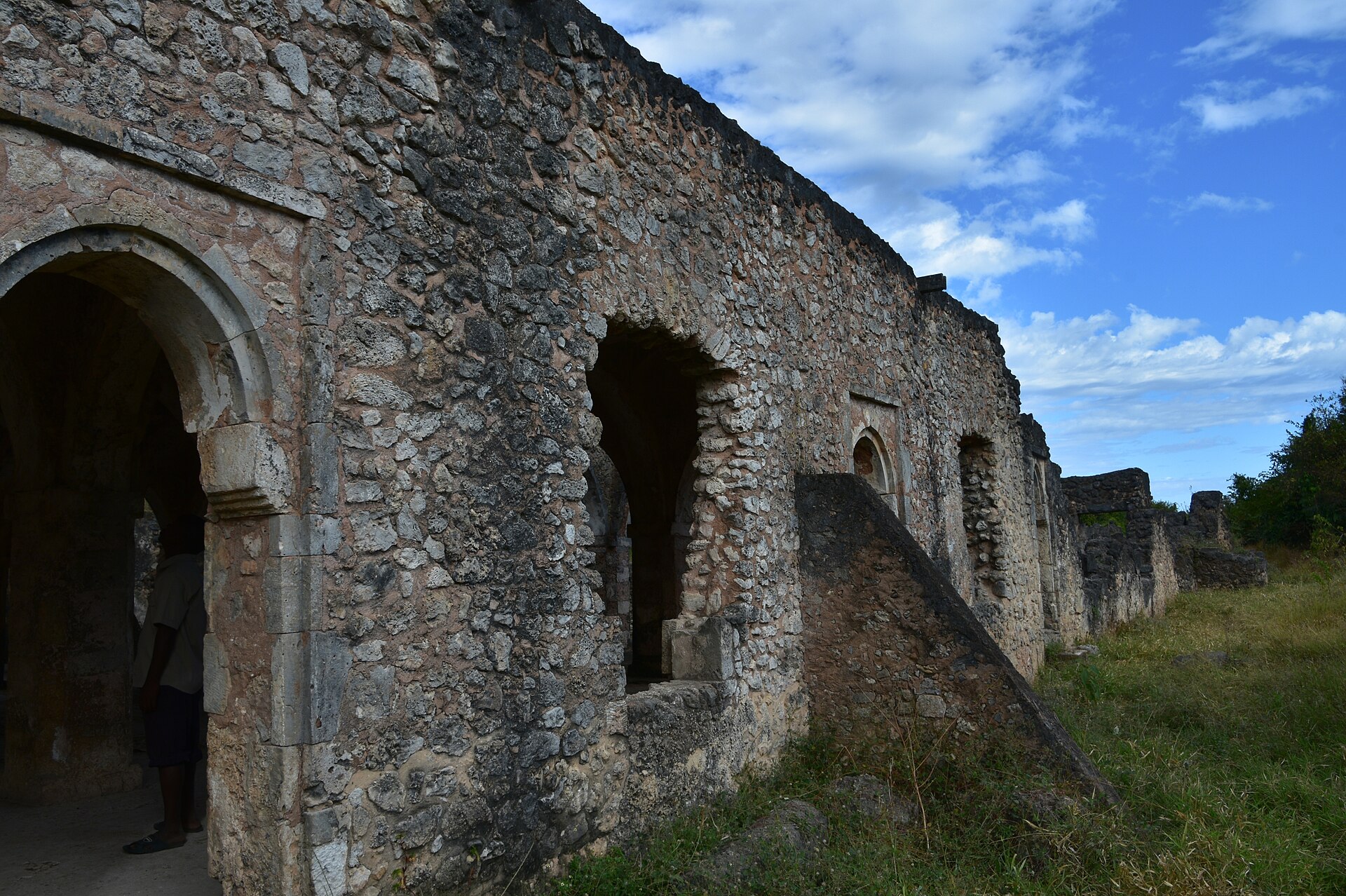
Kilwa Masoko — Today about 1,150 people live on Kilwa Kisiwani, an island off southern Tanzania. In the Middle Ages it had more than 10,000 inhabitants, and at the height of its power, in the 13th to 15th centuries, the Kilwa Sultanate's authority stretched the whole length of the Swahili coast.
Gold, monsoons and money
Seasonal monsoon winds shaped the trade of the East African coast. Kilwa took control of the gold trade at Sofala, in what is now Mozambique, and traded with the Arabian Peninsula, India and China. Wealthier residents owned foreign ceramics and fine textiles.
For about 500 years, from around 1100 to 1600, Kilwa minted its own coins, and they have been found across the region, including at Great Zimbabwe.
The Moroccan traveller Ibn Battuta visited in 1331 and described it as one of the most beautiful cities in the world. Though trade brought Islamic words and customs, the city's origins are African.
Stone that still stands
The earliest section of the Great Mosque, built of squared coral limestone blocks, is thought to date from between 1131 and 1170. Its flat roof rested on columns made from single tree trunks.
Protecting what remains
The Portuguese sacked and burned the town in July 1505. UNESCO has listed the island, with the nearby ruins of Songo Mnara, as a World Heritage Site since 1981. Rainwater and vegetation still threaten some buildings, including Husuni Kubwa, and the site was on the World Monuments Fund's 2008 Watch List. Volunteers worked to protect the ancient city between 2001 and 2007.
Background: Wikipedia.