The Benin Bronzes: six centuries of Edo art
Cast by a royal guild that still works in Benin City, thousands of plaques and heads were taken by British forces in 1897.
Lire cet article en français →
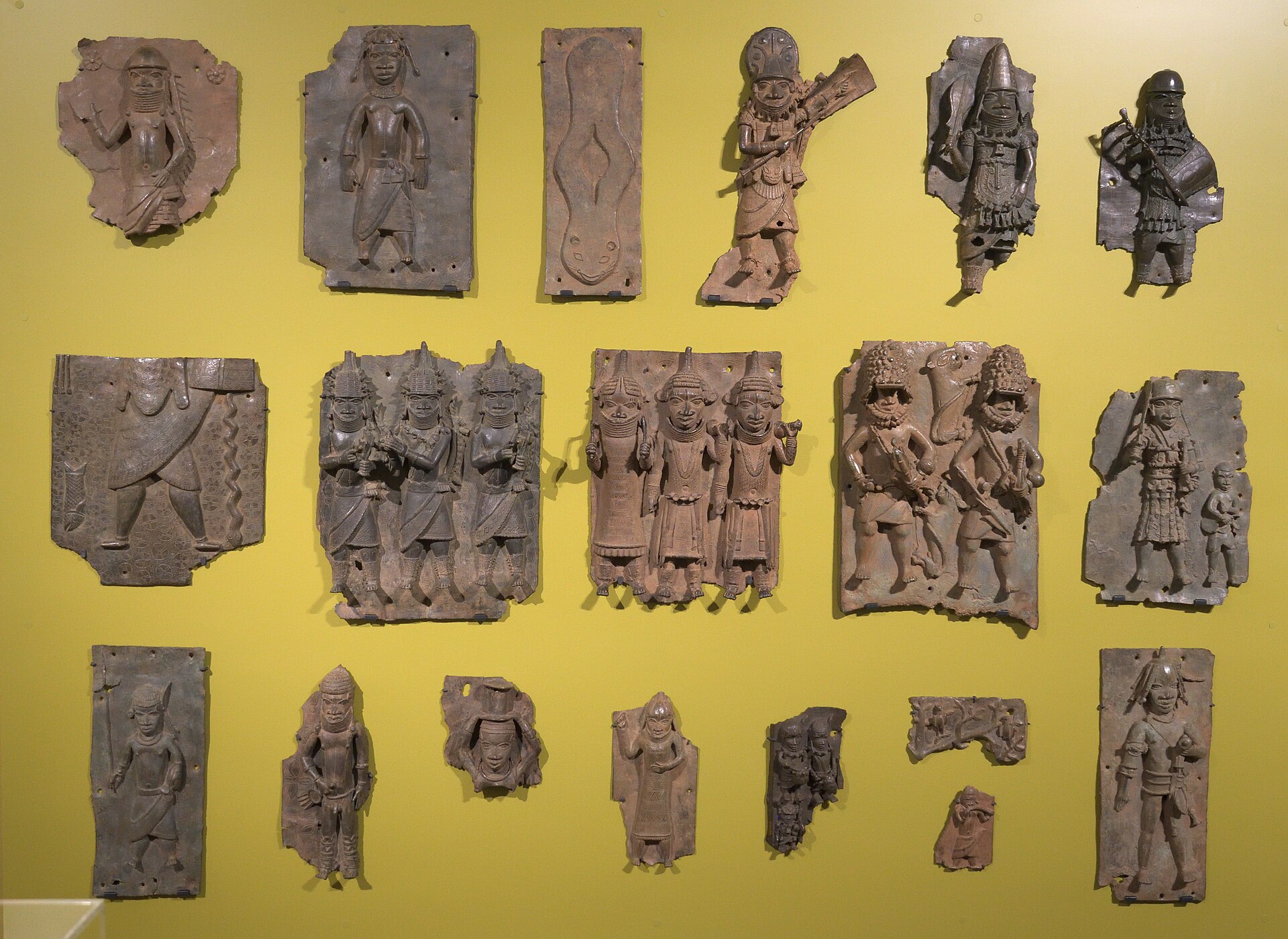
Benin City — The Benin Bronzes are several thousand metal plaques and sculptures that once decorated the royal palace of the Kingdom of Benin, in what is now Edo State, Nigeria. They are among the finest works of African art.
Made by a royal guild
The pieces were made by Edo artists from the 14th century onward. Most date from the 15th and 16th centuries. The plaques, called Ama in the Edo language, show scenes and themes from the kingdom's history. Other works in brass and bronze include portrait heads, jewellery and smaller objects.
They were made by the Guild of Benin Bronze Casters, which is still at work today on Igun Street in Benin City. Historians see two golden ages of Benin metalwork, under Oba Esigie in the 16th century and Oba Eresoyen in the 18th, when the craft reached its finest quality.
Taken in 1897
Most of the plaques and other objects were taken by British forces during the Benin Expedition of 1897, as Britain tightened its control of southern Nigeria. British accounts called it retaliation for the killing of a British party earlier that year; some scholars, such as Dan Hicks, argue it was part of a wider pattern of attacks serving imperial and economic interests.
About 200 pieces went to the British Museum in London and the rest to other European museums, with large collections now in Germany and the United States. Meanwhile, on Igun Street, the casters' craft carries on.
Background: Wikipedia.