Stone Town: where Swahili, Arab, Indian and European worlds meet
Zanzibar's old city of narrow alleys and carved doors has been a UNESCO World Heritage Site since 2000.
Lire cet article en français →
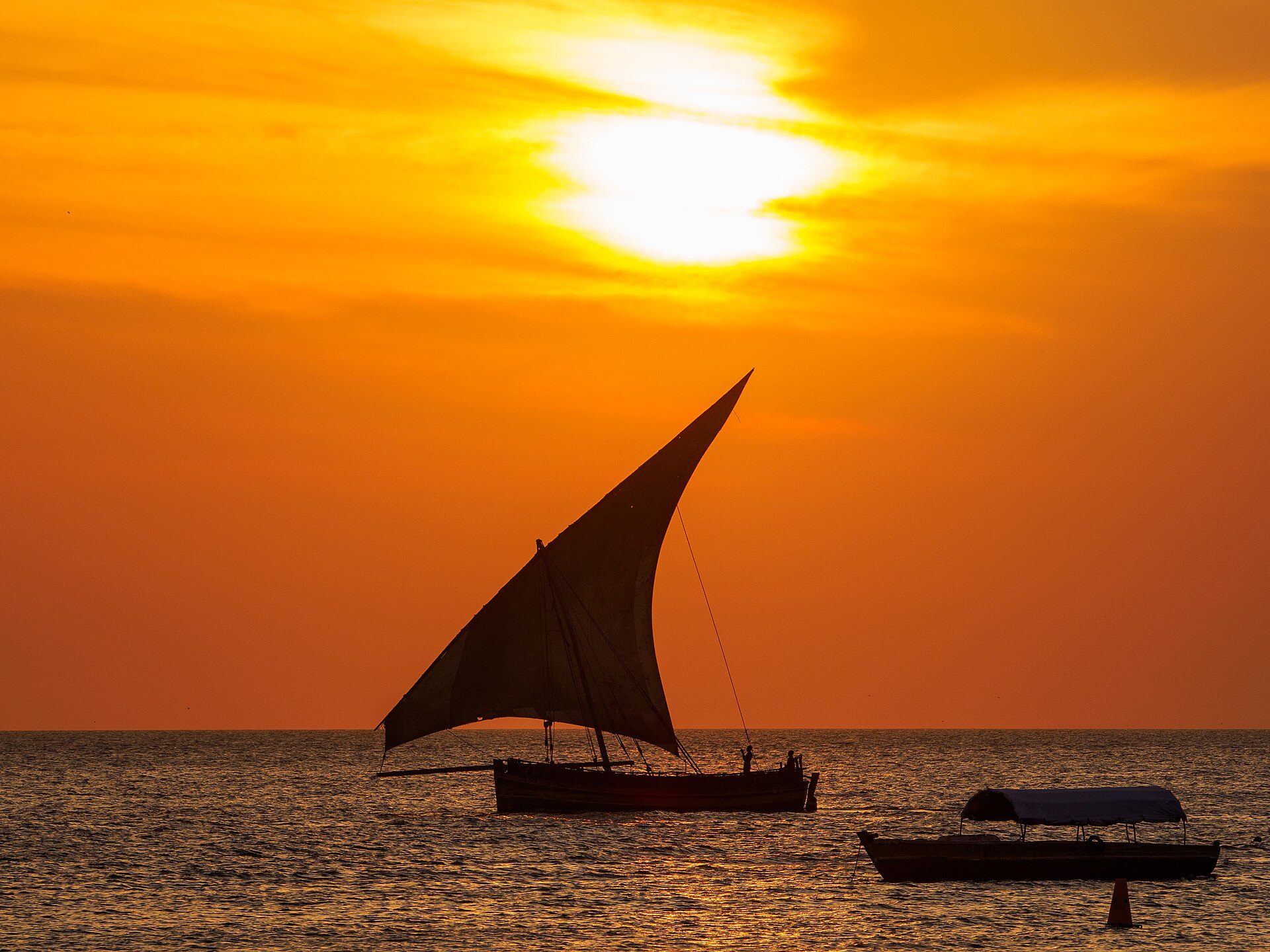
Zanzibar — Stone Town, or Mji Mkongwe ("old town" in Swahili), is the historic heart of Zanzibar City, on the west coast of Unguja, the main island of the Zanzibar archipelago.
A crossroads of the Indian Ocean
Stone Town was the capital of the Sultanate of Zanzibar and, in the 19th century, a thriving centre of the spice trade, and also of the Indian Ocean slave trade. It stayed Zanzibar's main city under the British protectorate. When Tanganyika and Zanzibar united to form Tanzania, Zanzibar kept a semi-autonomous status, with Stone Town as its seat of government.
A city built from many cultures
Most of its buildings date from the 19th century and reflect the many influences behind Swahili culture: a unique mix of Arab, Persian, Indian and European styles. The heart of the town is a maze of narrow alleys lined with houses, shops, bazaars and mosques.
On the seafront along Mizingani Road stands the House of Wonders, or Beit al-Ajaib, built as a royal palace, next to the Sultan's Palace. Beside them is the Old Fort, Ngome Kongwe, a heavy stone fortress built by the Omanis in the 17th century.
For its history and architecture, Stone Town was named a UNESCO World Heritage Site in 2000. Today it is one of Tanzania's main tourist attractions, and much of its economy depends on visitors. The newer part of the city is known as Ng'ambo, "the other side".
Background: Wikipedia.