The Namib: perhaps the oldest desert on Earth
Dry for 55 to 80 million years, it stretches 2,000km along the Atlantic coast of Angola, Namibia and South Africa.
Lire cet article en français →
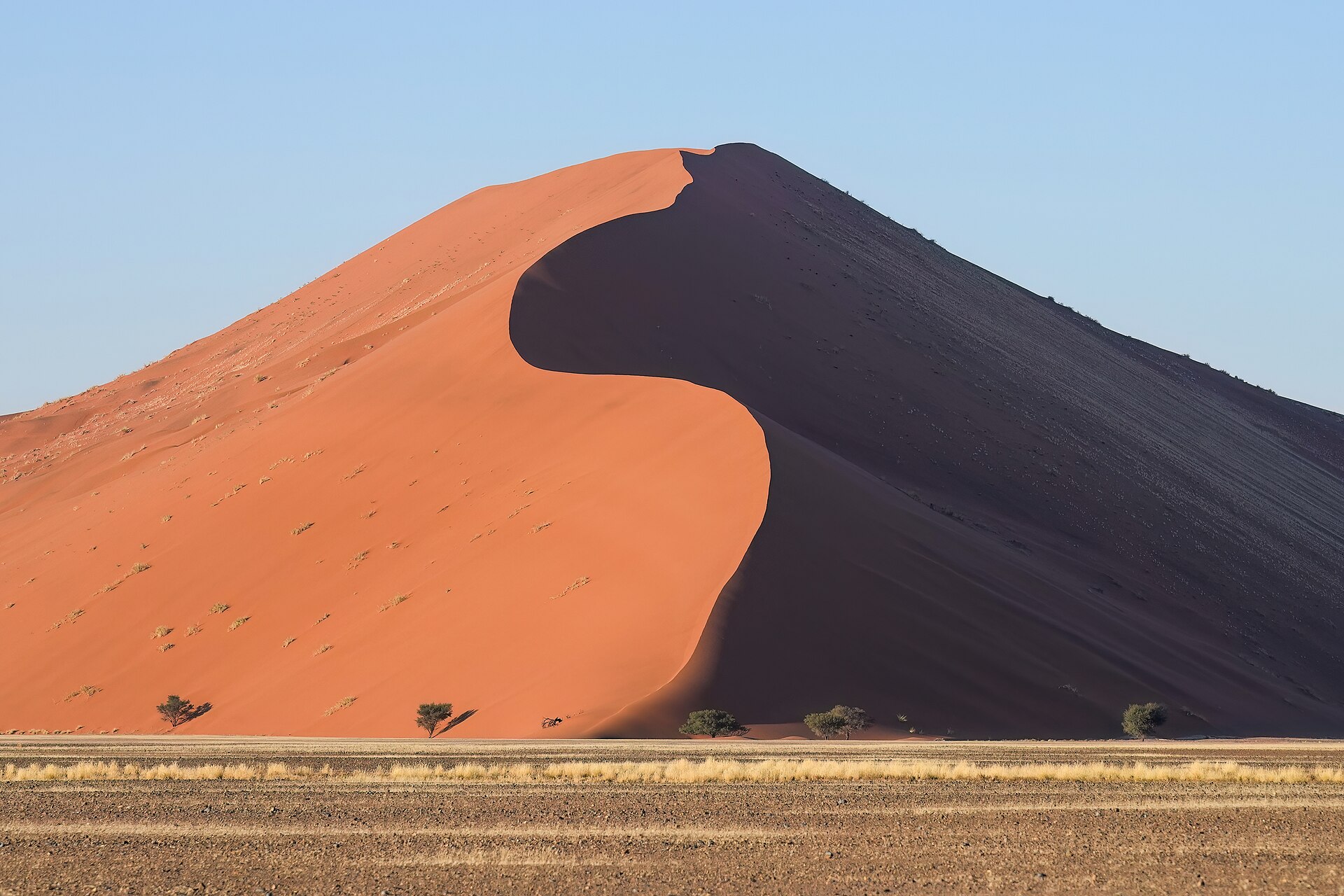
Sossusvlei — Along the Atlantic coast of southern Africa lies a desert so old that it may be the oldest in the world. The Namib has been arid or semi-arid for roughly 55 to 80 million years. Only the Atacama in South America rivals it for age and dryness.
2,000 kilometres of sand and stone
In its broadest definition, the Namib stretches more than 2,000 kilometres along the coasts of Angola, Namibia and north-western South Africa, from the Carunjamba River in Angola to the Olifants River in the Western Cape. Its northern part, reaching 450km from the Angola–Namibia border, is known as the Moçâmedes Desert. From the coast it rises gradually inland for up to 200km to the foot of the Great Escarpment.
Rainfall ranges from just 2 millimetres a year in the driest parts to 200mm near the escarpment, making the Namib the only true desert in southern Africa. Near the coast are great seas of sand dunes; further inland, gravel plains and scattered mountains.
Protected by the constitution
Most of Namibia's share of the desert is protected under the environmental provisions of the country's constitution. Its towering red dunes, such as those at Sossusvlei, draw visitors from across the world.
Background: Wikipedia.