Kente: the Ghanaian cloth woven like a spider's web
From the looms of Bonwire to graduation stoles worldwide, kente is now a protected geographical indication of Ghana.
Lire cet article en français →
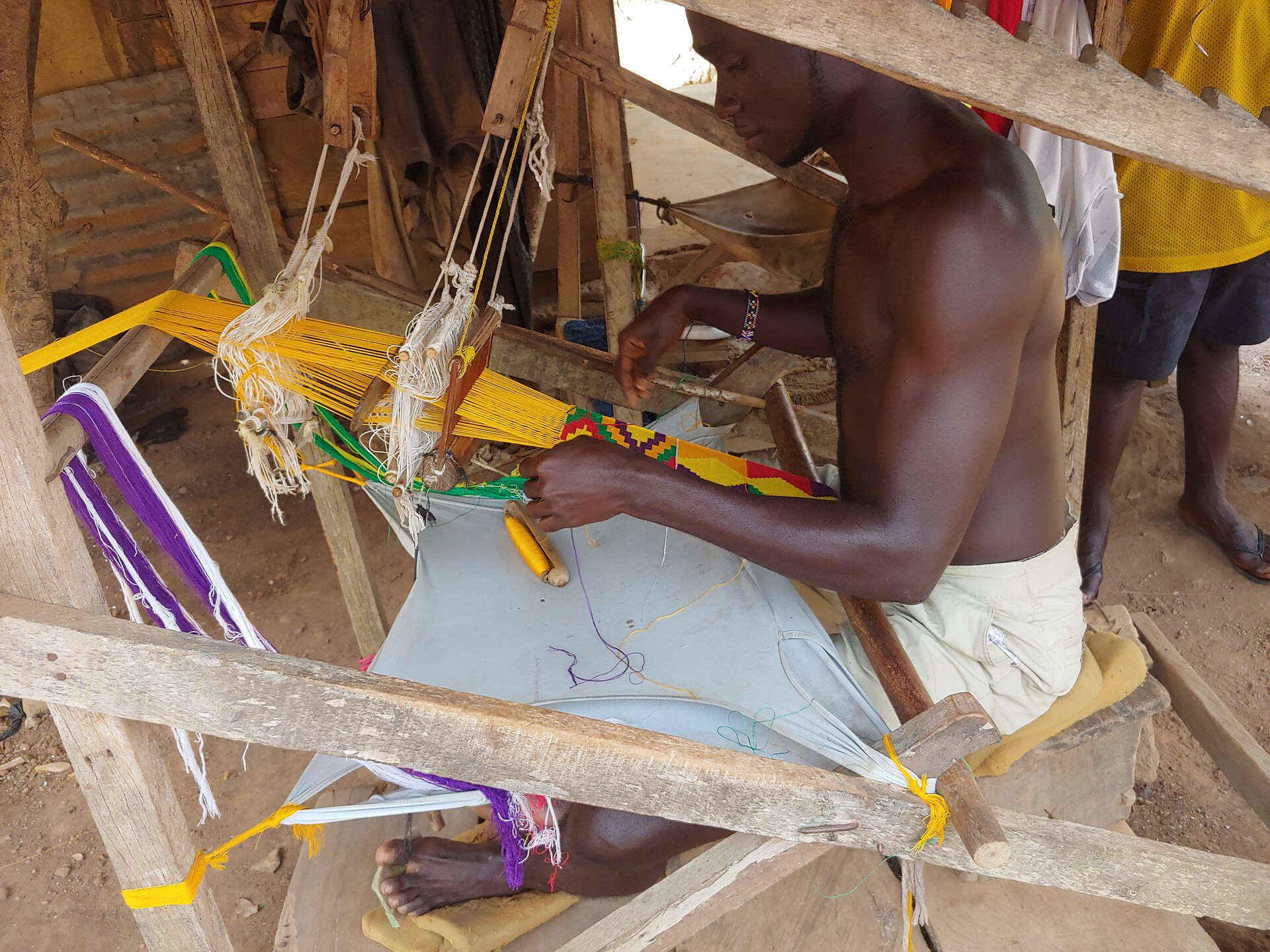
Bonwire — Kente, the bright hand-woven cloth of Ghana, is one of Africa's best-known textiles. It is made from narrow strips of silk and cotton woven on a loom and sewn together, and Ghana now protects it as a geographical indication, so that its name and origin are safeguarded.
Born in Bonwire
According to Asante oral tradition, kente began in Bonwire, in the Ashanti Region. One story says weavers there invented it by copying the web of Anansi the spider. Another says a man from Bonwire brought the loom from Bono Gyaman in the 17th century.
Archaeologists have found spindle whorls and dye pits from the 14th to 18th centuries at Begho and Bono Manso, the oldest evidence of handloom weaving in southern Ghana. The colourful cloth known as kente was an Asante innovation: weavers dyed thread and unravelled imported silk to weave it into many patterns, each with its own meaning. In the 18th century, Asantehene Opoku Ware I encouraged the growth of craft work.
A name from a basket
The word comes from kɛntɛn, "basket" in the Asante dialect of Akan, after its basket-like pattern. Akan speakers also call it nwentoma, "woven cloth".
Once worn like a toga by the Asante, Akan and Ewe peoples, kente is now worn across Ghana for weddings, festivals and special occasions, and cloth by master weavers is in high demand. Printed kente patterns are worn across Africa, and kente stoles are a proud sight at graduations, especially among African Americans and the wider diaspora.
Background: Wikipedia.