Lake Malawi: the lake of stars, and of more fish than any other
Shared by Malawi, Mozambique and Tanzania, it holds at least 700 species of cichlid and is 706 metres deep.
Lire cet article en français →
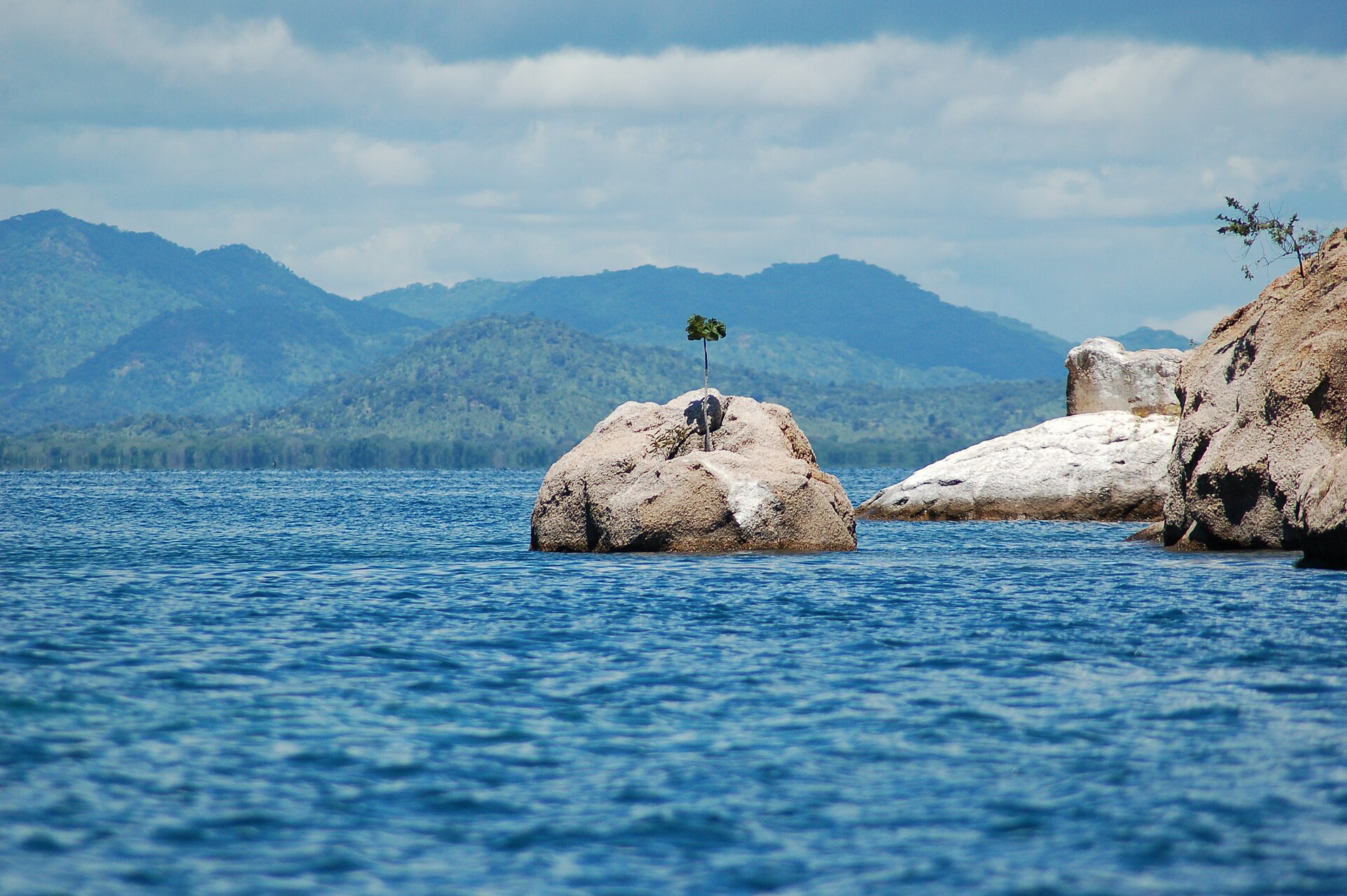
Mangochi — Lake Malawi, known as Lake Nyasa in Tanzania and Lago Niassa in Mozambique, is the southernmost of Africa's Great Lakes, lying along the East African Rift between Malawi, Mozambique and Tanzania.
Big, deep and full of life
It is the fourth-largest freshwater lake in the world by volume and the ninth-largest by area: about 570km long, up to 75km wide and 706 metres deep at its deepest point. It is home to more species of fish than any other lake on Earth, including at least 700 species of cichlid.
Its waters never fully mix, and below about 250 metres there is too little oxygen for fish, so life is concentrated in the upper layers. Nile crocodiles, hippos, monkeys and many African fish eagles live in and around the lake.
The lake of stars
The Scottish missionary David Livingstone reached the lake in 1859. Its nickname, the Lake of Stars, comes from the lanterns of Malawian fishermen on their boats at night, which from a distance look like stars in the sky.
Protecting it
Part of the lake lies in Lake Malawi National Park, and Mozambique declared its section a reserve in 2011. The lake's outflow, the Shire River, supports hydropower, irrigation and wildlife downstream. Scientists are watching closely: water levels have fallen in recent years, and the region's climate is already changing.
Background: Wikipedia.