Senegal's rice farmers: why secure land rights make credit work
A study of 644 rice-growing households finds loans help farmers adopt better seed only when they are sure of keeping their land.
Lire cet article en français →
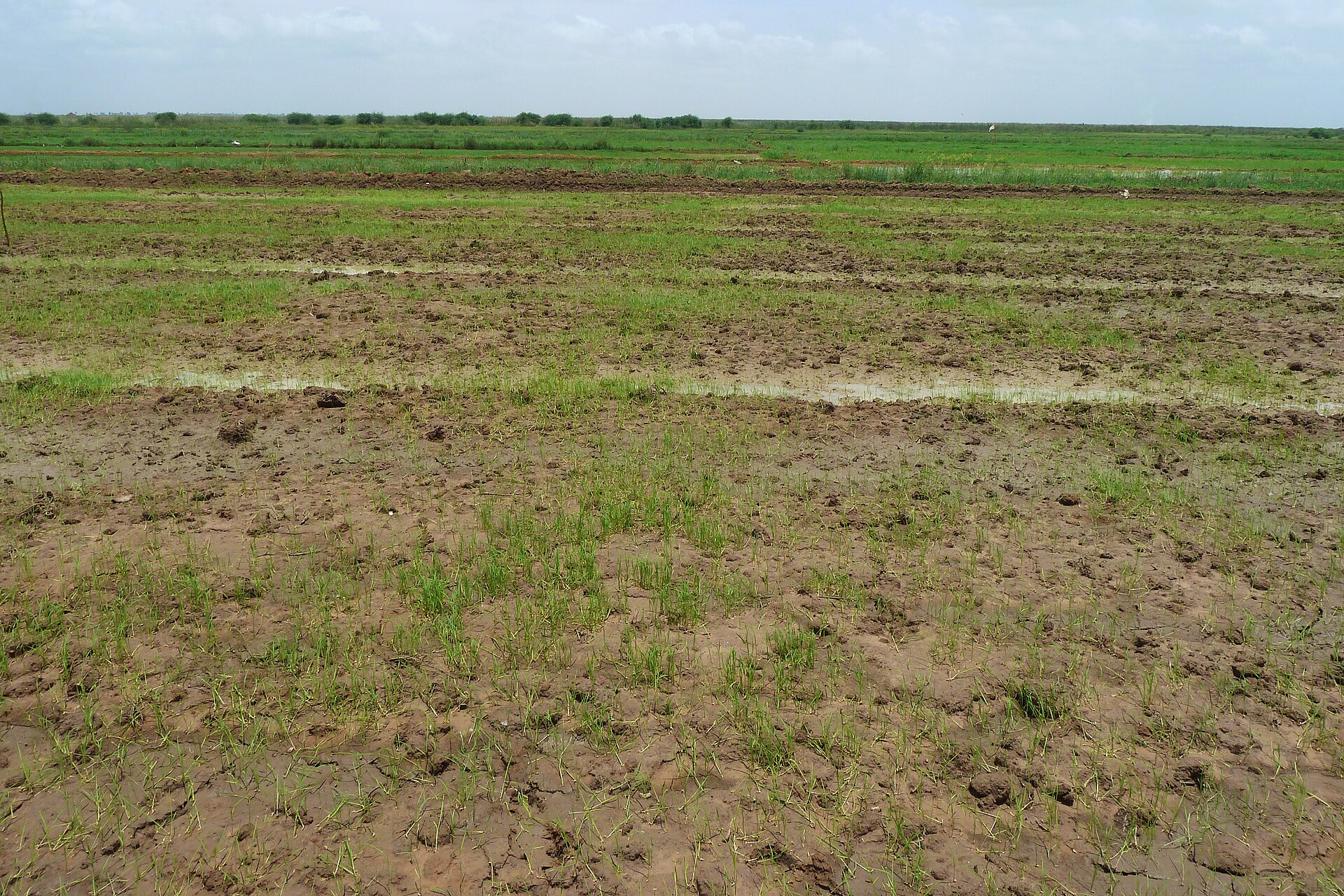
Saint-Louis — Senegal imports a lot of rice: the grain makes up nearly two-thirds of its cereal imports. Growing more at home depends on farmers adopting improved, certified varieties. But good seed is not enough on its own, according to agricultural economists writing in The Conversation.
The study
The researchers used the government's 2021/2022 annual agricultural survey, covering 644 rice-growing households, most of them small farms of under a hectare. They looked at whether access to credit helped farmers adopt improved rice varieties, and whether the answer depended on how secure their land rights were.
What they found
- Across all farmers, credit made no difference. On average, access to a loan did not change whether farmers adopted improved varieties or how much land they planted with them.
- For farmers with secure land rights, credit worked. It was linked both to adopting the new seed and to planting more of their land with it. A loan helps cover the upfront cost, and secure land gives a long enough horizon to invest.
- For farmers with insecure rights, credit did not help. Those unsure of keeping their plot tended to plant only a small area with improved seed, to limit what they could lose.
Many Senegalese farmers struggle to borrow at all: about 61% of households face credit rationing, and land often cannot be used as collateral because customary rights are rarely formally recognised.
The researchers conclude that farm finance and land reform must go together if credit is to help Senegal grow more of its own rice.
Source: The Conversation (French edition), 23 October 2026.