Ethiopia demands the return of a Gospel looted at Maqdala in 1868
An illustrated 18th-century Ge'ez Gospel is offered for €250,000 by a Vienna dealer. Ethiopia's heritage authority wants it back, unconditionally.
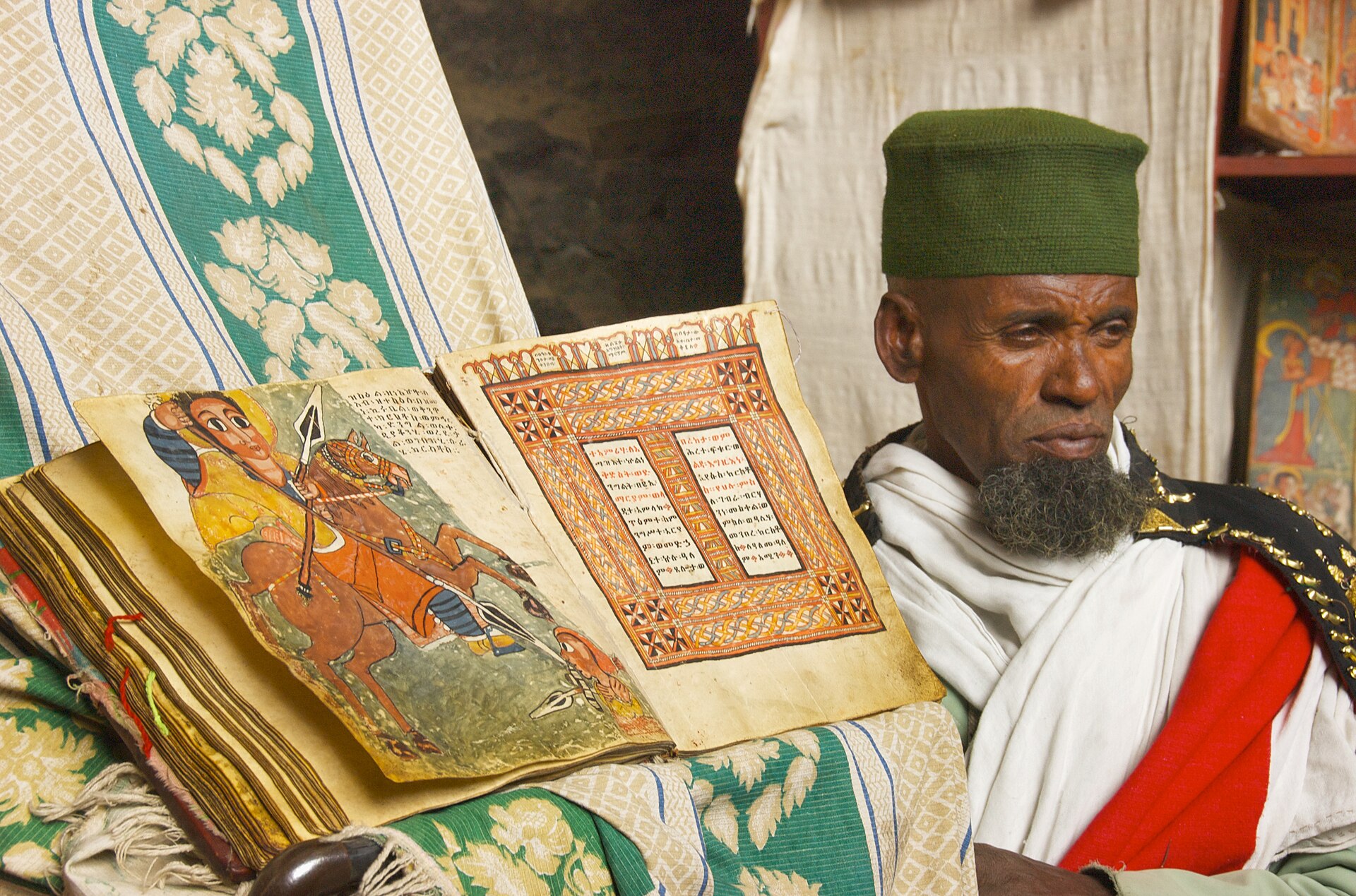
Addis Ababa — A richly illustrated Ethiopian Gospel taken by British troops in 1868 has been offered for sale in Europe, and Ethiopia wants it home. Jacopo Gnisci, a specialist in Ethiopian art at University College London, tells its story in The Conversation.
The manuscript
- Probably from the second half of the 18th century, written in Ge'ez, the language of the Ethiopian Orthodox Church.
- Contains the Gospel of Luke and most of John, likely the second volume of a set whose first volume is thought to be in the Bavarian State Library.
- Illustrated with 235 scenes, in an unusual binding of red openwork leather lined with gold foil and velvet.
How it left Ethiopia
Emperor Tewodros probably gathered it from churches in Gondar in the 1860s. In 1868, British forces stormed his mountain fortress at Maqdala (Magdala), and Tewodros took his own life rather than surrender. The soldiers looted the royal treasury and a church, carrying off relics, crosses and manuscripts that were scattered across Europe. A note says the commander, Robert Napier, gave this Gospel to the Governor of Bombay, who sold it in 1887.
Ethiopia's answer
The Vienna bookseller Antiquariat Inlibris has advertised it since mid-August for €250,000 and offered to sell it to Ethiopian institutions at a preferential price. The Ethiopian Heritage Authority has instead demanded that it be withdrawn from sale and returned unconditionally.
Ethiopia has brought dozens of items home in recent years: a lock of Tewodros's hair returned from Britain in 2019, 17 manuscripts repatriated from the US, and a 2026 partnership with the Toledo Museum of Art over about 380 Ethiopian Christian artefacts.
Source: The Conversation, 24 September 2026.