The Okavango: a river that floods the desert instead of reaching the sea
Every year floodwater from Angola spreads across Botswana's Kalahari, creating one of Africa's greatest gatherings of wildlife.
Lire cet article en français →
Maun — Most rivers end in the sea. The Okavango ends in the Kalahari Desert. Where it reaches a basin in northern Botswana, it spreads out into a vast inland delta of channels, lagoons, floodplains and islands, one of the few large interior deltas on Earth that never flows into an ocean.
A flood in the dry season
The water starts as summer rain in the highlands of Angola in January and February. The surge travels about 1,200km downstream in roughly a month, then spreads across the delta over the next four months. The floods peak between June and August, in Botswana's dry winter, when the delta swells to three times its permanent size.
Each year about 11 cubic kilometres of water spreads across the delta. Almost all of it is eventually used by plants or lost to evaporation; some seeps into the sand and some drains into Lake Ngami.
A gathering of wildlife
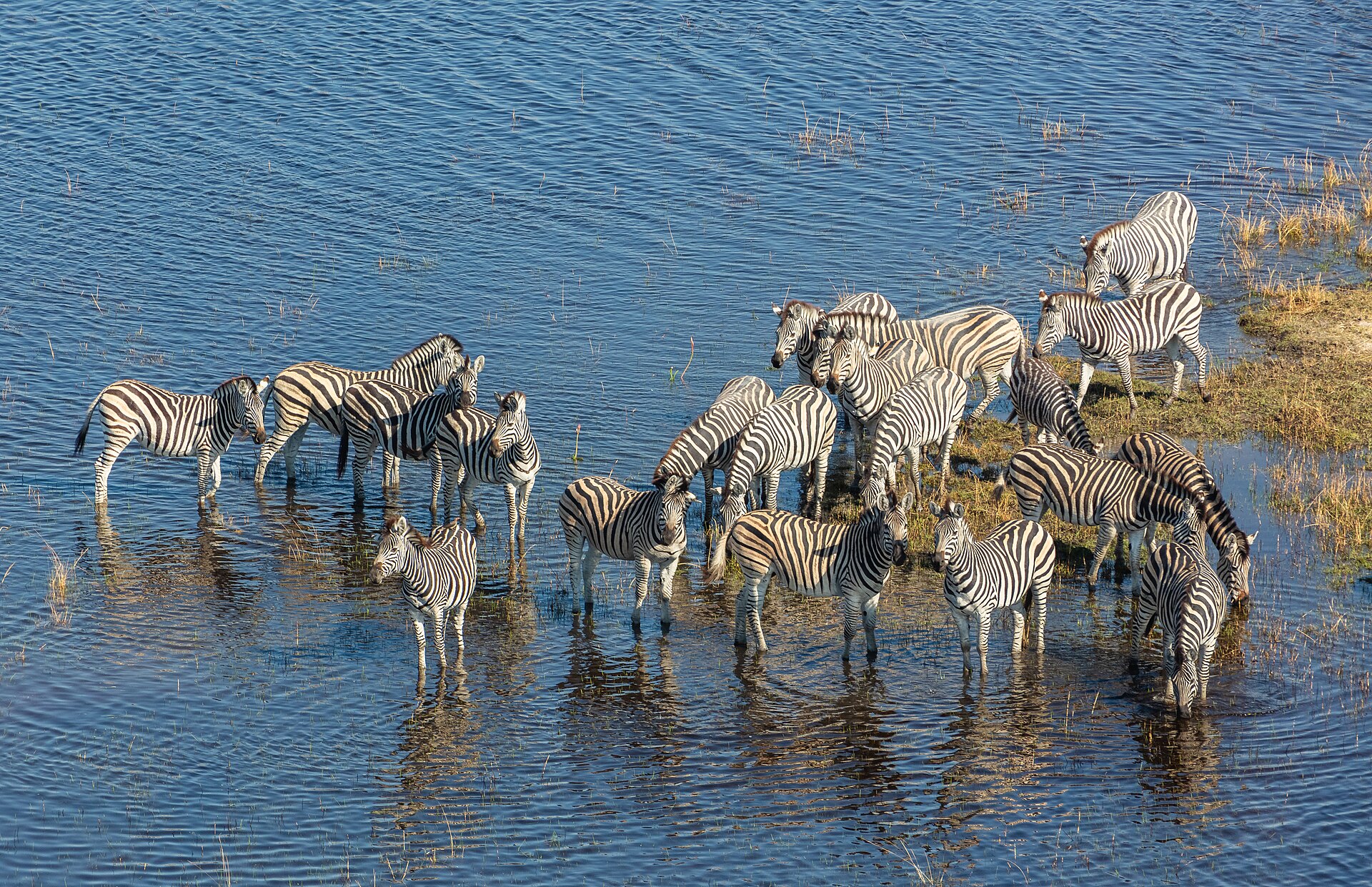
Arriving in the driest months, the floods draw animals from far around, creating one of Africa's greatest concentrations of wildlife. The Moremi Game Reserve lies on the eastern side of the delta.
The Okavango was named one of the Seven Natural Wonders of Africa in 2013. In June 2014 it became the 1,000th site inscribed on the UNESCO World Heritage List, recognised as a wetland that remains largely intact.
The name comes from the Okavango River, which takes its name from the Kavango people of northern Namibia.
Background: Wikipedia.